
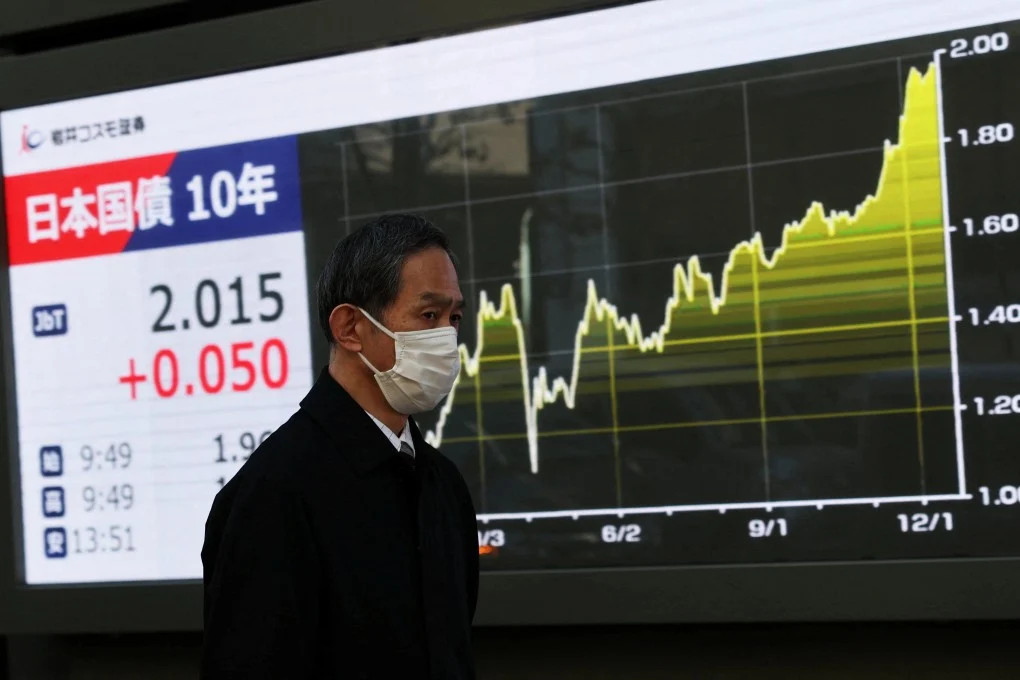
The Bank of Japan lifted its benchmark interest rate to 1 percent on Tuesday, the highest level since 1995, as surging global energy costs — driven by the U.S.-Israeli war with Iran — push inflation deeper into the country’s economy after two decades of near-stagnation.
The quarter-point increase from 0.75 percent is the BOJ’s latest step in a gradual tightening cycle that began in March 2024, when the central bank executed its first rate hike in 17 years. Tuesday’s move marks the second increase since Prime Minister Sanae Takaichi took office, and had been widely anticipated following December’s adjustment to around 0.75 percent.
Japan imports the overwhelming share of its oil and gas from the Middle East, leaving it acutely exposed to the price shock that has rippled through energy markets since hostilities with Iran intensified. Wholesale prices climbed more than 6 percent in May compared with the same period last year — the steepest annual rise in three years. Consumer inflation, recorded at 1.4 percent in April, remains below the BOJ’s 2 percent target, but the trajectory is upward, and the bank signaled concern Tuesday that underlying price growth could overshoot that goal.
“After twenty years of deflation, Japan is now in an inflationary upcycle,” economist Jesper Koll told the BBC. Emergency monetary policy, he said, is no longer the appropriate instrument.
That diagnosis captures a transformation in Japan’s economic circumstances that few would have predicted a decade ago. The country spent the 1990s cutting rates aggressively to blunt the damage from collapsing asset prices — property values and equity markets both cratered — and then kept borrowing costs pinned near zero for roughly twenty years as deflation persisted and growth flatlined. The architecture of crisis management, long embedded in BOJ policy, is now being methodically dismantled.
Read also: Japan Detains Chinese Fishing Vessel In Nagasaki Waters
The dismantling continued Tuesday without the bank’s governor in the room.
Kazuo Ueda missed the meeting while hospitalized for treatment of an infected liver cyst — an unusual absence for a decision of this magnitude. In the weeks prior to the meeting, however, Ueda had consistently signaled openness to further tightening. “Even if the situation remains unclear, should it be judged that upside risks to prices outweigh downside risks to economic activity, it will be necessary to thoroughly discuss the pros and cons of raising the policy interest rate,” he said earlier this month. His colleagues on the policy board proceeded in his absence without deviation from that posture.
The BOJ explicitly addressed the Iran war’s economic risks, concluding that government measures to cushion the fuel cost burden on households had reduced the danger of a sharp economic deterioration. But the bank stopped well short of a clean bill of health, warning that medium- and long-term inflation expectations have continued to rise and that prices could deviate above target.
That warning creates the central dilemma now facing Japanese policymakers. Higher interest rates help cool inflation but raise borrowing costs for businesses and the government alike — a serious consideration in a country carrying one of the world’s largest public debt loads relative to GDP. The BOJ is threading this needle incrementally, each quarter-point move a calibrated bet that the economy can absorb tighter conditions without stalling a recovery still finding its footing.
Takaichi’s posture has added another variable. The prime minister built her political identity on fiscal stimulus and long resisted rate hikes. Since taking office she has refrained from publicly opposing the BOJ’s tightening path, but her silence reads as tolerance rather than endorsement — a distinction that could matter if the rate cycle accelerates.
Currency dynamics have also factored into the calculus. The yen has weakened against the dollar and the euro, amplifying import costs and contributing to inflationary pressure. “There has been a sense that the yen is too cheap and that raising its currency will not hurt,” said Ulrike Schaede, a business professor at the University of California San Diego.
Even at 1 percent, Japan’s rate remains a fraction of prevailing levels in other major economies. The United States and United Kingdom both sit above 3 percent, though both central banks are expected to hold rates steady when they meet this week. Australia’s Reserve Bank kept its benchmark at 4.35 percent on Tuesday while preserving the option to hike again.