
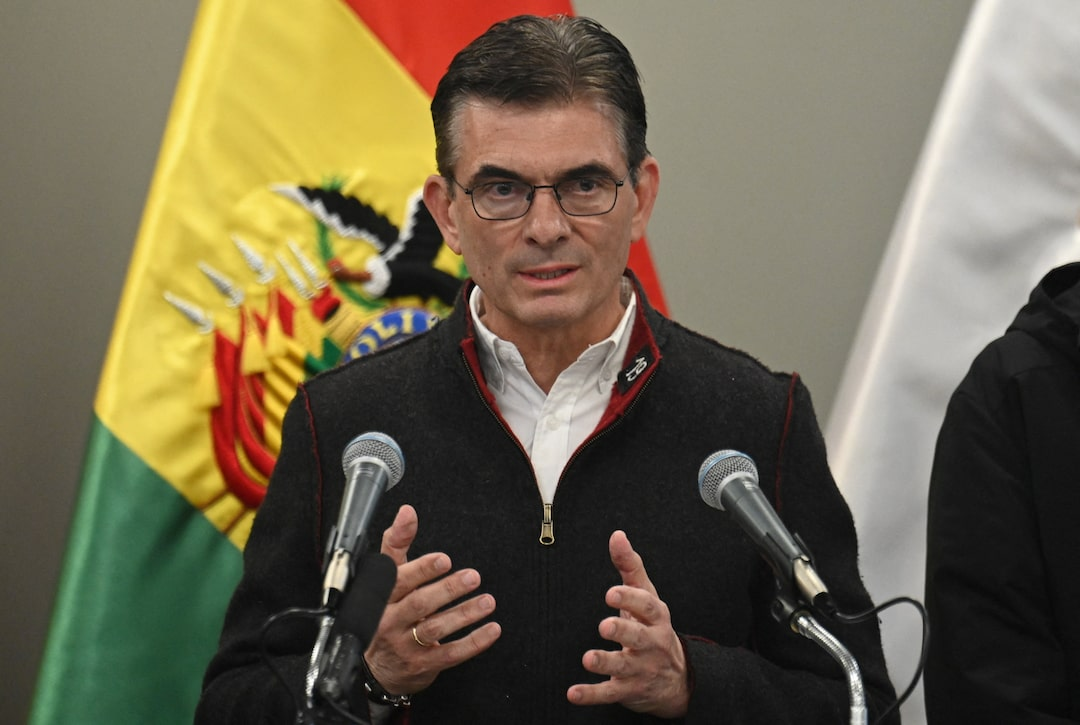
Bolivian troops began clearing road blockades Saturday under emergency powers signed by President Rodrigo Paz — less than a day after his government said it had resolved the very crisis those troops are now being sent to end.
The contradiction sits at the center of Bolivia’s weekend.
On Friday, Paz signed an agreement with the Bolivian Workers’ Confederation, the country’s dominant labor federation, after 50 days of protests had throttled the national economy. By Saturday evening, he was on national television announcing a state of emergency, broadening his constitutional authority to deploy the armed forces against blockades that remain very much in place.
The decree took effect immediately. Bolivian law requires Paz to notify Congress within 24 hours of signing it, after which lawmakers have a 72-hour window to ratify the measure or strike it down — a legislative clock now running in parallel with the military deployment itself.
What the labor deal solved and what the emergency decree is meant to solve are not the same crisis.
The COB agreement addressed unions willing to sit at a negotiating table. It said nothing to the rural farming associations loyal to former President Evo Morales that physically control the roads feeding into Cochabamba, Bolivia’s agricultural and industrial center. Those groups were never part of the Friday talks. They are not bound by what the union accepted, and as of Saturday, they had not moved.
Read also: Drug Lord Sebastian Marset Nabbed In Bolivia Police Sweep
Trucks carrying food, fuel and medicine remain stranded at checkpoints across the region. La Paz has felt the shortage as acutely as anywhere.
The roots of the standoff reach back to an early decision in Paz’s presidency. Facing a worsening dollar shortage and ongoing negotiations with the International Monetary Fund, his government cut fuel subsidies Bolivia had maintained for years in an effort to narrow the budget deficit. Diesel and gasoline prices spiked almost immediately, hammering transport costs and consumer prices alike. Paz later partially reversed the subsidy cut and rolled back a separate, unpopular land redistribution policy, but the damage had already widened into something bigger than fuel. Unions added demands for higher wages and an end to chronic dollar shortages. Eventually, some called for Paz’s resignation outright.
That broader movement is what splintered into Friday’s deal and Saturday’s deployment.
Paz cast the holdout blockades in stark terms during his address, describing the prolonged disruptions as an organized campaign to destabilize Bolivian democracy rather than an economic grievance still being negotiated. The emergency declaration, he said, exists to restore order, protect citizens and guarantee the flow of essential goods — and to put those still blocking roads on notice that they now face legal consequences.
Read also: Rodrigo Paz Wins Bolivia’s Presidency On Centre-Right Ticket
“This is not a state of emergency to restrict people’s lives,” Paz said. “It is a state of emergency to give freedom back to the people, to free Bolivia from those who use political conflict to block roads and harm the population.”
Whether Congress sees it the same way is an open question. Bolivian lawmakers wary of a Trump-aligned government claiming expanded military authority over domestic protesters now have 72 hours to decide. A rejection would leave Paz’s deployment without legislative cover even as soldiers are already in the field.
Morales, for his part, has said nothing publicly resembling a retreat. His political influence, built over more than a decade in power, persists even from outside government — strong enough that a labor deal struck by Bolivia’s largest union could not reach the roads his rural allies control.
The army is now doing what fifty days of negotiation could not: physically moving the trucks. It is doing so without the agreement of the people who parked them there.