
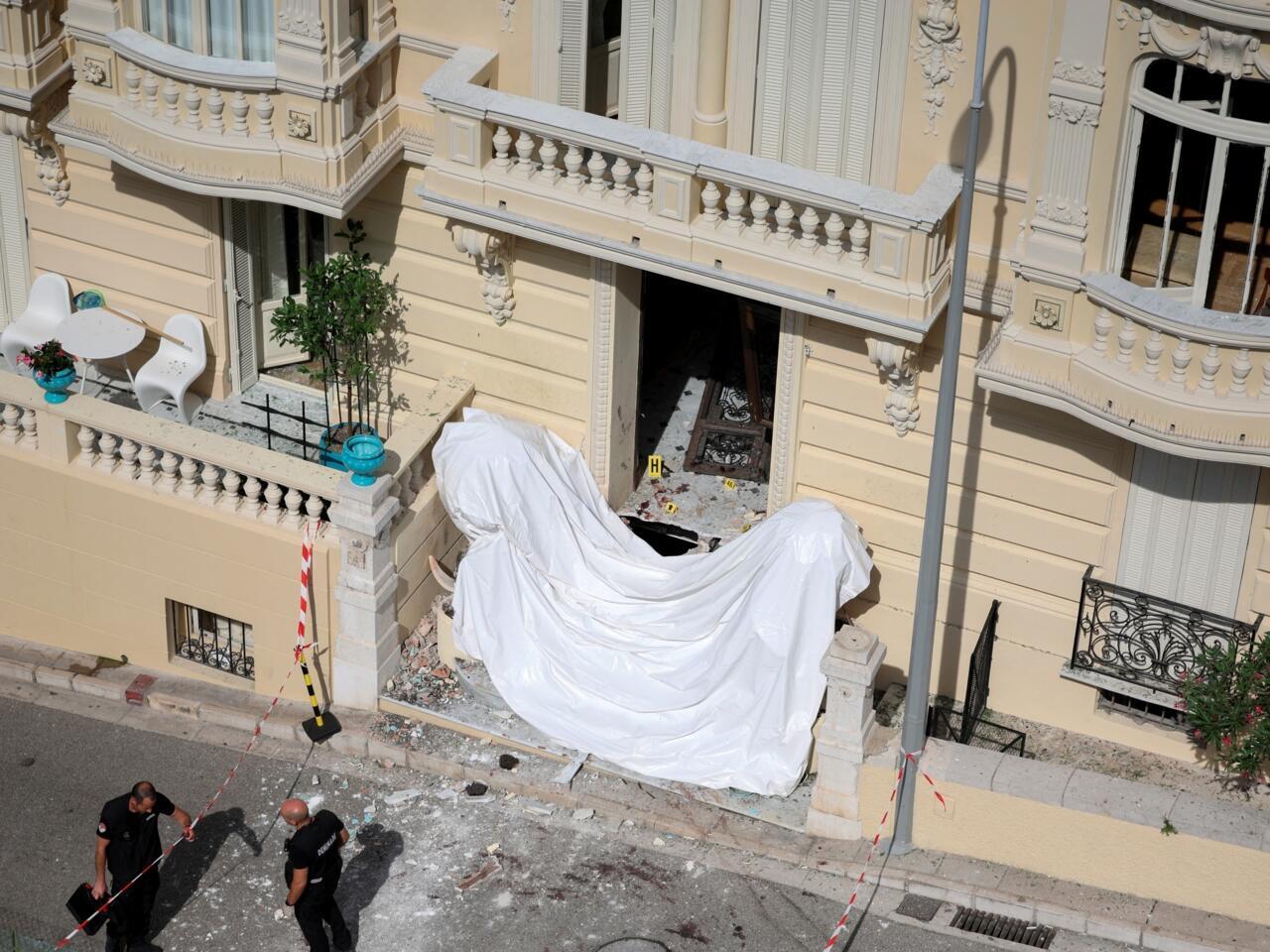
Investigators in Monaco have identified a suspect in Monday’s parcel bombing that tore through the entrance of an apartment building near the French border, seriously wounding a sanctioned Ukrainian businessman, his partner and his 13-year-old son.
An arrest warrant is now active. Monaco’s public prosecutor’s office confirmed Thursday night that the suspect, described only as a foreign national, has already left the principality, prompting authorities to request an Interpol Red Notice by evening’s end.
Surveillance footage captured the moment a figure entered the building and left a package in the entrance hall. Within minutes, the device detonated as the three victims arrived, according to information gathered at the scene.
The suspect was filmed fleeing across the frontier into Beausoleil, the French commune that presses directly against Monaco’s edge — a detail that has complicated jurisdiction and required coordination between two national police forces working against the clock.
That collaboration, prosecutor Stéphane Thibault said, allowed investigators “to identify, in a particularly short time, the person suspected of having carried out the attack.” He credited joint work between Monegasque and French police for the breakthrough and indicated a further briefing would follow around midday Friday.
Descriptions of the suspect have shifted since Monday. Initial reports characterized the individual as a man wearing a black hat. Local Monaco media have since reported that the person of interest may in fact be a woman who disguised her appearance to pass as male. Thibault’s office has not addressed that detail directly.
Read also: Monaco’s Wealthy Elite Get Papal Plea To Help Poor
Authorities are treating the bombing as attempted murder rather than an act of terrorism, a distinction officials have maintained since the early hours of the investigation.
Monaco has not formally released the victims’ names. Local reporting, however, has widely identified the target as Vadym Yermolaiev, a 58-year-old real estate developer who has made the principality his home for years.
Yermolaiev’s biography stretches across borders in ways that mirror the case itself. He gave up his Ukrainian citizenship in 2019 and now holds Cypriot nationality. His business interests include wine and alcohol ventures inside Russian-annexed Crimea, holdings that placed him under sanctions imposed by Kyiv beginning in 2023.
His fortune once drew significant attention in Ukrainian business circles. Forbes ranked him the 39th-richest Ukrainian in 2020, estimating his wealth at roughly $230 million.
None of that wealth shielded the family from Monday’s blast. All three victims — Yermolaiev, his partner and his young son — were rushed to hospital, with the two adults initially listed in critical condition.
By Wednesday, doctors had stabilized Yermolaiev enough to move him out of immediate danger, Agence France-Presse reported, citing hospital information. His partner’s condition had not yet stabilized as of that report, leaving her prognosis uncertain days after the attack.
Monaco’s Prince Albert II condemned the bombing publicly, calling it a “heinous crime” — a rare direct statement from the head of state on a criminal matter within the tightly controlled principality.
The scale of the police response has been unusual for Monaco, a jurisdiction of roughly two square kilometers where violent crime involving explosives is exceedingly rare. The speed of the identification, prosecutors suggest, reflects both the density of surveillance coverage in the principality and the narrow window available for the suspect to escape before borders tightened.
Beausoleil’s proximity to Monaco has long made it a practical corridor for anyone seeking to slip out of the principality on foot within moments. French police are now working alongside their Monegasque counterparts to trace the suspect’s movements beyond that initial escape route.
Investigators have not disclosed a motive. The sanctions against Yermolaiev, his renunciation of Ukrainian citizenship, and his business ties to occupied Crimea have fueled speculation about a possible connection to the broader fallout of Russia’s war against Ukraine, though nothing in the official record yet confirms such a link.