
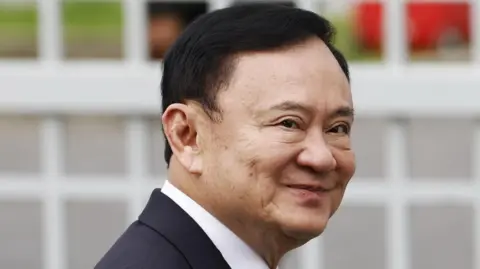
Thailand’s Supreme Court has ordered former prime minister Thaksin Shinawatra to serve a one-year jail term, reigniting debate over justice, privilege, and political dynasties in the country.
The 76-year-old, a towering figure in Thai politics for more than two decades, had been briefly imprisoned in 2023 for corruption and abuse of power, only to be transferred to a hospital after citing heart issues. The Supreme Court ruled on Tuesday that this transfer was unlawful, stating that Thaksin “knew or could perceive that he was not in a critical or emergency condition,” and could have been treated as an outpatient.
Thaksin, who rose to power in 2001, was ousted in a 2006 military coup and spent years living in self-imposed exile, primarily in Dubai. Upon returning to Thailand last year, he faced a corruption trial and was initially sentenced to eight years in prison. Following a plea for a royal pardon, his sentence was commuted to one year. Yet his brief stint in a jail cell—dubbed the “14th floor case” for the hospital wing he occupied—has been a lightning rod for public criticism, with many Thais viewing it as emblematic of how the wealthy and powerful receive preferential treatment.
Despite the ruling, Thaksin appeared undeterred. Arriving at Bangkok’s court with his daughter, Paetongtarn Shinawatra, he smiled and greeted supporters. In a social media statement, he wrote, “Even though I lose my physical freedom, I will still have freedom of thought for the benefit of my country and its people,” pledging to continue serving the monarchy and Thailand.
Read Also: BRICS Leaders Slam Protectionism, Call Tariffs ‘Blackmail’
Paetongtarn, who had briefly led the family’s Pheu Thai Party before being removed from office over a leaked phone call with Cambodian leader Hun Sen, expressed concern for her father but said the family remained “in good spirits.” She also promised to carry forward the party’s work as an opposition force in the new political landscape.
The case unfolds against a backdrop of political instability in Thailand. Parliament last week selected Anutin Charnvirakul as the new prime minister, marking the third leadership change in two years. The handling of Thaksin’s incarceration and the family’s political maneuvering continue to capture the public’s attention, highlighting the enduring influence of the Shinawatra dynasty and the tension between elite privilege and the rule of law.
As Thailand grapples with these challenges, the court’s decision serves as a stark reminder that even the country’s most powerful figures are not entirely immune from legal scrutiny—a development that is likely to shape political discourse for months to come.