
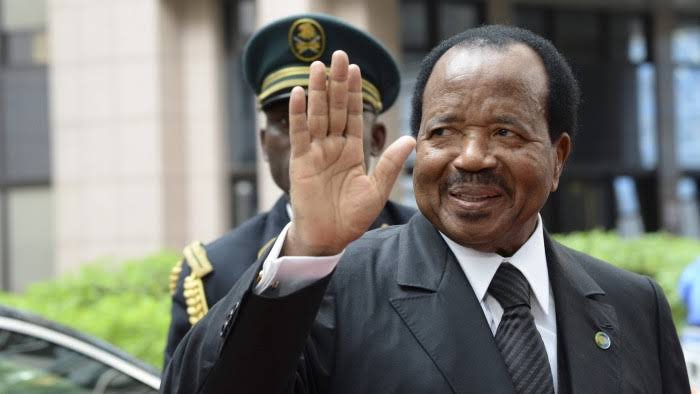
Cameroon President Paul Biya has secured re election for an eighth term, the Constitutional Council announced on Monday. Official figures show the 92 year old leader received more than 53 percent of the vote from the October 12 poll.
The result extends one of the longest presidencies in the world and could keep Paul Biya in office until close to his 100th birthday. Supporters say his leadership offers stability in a country facing security threats in multiple regions while opposition argue that his long rule has weakened political competition and human rights.
Protests erupted in the capital Yaounde and other cities before the official declaration. At least four people were killed in clashes with security forces, according to local groups and media reports. Demonstrators demanded what they called credible results and raised concerns about the transparency of the election and the results.
Clement Atangana, president of the Constitutional Council, read out the announcement during a televised session. He stated that Paul Biya had been confirmed as President elect and that the process followed legal procedures.
Read Also: Cameroon Detains Opposition Ahead Of Result Announcement
Biya’s main challenger was Issa Tchiroma Bakary, a former government spokesperson and employment minister. After leaving Biya’s circle earlier this year, Tchiroma rallied several opposition parties and civic groups behind him. His campaign drew significant crowds across major cities and sought to tap into young voters’ frustrations.
Officials said Tchiroma finished second, well behind Biya. Opposition representatives have rejected the numbers and signaled they may challenge parts of the count. Other members of the opposition were also detained before the announcement of the results.
Biya first took office in 1982. He removed presidential term limits in 2008, clearing the way for repeated re election victories. International communities have often pointed to concerns about political freedoms in the country.
The central African nation continues to face security challenges. Armed conflict persists in the Anglophone northwest and southwest, while militant attacks in the north have displaced thousands.
The opposition is expected to push for further reviews of the vote as tensions remain high. Government officials have urged calm, saying national unity must be the priority.