
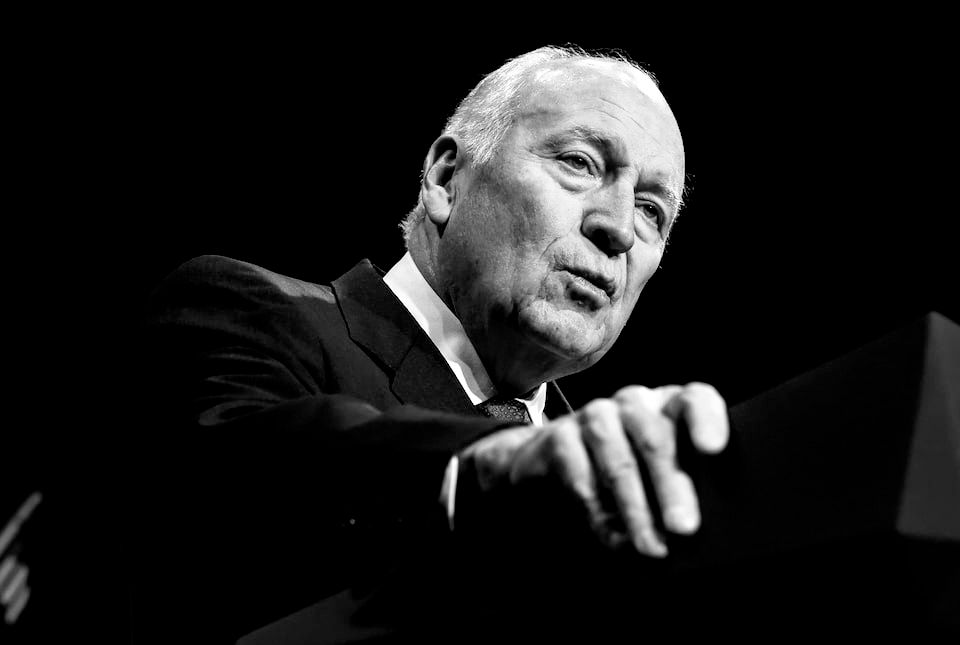
Richard “Dick” Cheney, widely regarded as one of the most influential vice presidents in modern American history, died on November 3, 2025, at age 84. According to a family statement, his death was caused by complications from pneumonia in conjunction with cardiac and vascular disease.
Cheney’s passing marks the end of a political career that reshaped the role of the vice presidency and deeply impacted U.S. foreign policy. His legacy remains hotly debated, praised by allies for his steadfast defense of executive strength, condemned by critics for endorsing controversial national security measures.
Before his tenure as vice president from 2001 to 2009, Cheney already held significant sway in Washington. He served as a Republican congressman from Wyoming, White House Chief of Staff, and U.S. Secretary of Defense under President George H. W. Bush.
When George W. Bush selected Cheney as his running mate in 2000, it wasn’t a gamble. Cheney was already a major policymaker behind the scenes. As vice president, he pushed to reverse what he saw as the erosion of presidential power following Watergate, working to empower his own office with a national security apparatus that at times operated semi-autonomously.
Read Also: Canadian Leader’s Inaugural Budget To Lessen US Dependency
Cheney was a vocal architect of the 2003 invasion of Iraq, citing the threat of weapons of mass destruction and alleged ties to al Qaeda. Those claims were never substantiated. He frequently clashed with other Bush administration figures, including Secretaries of State Colin Powell and Condoleezza Rice, over the direction of foreign policy and counterterrorism methods. He defended “enhanced interrogation techniques” such as waterboarding and prolonged sleep deprivation, methods later condemned by the U.S. Senate Intelligence Committee and human rights bodies as torture.
Cheney’s health was a prolonged challenge. He first suffered a heart attack at age 37 and endured multiple cardiac events over the decades. In 2012, he underwent a heart transplant. Despite advanced age, he remained politically engaged in his later years.
In 2024, Cheney made waves by announcing he would vote for Democratic vice presidential candidate Kamala Harris over President Donald Trump, a reflection of his break with the GOP establishment in the later stage of his life. He justified his stance, saying, “In our nation’s 248-year history, there has never been an individual who is a greater threat to our republic than Donald Trump.”
Cheney was married to Lynne Cheney for 61 years, and they had two daughters: Liz and Mary. His daughter Liz Cheney became a prominent Republican congresswoman known for opposing Trump and voting to impeach him after the January 6 Capitol attack.