
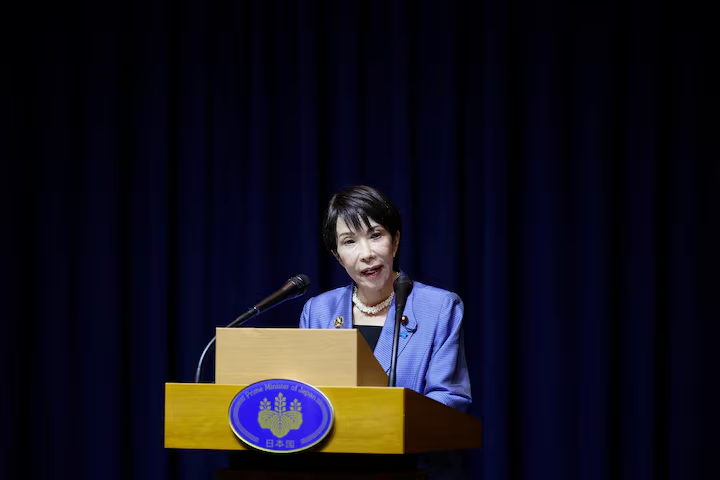
A new Kyodo News survey shows the Japanese public is split over whether Japan should exercise its right to collective self-defense in the event of a Chinese attack on Taiwan, highlighting a growing national debate over regional security and Tokyo’s role in a potential crisis.
According to the poll released Sunday, 48.8% of respondents said Japan should join a collective military response, while 44.2% opposed doing so.
The findings come as tensions between Tokyo and Beijing escalate following recent comments by Prime Minister Sanae Takaichi, who has sharpened her government’s stance on Taiwan and pressed for higher defense spending.
Despite divisions over potential military involvement, the poll found strong backing for Takaichi’s defense buildup, with 60.4% supporting her plan to raise Japan’s defense budget to 2% of GDP in the current fiscal year—three years ahead of the original 2027 goal.
Read Also: Norway Harnesses Seaweed Farms To Combat Climate Change
The prime minister has argued that Japan must be prepared for rapidly shifting security conditions in East Asia. On November 7, she said a Chinese attack on Taiwan could constitute a “survival-threatening situation” under Japan’s security laws, potentially prompting a collective military response by Tokyo.
Her remarks drew a sharp rebuke from Beijing, which warned its citizens about traveling to Japan and accused Tokyo of undermining regional stability.
China has not ruled out using force to take control of Taiwan, which it claims as its own territory. Taiwan’s democratically elected government rejects Beijing’s sovereignty claim, while Japan—whose nearest territory lies just 110 km (70 miles) from Taiwan—views stability in the Taiwan Strait as essential to its own security.
Growing concerns over China’s military activity around Taiwan and Japan’s southwestern islands have elevated defense policy to the forefront of Japanese politics.
Kyodo’s poll also showed a 69.9% approval rating for Takaichi’s cabinet, up 5.5 points from the previous month, underscoring strong domestic support for her broader leadership even as security policy remains contested.
The diplomatic rift between Japan and China appears likely to deepen as Tokyo accelerates defense reforms and signals readiness to respond to a Taiwan conflict under its collective self-defense framework.
With public opinion closely divided on the issue, Japan’s leaders face the challenge of balancing rising security threats with constitutional and political constraints at home.
More detailed policy proposals on defense and security are expected as Takaichi continues to push her agenda in the coming months.