
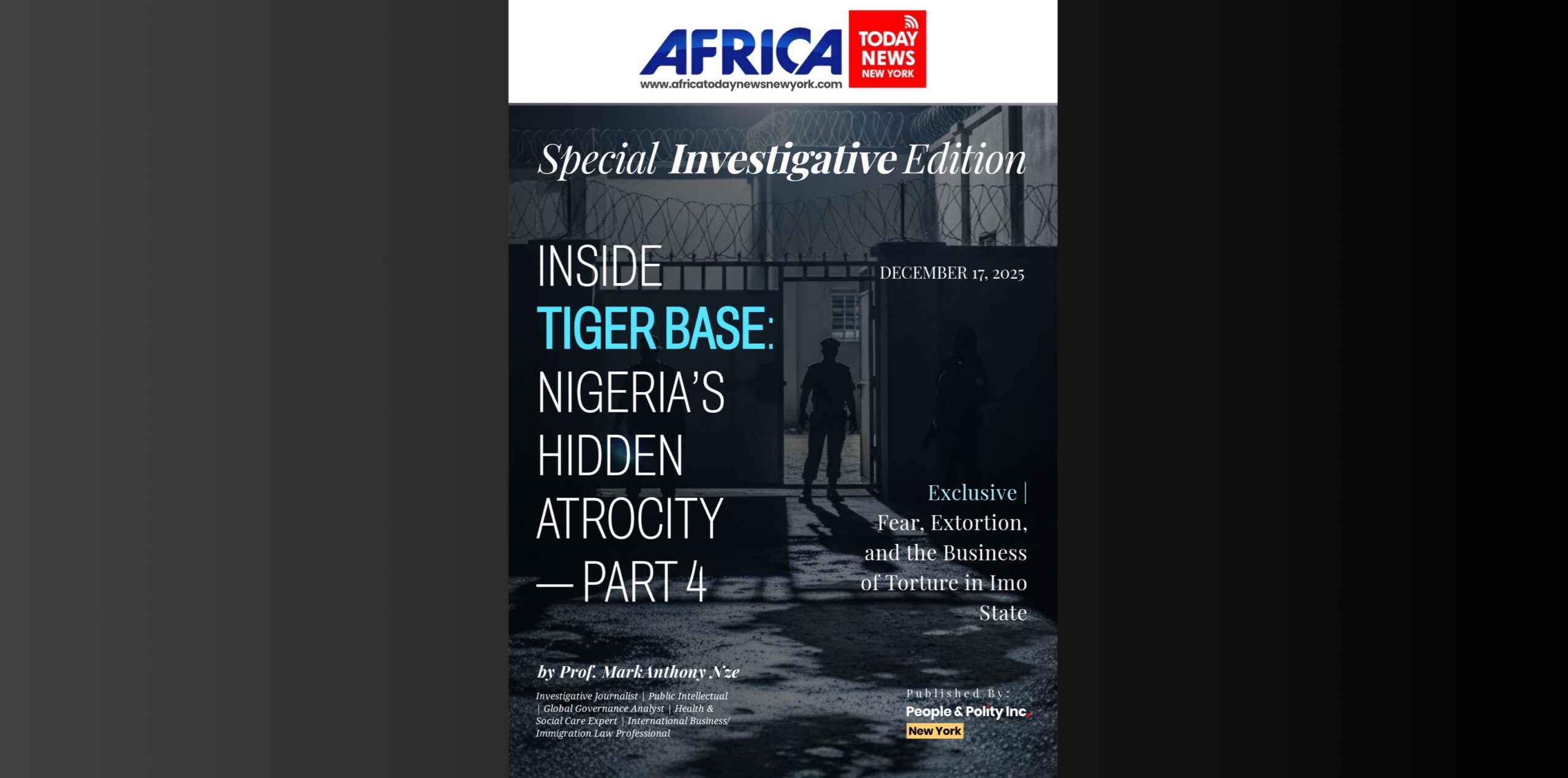
Inside Tiger Base, torture is dressed as ritual and fear becomes faith — a calculated theatre of pain that turns belief itself into an instrument of control.
It starts as a vibration before it becomes sound — boots striking concrete, a generator coughing to life, a low chant rising from somewhere behind the cells. Survivors say that rhythm means only one thing: someone has been taken to the shrine. It is not a place of prayer but of extraction, where truth is beaten into being.
The structure itself is unremarkable, a crooked shed crouched behind the main block, no larger than a roadside stall. Its plywood walls bow inward as if exhausted by what they have witnessed, the grain darkened by soot, sweat, and the slow drip of palm oil from candles that never go out. To the officers, it stands as proof of authority; to those who have been dragged through its doorway, it marks the edge where sanity begins to fray and the body becomes the only language left.
The Ritual of Fear
The ritual always follows a pattern. The detainee is blindfolded, stripped to the waist, and made to kneel before a cluster of carved figures and half-burnt candles. A voice orders him to “speak the truth.” When he hesitates, the blows begin — cables, sticks, a hosepipe cut into lengths. With each strike comes the same refrain: “The gods know you are lying.”
A farmer from Awo Omamma recalled being beaten until his vision blurred. “They said the shrine would strike me if I didn’t confess,” he said. “When I told them I was innocent, they poured water on my head and kept beating. I fainted before I said anything.”
No prayer is allowed except the one demanded. No truth exists except the one the officers dictate.
Faith as Weapon
In a state where religion defines daily life, Tiger Base has learned to weaponize belief. The officers invoke both Bible and deity, switching between cross and fetish as tools of submission. One detainee remembered an officer holding a Bible in one hand and a gun in the other. “He said, ‘Swear you did it. If you lie, the Bible will judge you. If you lie again, I will.’”
In that moment, faith loses its sanctity and becomes administrative violence. The invocation of the divine legitimizes the cruelty that follows. It transforms torture into purification — a cleansing that requires pain as proof.
An observer who has studied police culture in the region explained that this fusion of religion and brutality is strategic. “It breaks the mind faster than the body,” he said. “Once fear takes the shape of faith, resistance collapses.”
The Room Without Windows
Next to the shrine is another space, known among detainees as the room. There are no windows, only a single bulb dangling from a wire. The air is thick with damp and metal. From a hook welded to the ceiling hangs an iron rod. Men are tied by the wrists and lifted until their feet leave the ground. Then the beating begins again — deliberate, rhythmic, endless.
“They call it flying,” said a man once detained for theft. “They hang you until your arms go numb. They ask questions while you spin. When you stop answering, they lower you, splash water on you, and start over.”
Others describe being forced to lie on wet concrete while officers poured water into their noses with plastic bottles. The sensation, one said, “felt like drowning while breathing.”
The walls of the room bear scratches that look like writing. No one knows who made them.
The Logic of Ritual
The combination of shrine and torture room forms a complete ideology. One appeals to superstition, the other to physical terror. Together, they create a choreography of obedience. The accused is stripped of choice, crushed by the twin forces of divine threat and human cruelty.
Within that logic, confession becomes ceremony. The officers speak of “cleansing” and “purging lies.” They insist the shrine reveals truth, even as they force the words from fractured lips. Each coerced statement feeds a file labeled Case Closed.
Pain, in this structure, is not collateral damage — it is the method. The louder the scream, the stronger the proof.
The Witnesses of Death
Every few weeks, someone dies during interrogation. The survivors say the body is left overnight, a warning to others. One man from Nempi said he awoke to find the corpse beside him. “They told us to sleep with him,” he said. “They said his spirit would tell the truth before morning.”
At dawn, officers dragged the body away, leaving a smear of blood that no one dared to clean. The next day, another detainee was taken to the shrine.
For those who live, memory becomes the second sentence. They remember the smell, the sound, the way the officers laughed between questions. They remember praying for unconsciousness.
Read also: Part 3: The Man They Call Kill And Bury
The Myth and Its Purpose
Outside the compound, the legend of the shrine has grown into something almost supernatural. Some villagers believe the officers command spirits; others say they have made a pact with darkness. The truth is more precise and more human — the myth is strategy.
Fear of the shrine keeps families quiet. It stops questions before they reach the police gate. It turns witnesses into spectators. The myth ensures that Tiger Base can function without scrutiny. When terror becomes mystical, it no longer needs justification.
The Denial
Officials deny everything. They insist no shrine exists, no torture rooms, no rituals. They say the building behind the compound is a “storehouse.” Yet the survivors who describe it have never met one another, arrested months apart, from different towns. They speak of the same carvings, the same candles, the same voice commanding confession.
The contradiction defines the entire system: the more consistent the evidence, the louder the denial.
Closing Reflection
The shrine and the torture room are not remnants of a primitive past — they are the architecture of a modern impunity disguised as tradition. They convert belief into compliance and pain into paperwork.
Inside their walls, the body is made to speak what the state demands. The screams echo beyond the compound, but no one writes them down. In Tiger Base, truth has been redefined: it is whatever survives the beating long enough to be recorded.
Professor MarkAnthony Ujunwa Nze is an internationally acclaimed investigative journalist, public intellectual, and global governance analyst whose work shapes contemporary thinking at the intersection of health and social care management, media, law, and policy. Renowned for his incisive commentary and structural insight, he brings rigorous scholarship to questions of justice, power, and institutional integrity.
Based in New York, he serves as a full tenured professor and Academic Director at the New York Center for Advanced Research (NYCAR), where he leads high-impact research in governance innovation, strategic leadership, and geopolitical risk. He also oversees NYCAR’s free Health & Social Care professional certification programs, accessible worldwide at:
👉 https://www.newyorkresearch.org/professional-certification/
Professor Nze remains a defining voice in advancing ethical leadership and democratic accountability across global systems.