
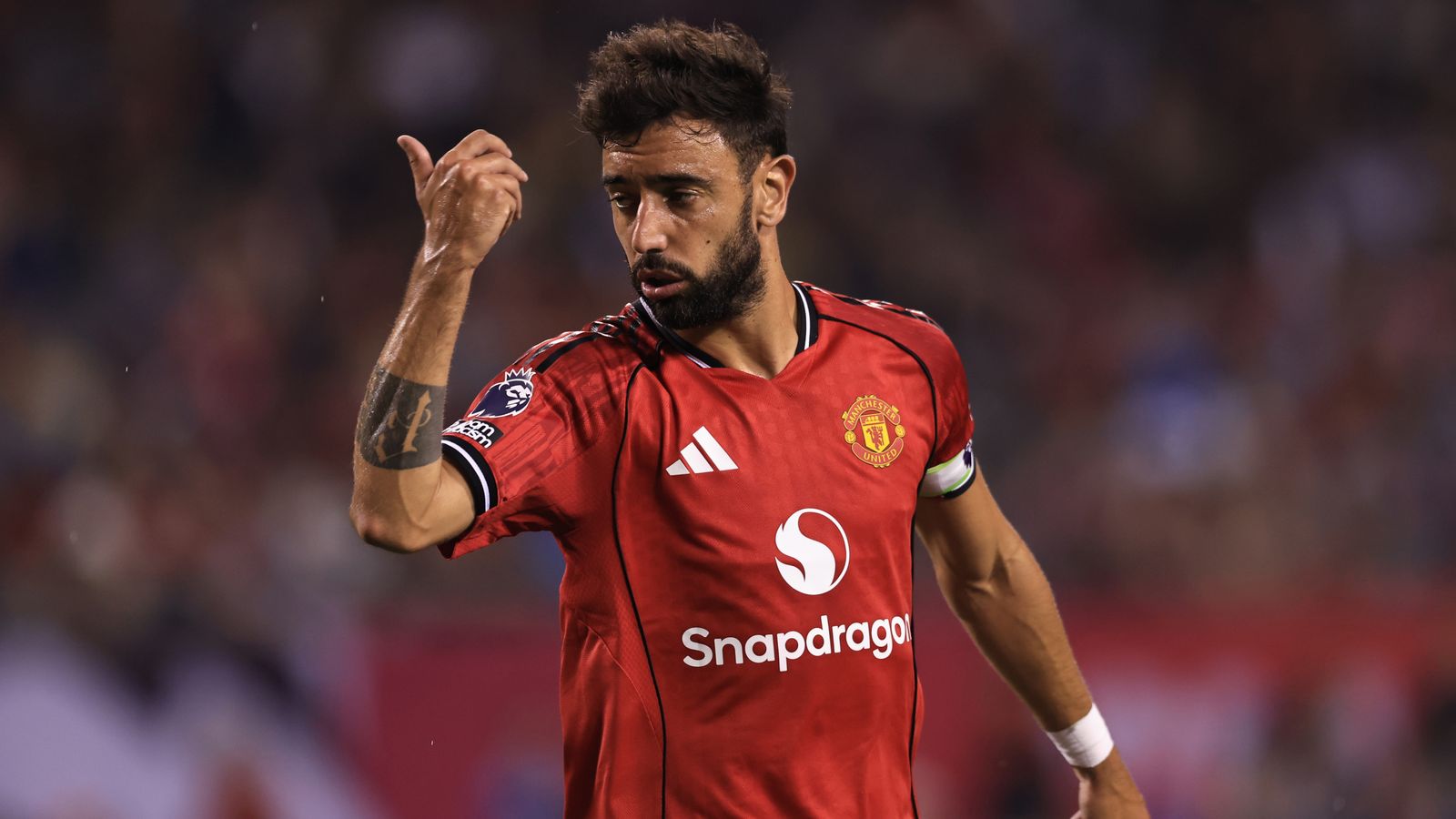
Bruno Fernandes has written his name into Manchester United’s record books once again after becoming the second fastest player in the club’s Premier League era to reach 200 goal involvements. The Portuguese midfielder now sits behind only Wayne Rooney in a landmark achievement that underlines his influence since arriving at Old Trafford. The statistic reflects not just goals scored but assists created, highlighting Fernandes’ importance as both a scorer and a playmaker during a period of transition for the club.
Reaching 200 combined goals and assists is a mark typically associated with legendary forwards, which makes Fernandes’ rise even more notable given his primary role in midfield.
Since joining Manchester United from Sporting CP in January 2020, he has become a central figure in the team’s attacking structure, often carrying creative responsibility. His ability to produce decisive moments has helped define several seasons for the club, even during campaigns where consistency has been questioned.
The pace at which Fernandes reached the milestone places him among elite company. Rooney, widely regarded as one of United’s greatest modern players, remains the fastest to reach the same mark, but Fernandes’ achievement shows how quickly he has adapted to English football. Players such as Cristiano Ronaldo, Ryan Giggs and Paul Scholes also reached the 200 involvement mark during the Premier League era, yet required more appearances to do so, emphasising the scale of Fernandes’ contribution.
What makes this milestone particularly significant is the context in which it arrives. Manchester United have experienced managerial changes, fluctuating league form and rebuilding phases during Fernandes’ time at the club. Despite those challenges, he has consistently delivered goals, assists and leadership on the pitch.
Many supporters and analysts point to his arrival as a turning point that revived United’s attacking identity after a difficult spell in the late 2010s.
Fernandes’ playing style has evolved since his early months in England. Initially known for taking risks with ambitious passes and long range efforts, he has gradually balanced creativity with discipline. Coaches have relied on his versatility, deploying him in deeper roles at times while still expecting him to drive attacks forward. That adaptability has allowed him to maintain strong output numbers even when tactical systems around him have changed.
The midfielder’s relationship with teammates has also been key to his success. Partnerships with forwards and wingers have produced numerous assists, while his movement into scoring positions has made him one of the club’s most reliable finishers from midfield. Penalties have contributed to his goal tally, but open play strikes and late runs into the box remain defining aspects of his game.
Read Also: Somalia Rejects Israeli Base Plan, Warns Of Confrontation
Historically, Manchester United have relied on influential midfielders who combine technical skill with leadership qualities. From Bryan Robson to Paul Scholes, the club’s identity has often been shaped by players capable of controlling matches from central areas.
Fernandes appears to fit within that tradition, though his direct involvement in goals places him closer statistically to attacking forwards than to classic midfield orchestrators.
The comparison with Rooney adds another layer to the achievement. Rooney reached 200 involvements while operating across multiple attacking roles, eventually becoming the club’s all time leading scorer.
While Fernandes plays deeper on average, his consistency in front of goal has sparked debates about how modern attacking midfielders are judged. In an era where pressing, transitions and rapid build up play dominate tactics, midfielders are increasingly expected to deliver forward numbers that rival strikers.
Beyond statistics, Fernandes’ influence can also be seen in his role as captain and emotional leader. His visible passion during matches has drawn both praise and criticism, but teammates frequently speak about his drive to raise standards. That leadership has been particularly important during matches where United have needed moments of inspiration to secure points or change momentum.
Read Also: Why Prince William’s Saudi Visit Poses A Diplomatic Test
Reaching a milestone of this magnitude also reflects durability. The Premier League’s demanding schedule requires players to maintain fitness across domestic competitions, European fixtures and international duty. Fernandes has remained available for long stretches, rarely missing games through injury, which has helped him accumulate contributions at a rapid pace. Consistent selection has allowed him to build rhythm and maintain his impact season after season.
As Manchester United continue to rebuild and chase major honours, Fernandes’ milestone may serve as both a celebration and a reminder of expectations. The club’s history is filled with players whose individual brilliance translated into trophies, and supporters will hope that his productivity leads to sustained team success.
With Rooney still ahead in the record books, the comparison between the two figures is likely to continue, especially as Fernandes approaches further landmarks in appearances and goals.
For now, becoming the second fastest player to reach 200 goal involvements cements Fernandes’ place among Manchester United’s modern icons. The achievement highlights how quickly he has risen from a mid season signing to one of the defining figures of the Premier League era at Old Trafford. Whether he can close the gap on Rooney’s record remains to be seen, but his current trajectory suggests that more milestones could arrive sooner rather than later.