
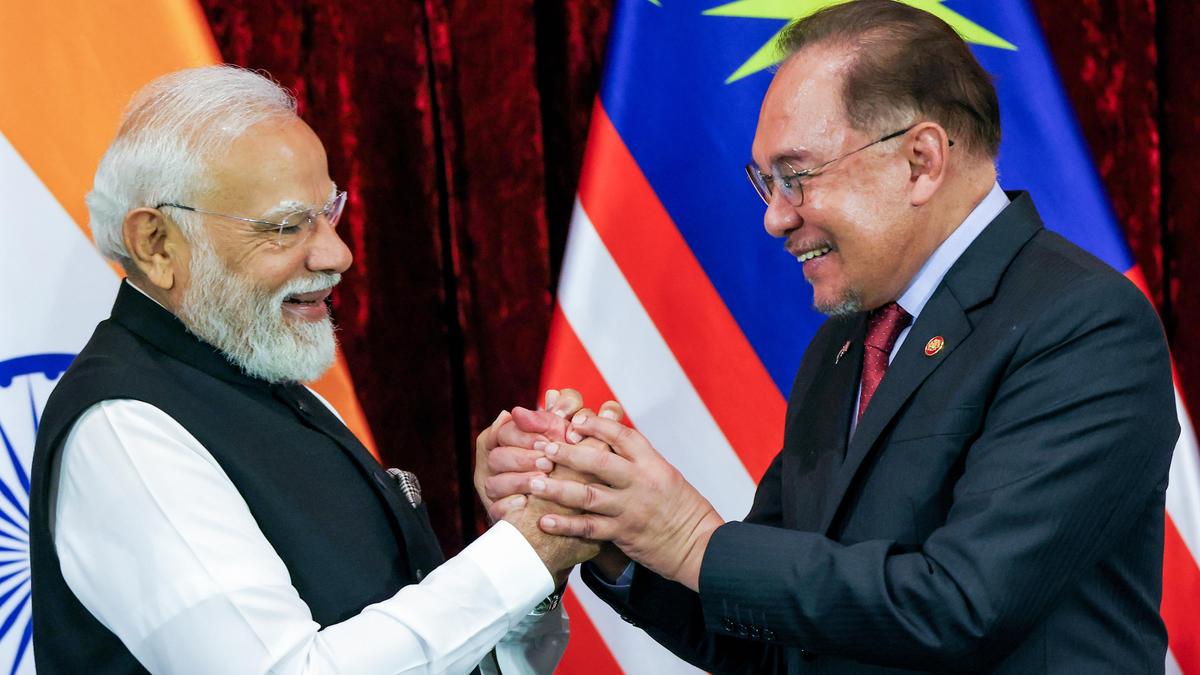
Indian Prime Minister Narendra Modi visited Malaysia this weekend, marking his first trip since the two countries upgraded their relationship to a comprehensive strategic partnership in August 2024. During his visit, Modi met Malaysian Prime Minister Anwar Ibrahim in Putrajaya, where both leaders emphasised strengthening bilateral trade, defense collaboration, and technological cooperation. The leaders highlighted a shared commitment to advancing initiatives across digital technology, semiconductors, health, and food security.
In a welcoming ceremony at Perdana Putra, Malaysia’s administrative centre, Anwar Ibrahim expressed delight in receiving Modi, calling him a close friend. “This meeting and these exchanges are very vital, very strategic and critical to advance and enhance relations between India and Malaysia,” Anwar said. He added that the two governments were committed to executing plans quickly, ensuring that agreements reached would translate into tangible outcomes.
Modi underscored the importance of people-to-people connections in strengthening ties. He mentioned recent initiatives, including a social security agreement, the introduction of gratis e-visas for tourism, and plans to bring India’s Unified Payments Interface (UPI) to Malaysia. These measures, he said, were designed to enhance mobility, trade, and communication between citizens of the two nations, while fostering closer economic and cultural links.
The visit also produced concrete results in the form of 11 signed agreements covering a broad spectrum of areas. These include renewable energy, semiconductors, disaster management, and peacekeeping. Officials described the agreements as a roadmap for long-term collaboration and noted that both countries would work closely to implement them efficiently.
Read Also: Dubai Arrest After Shooting Of Russian General Alexeyev
A significant area of focus during Modi’s visit was cooperation in semiconductors. Malaysia is among the world’s top semiconductor exporters, contributing approximately a quarter of its gross domestic product. India sees Malaysia’s established semiconductor ecosystem as an opportunity for joint research, development, and manufacturing ventures. The Indian Foreign Ministry highlighted Malaysia’s 30 to 40 years of expertise in the sector, noting that Indian companies were keen to collaborate on building testing plants and expanding manufacturing capabilities.
Beyond semiconductors, Modi and Anwar discussed strengthening collaboration on AI and digital technologies. Both leaders agreed that technological innovation could play a key role in accelerating economic growth and improving social outcomes in their countries. Investments in AI-driven healthcare, renewable energy, and disaster management were emphasised as mutually beneficial priorities.
Modi’s visit also sought to reinforce defense and strategic cooperation. As regional dynamics evolve, both India and Malaysia expressed interest in closer military collaboration, joint exercises, and intelligence sharing. These measures aim to enhance security in Southeast Asia and beyond, contributing to regional stability and fostering trust between the two countries.
The two leaders noted that bilateral trade had seen steady growth in recent years, and they discussed strategies to further expand economic ties. Initiatives in digital payments, joint infrastructure projects, and the promotion of sustainable industries were cited as areas with significant potential.
The goal, both sides stated, was to create a partnership that went beyond formal agreements, fostering practical benefits for citizens, businesses, and governments alike.
Read Also: Somalia Rejects Israeli Base Plan, Warns Of Confrontation
Observers say Modi’s visit reflects India’s broader efforts to deepen engagement in Southeast Asia, particularly with nations that have advanced technological and industrial capabilities. Malaysia’s expertise in semiconductors, combined with India’s growing digital economy, creates opportunities for mutually beneficial collaboration. Analysts note that the visit also signals India’s intent to strengthen its regional influence while supporting Malaysia’s economic modernization goals.
The meeting concluded with both leaders expressing optimism about the future of India-Malaysia relations. They pledged continued dialogue, collaboration, and swift execution of signed agreements. Officials highlighted that the visit was not only a diplomatic milestone but also a foundation for enduring economic and technological partnerships in the years ahead.
As Modi departs Malaysia, the agreements signed and initiatives launched are expected to accelerate cooperation in multiple sectors. From semiconductors to renewable energy, defense to digital innovation, both nations appear committed to turning diplomatic engagement into measurable outcomes.
The visit underscores how strategic partnerships can combine political goodwill with concrete economic and technological advancements, setting the stage for deeper ties in South and Southeast Asia.