
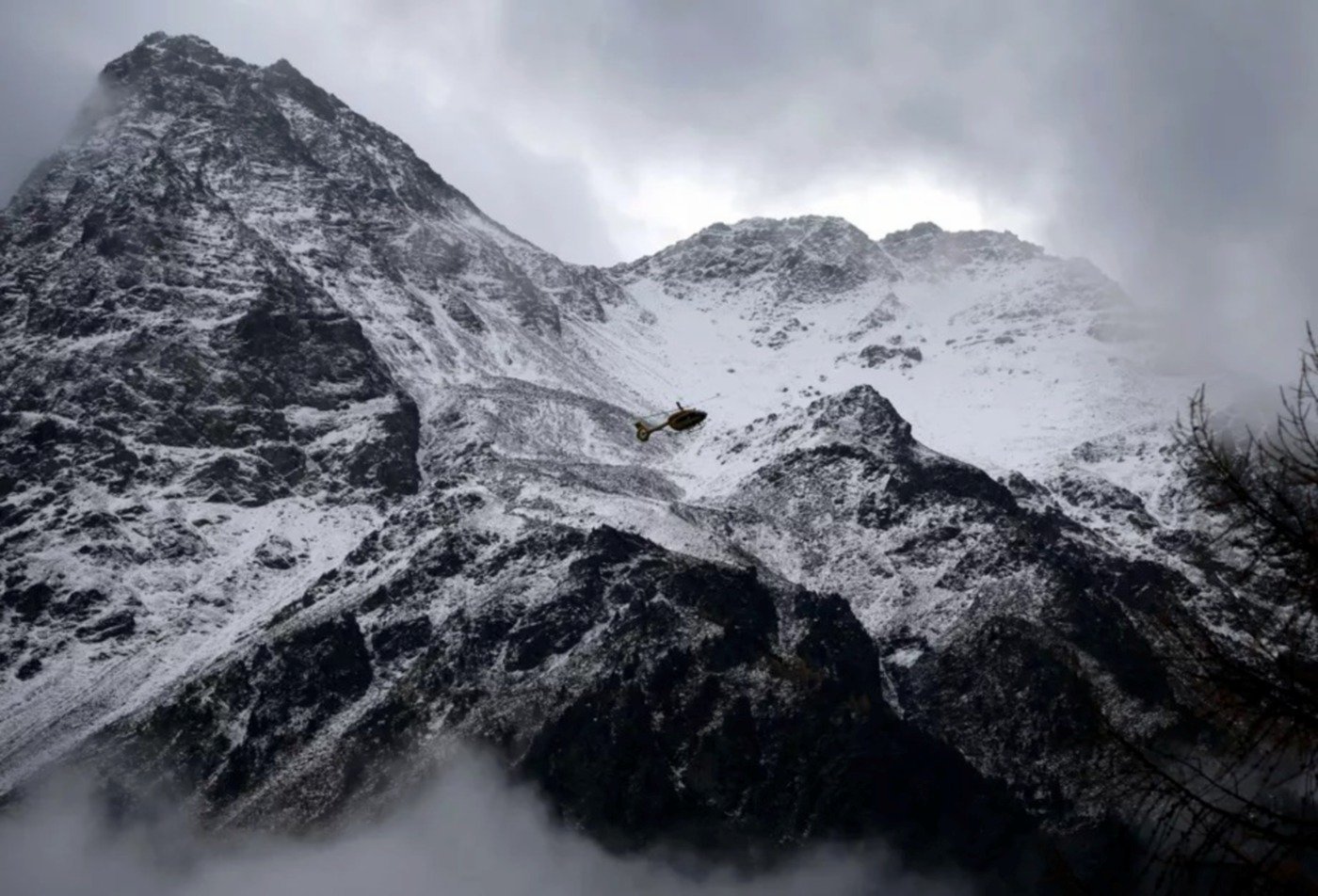
A series of avalanches and mountain accidents across northern Italy has left at least 13 backcountry skiers, climbers and hikers dead over the past week, rescue officials said on Monday, as winter sporting events linked to the Olympic calendar began in several Alpine locations.
Ten of the deaths were caused by avalanches triggered by unstable snow conditions, according to Italy’s Alpine Rescue Corps, which has been coordinating emergency responses across multiple regions. The incidents took place on ungroomed terrain beyond monitored ski areas, largely along the Alpine arc bordering France, Switzerland and Austria. Rescue authorities said recent storms deposited fresh snow onto fragile underlying layers, while strong winds redistributed snow across exposed ridges and slopes. The combination produced conditions in which even limited movement could set off slides. Federico Catania, spokesperson for the Alpine Rescue Corps, said a single skier passing over a weak section or the natural pressure from accumulating snow could be enough to cause a collapse.
Most of the fatalities occurred away from Olympic competition venues in Lombardy near the Swiss frontier and in the Veneto resort town of Cortina d’Ampezzo, as well as cross country skiing areas in Val di Fiemme in the autonomous province of Trentino. Officials stressed that managed pistes and Olympic sites remain under continuous surveillance and are regarded as safe for visitors. “There is no danger for people skiing within managed ski reports, and in particular no risks to the Olympic sites,” Catania said. He added that those locations are closely monitored and subject to strict safety procedures regardless of major sporting events.
Read Also: Italy Winter Olympics Security Plan Detailed Amid ICE Role
The deaths were recorded across several regions during a period marked by volatile weather. Over the weekend alone, rescuers reported two skiers killed in Lombardy, three in Trentino and one in neighbouring South Tyrol. Two of the victims died in separate avalanches near the Marmolada glacier, a high altitude area known for challenging terrain and shifting snowpack conditions. Other fatalities included two hikers, one on Monte Grappa in Veneto and another in the Marche region along the Apennine range, as well as an ice climber in Valle d’Aosta. Authorities said these incidents reflect the broader risks facing mountain visitors during rapid changes in weather and snow stability.
Rescue teams noted that alternating storms and brief periods of clear skies have encouraged a surge in excursions into the backcountry. According to Catania, many enthusiasts have attempted to take advantage of short windows of improved weather following heavy snowfall, increasing exposure to unstable slopes. “As a result the number of accidents, and therefore fatalities, has increased proportionally,” he said.
Italy’s Alpine Rescue Corps has urged anyone planning off piste activity to consult avalanche bulletins issued by regional authorities and to postpone outings until the snowpack has had time to stabilise. Safety guidance typically includes carrying avalanche transceivers, probes and shovels, as well as checking local forecasts before departure.
The recent incidents unfolded as winter sports events connected to the Olympic programme commenced across northern Italy, drawing athletes and visitors to the region. Officials emphasised that the accidents have not affected scheduled competitions, which are held on prepared courses subject to safety controls and continuous monitoring.
In a separate operation over the weekend, Alpine Rescue personnel conducted a helicopter evacuation of American downhill skier Lindsey Vonn after she crashed during a competition in Cortina d’Ampezzo on Sunday. Details of her condition were not immediately released, and organisers did not indicate whether the incident would affect her participation in upcoming races. Mountain rescue organisations across the Alps routinely coordinate responses during the winter season, when snowfall and tourism both increase. Authorities in Italy, France, Switzerland and Austria publish daily avalanche risk assessments, using a standardised scale that ranges from low to very high danger. These bulletins draw on meteorological data, field observations and reports from rescue teams.
Read Also: ICE Winter Olympics Security Role Sparks Backlash In Italy
Experts say that unstable snow layers can persist for days or weeks after heavy storms, particularly when new precipitation settles unevenly over older crusts. Wind can shift snow from one slope to another, building up heavy deposits that appear stable but remain prone to sudden failure.
Rescue officials said investigations into the recent accidents are ongoing, with teams reviewing weather data and survivor accounts to determine the exact sequence of events in each case. Authorities have not announced additional restrictions but said they would continue issuing advisories and monitoring conditions across affected regions in the coming days.