
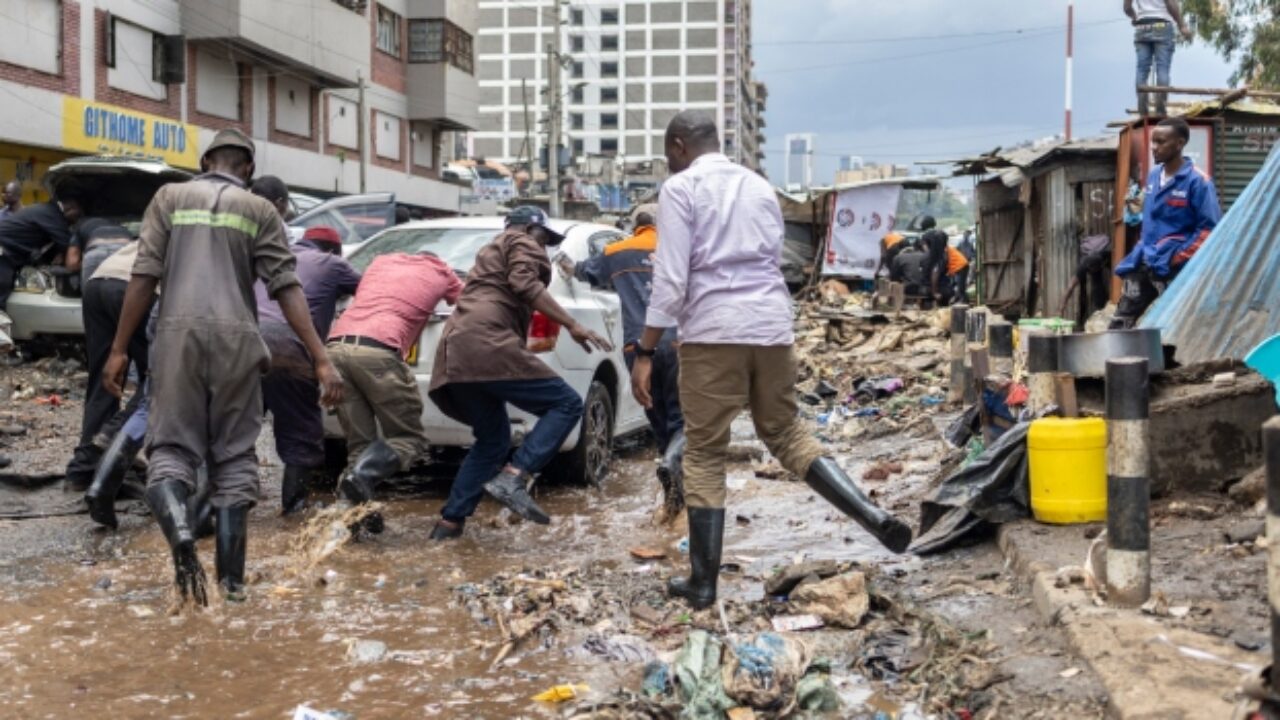
Torrential rain transformed Nairobi into a disaster zone overnight, killing at least 23 people as rivers burst their banks and swept vehicles through streets that became fast-moving channels, trapping motorists and forcing the military to deploy rescue teams across Kenya’s capital.
Police said roughly 30 people had been pulled from floodwaters by Saturday afternoon but warned that many others drowned after being carried into swollen rivers or died from electrocution when power lines collapsed.
Widespread property damage and road closures paralyzed the city as emergency crews struggled to reach neighborhoods cut off by rising water.
Several flights bound for Nairobi’s main airport were canceled or diverted to Mombasa on the coast. Key arteries including Mombasa Road, Uhuru Highway and Kirinyaga Road disappeared beneath water that stalled vehicles and created chaos during the evening rush hour Friday.
“The torrential rains have led to significant flooding, unfortunately resulting in 23 fatalities so far, the destruction of property, road closures, and the displacement of residents,” police said in a statement released Saturday afternoon.
John Lomayan, a 34-year-old security guard working in the industrial Grogan neighborhood, described watching someone he recognized get swept downstream when the Nairobi River overflowed.
The man ended up trapped beneath a car that had been washed away by the current.
Read also: Nairobi Floods Kill Ten, Trap 71 Vehicles As Airport Diverts Flights
“I saw him being carried by the water from up there,” Lomayan told Reuters, pointing up the road. “We didn’t know where he had gone. It is only now that we see him under the car.”
The Kenya Meteorological Department had warned of heavy rainfall across Nairobi and surrounding counties, with projections of 30 to 70 millimeters expected in the capital. River levels are forecast to continue rising through March 9, extending the danger period for communities living near waterways.
Authorities advised residents to avoid flooded streets and drainage channels while responders assisted stranded motorists and pedestrians. Parts of the Westlands district remained submerged, with fast-moving floodwaters preventing access to some areas.
Nairobi, the Central Highlands, the Lake Victoria Basin and coastal regions face heightened alert for peak rainfall in coming days. The meteorological department cautioned about urban flooding and poor visibility that could complicate rescue operations and prolong disruptions to transportation networks.
Last year, hundreds died in Kenya and neighboring Tanzania after heavy rains triggered severe flooding and landslides across both countries.
Read also: War Paralyzes WHO Emergency Hub Operations In Dubai
The disasters highlighted infrastructure vulnerabilities in cities where drainage systems cannot handle extreme weather events that climate scientists say are becoming more frequent and intense.
Kenya’s rainy seasons typically occur from March to May and October to December, but patterns have grown less predictable in recent years. Urban areas like Nairobi, where informal settlements crowd riverbanks and valleys, face particular risks when storms exceed normal rainfall totals.
The military deployment Saturday reflected the scale of the emergency.
Soldiers assisted civilians trapped inside vehicles and helped evacuate residents from low-lying neighborhoods where water continued rising hours after the initial deluge.
Whether the death toll will climb depends partly on how quickly water recedes and whether search teams can reach areas that remained inaccessible Saturday. Police have not provided details about how many people remain missing or unaccounted for following the overnight flooding.
The storm exposed longstanding weaknesses in Nairobi’s infrastructure and disaster preparedness. Despite warnings from meteorologists, the city appeared caught off guard by the intensity of rainfall and the speed with which rivers overflowed their banks.