
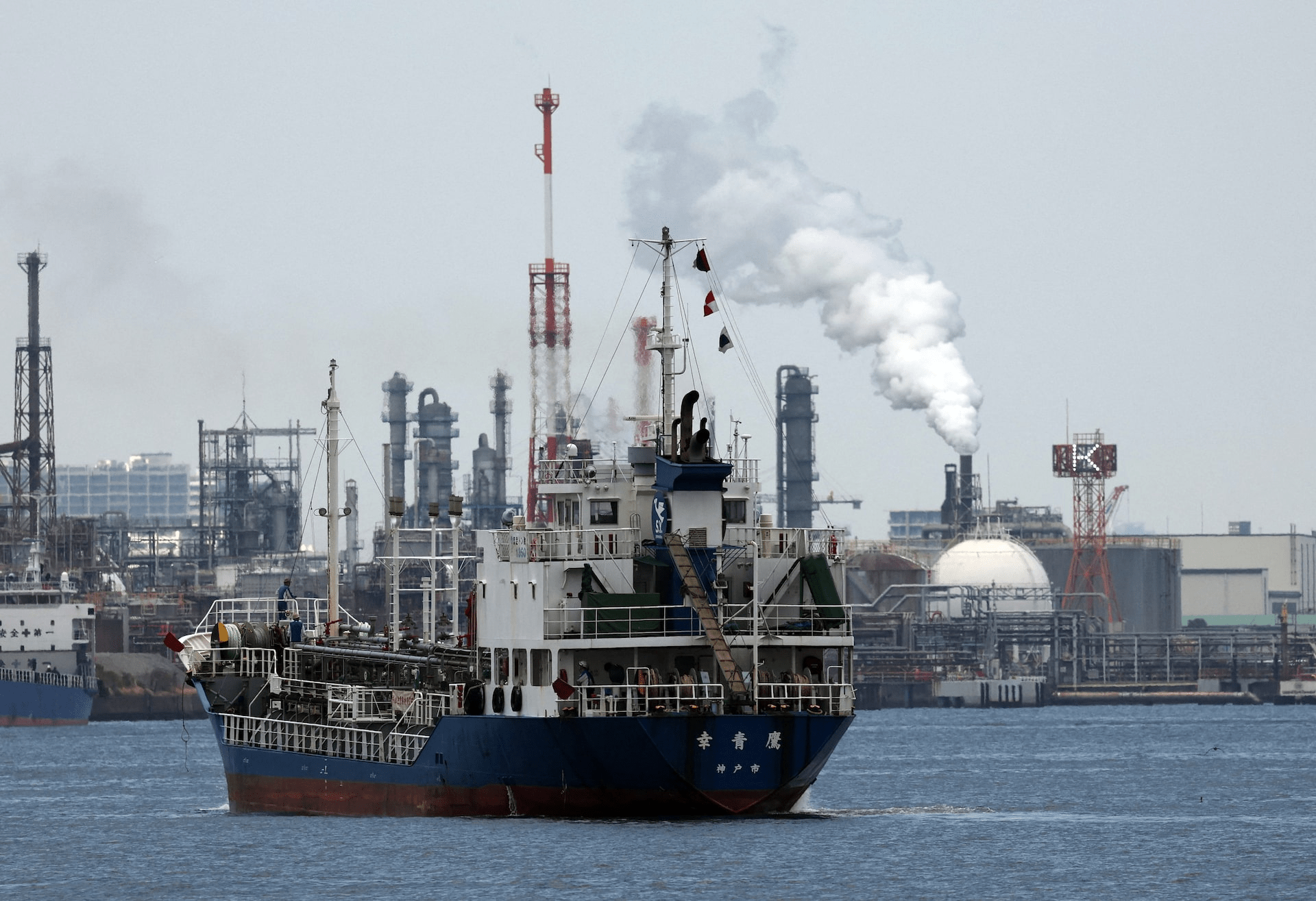
Japan will begin drawing down its government-held strategic oil reserves from Thursday, Prime Minister Sanae Takaichi announced Tuesday, while also moving to tap a rarely used category of stockpile — crude oil held on Japanese soil by Gulf producing nations — before the end of the month.
“In order to secure the necessary amount for the whole of Japan, we will release the state oil reserve from 26th March,” Takaichi posted on X, adding that a release from joint reserves held by oil-producing countries in Japan was also expected to begin in March.
The announcement adds a new layer to an emergency response that has been building in stages since the war in the Middle East began disrupting global energy supplies. To understand why Japan is moving this way — and what these different categories of reserve actually represent — it helps to understand how strategic oil storage works and why a country with almost no domestic oil production builds such an elaborate system of buffers against supply shocks.
Japan imports 95 percent of its oil from the Middle East. That single statistic defines the country’s entire approach to energy security. Unlike the United States, which sits atop substantial domestic reserves and can partially insulate itself from global price shocks, Japan has no such cushion. Every barrel of crude that fuels its factories, powers its grid and moves its vehicles must be purchased on international markets and shipped across sea lanes that run directly through the Persian Gulf — the same waters now disrupted by Iranian attacks on the Strait of Hormuz.
Strategic petroleum reserves exist precisely for this vulnerability. They function as a form of national insurance: large quantities of crude oil stored in underground caverns, purpose-built tanks and designated facilities, held in reserve for precisely the kind of supply emergency Japan is now navigating. Japan’s reserves are among the world’s largest, standing at over 400 million barrels as of December — equivalent to 254 days of domestic consumption, a buffer that reflects decades of investment following the oil shocks of the 1970s, which hit Japan harder than almost any other developed economy.
The reserve system Japan operates has three distinct tiers, each drawing on a different source and governed by different release mechanisms. The first is private-sector reserves — mandatory stockpiles that oil companies operating in Japan are legally required to maintain. Tokyo began releasing 15 days’ worth of these private holdings on March 16. The second tier is government-owned state reserves, the inventory held directly by the national government in dedicated storage facilities. Takaichi’s Thursday announcement activates this layer, adding government crude to the private-sector release already underway.
Read also: Oil Plunges As Trump Pauses Iran Power Plant Strikes
The third tier is the least commonly discussed and arguably the most diplomatically significant: joint reserves held in Japan by foreign oil-producing nations. Saudi Arabia, the United Arab Emirates and Kuwait each maintain crude oil stockpiles on Japanese territory, according to the Petroleum Association of Japan. These arrangements, established through bilateral agreements, allow producing nations to pre-position oil closer to Asian markets — reducing the time and shipping cost of getting crude to buyers when demand spikes. In exchange, Japan gains access to additional oil that can be released into its domestic market during a supply crisis. Takaichi confirmed Tuesday that this reservoir will also be opened before March ends.
The mechanism by which reserve releases stabilise markets operates through both physical supply and price psychology. On the physical side, releasing stored crude increases the volume of oil available for refining into gasoline, diesel and jet fuel, reducing the gap between supply and demand that has been driving prices higher. On the psychological side, a large, credible release signals to commodity traders that consuming nations will not allow supply disruption to go unchecked — a signal that can dampen speculative buying and reduce the premium that fear of shortage adds to the oil price.
Both mechanisms are currently being tested at unprecedented scale. Members of the International Energy Agency agreed on March 11 to collectively release 271.7 million barrels of government-managed stocks worldwide — the largest coordinated reserve deployment in the agency’s history. Japan, as one of the IEA’s largest and most vulnerable members, is contributing to that collective response while simultaneously managing its own domestic exposure through the layered release Takaichi outlined Tuesday.
Read more: Trump Eyes Wind-Down In Iran War But Israel Warns Of Surge
The staggered nature of Japan’s approach — private reserves first, then government stocks, then joint production-nation holdings — reflects a deliberate sequencing logic. Each successive layer draws on a different legal and institutional framework, requires different notification and activation procedures, and carries different implications for the relationships involved. Releasing Saudi and Emirati crude held in Japan requires coordination with those governments, adding a diplomatic dimension to what might otherwise appear to be a purely technical operation.
Japan’s 254-day reserve buffer means it can sustain current release rates for an extended period without approaching critical depletion. The question is not whether Japan has enough stored oil to weather the current crisis — it almost certainly does. The question is how long the Strait of Hormuz remains disrupted, and whether the combined reserves of IEA member nations collectively prove sufficient to hold energy markets stable until that question finds an answer.
Thursday’s release will not resolve that uncertainty. It will, however, confirm that Japan is deploying every instrument in its energy security architecture — private, public and diplomatic — to manage a crisis that its geography and import dependency make uniquely dangerous.