
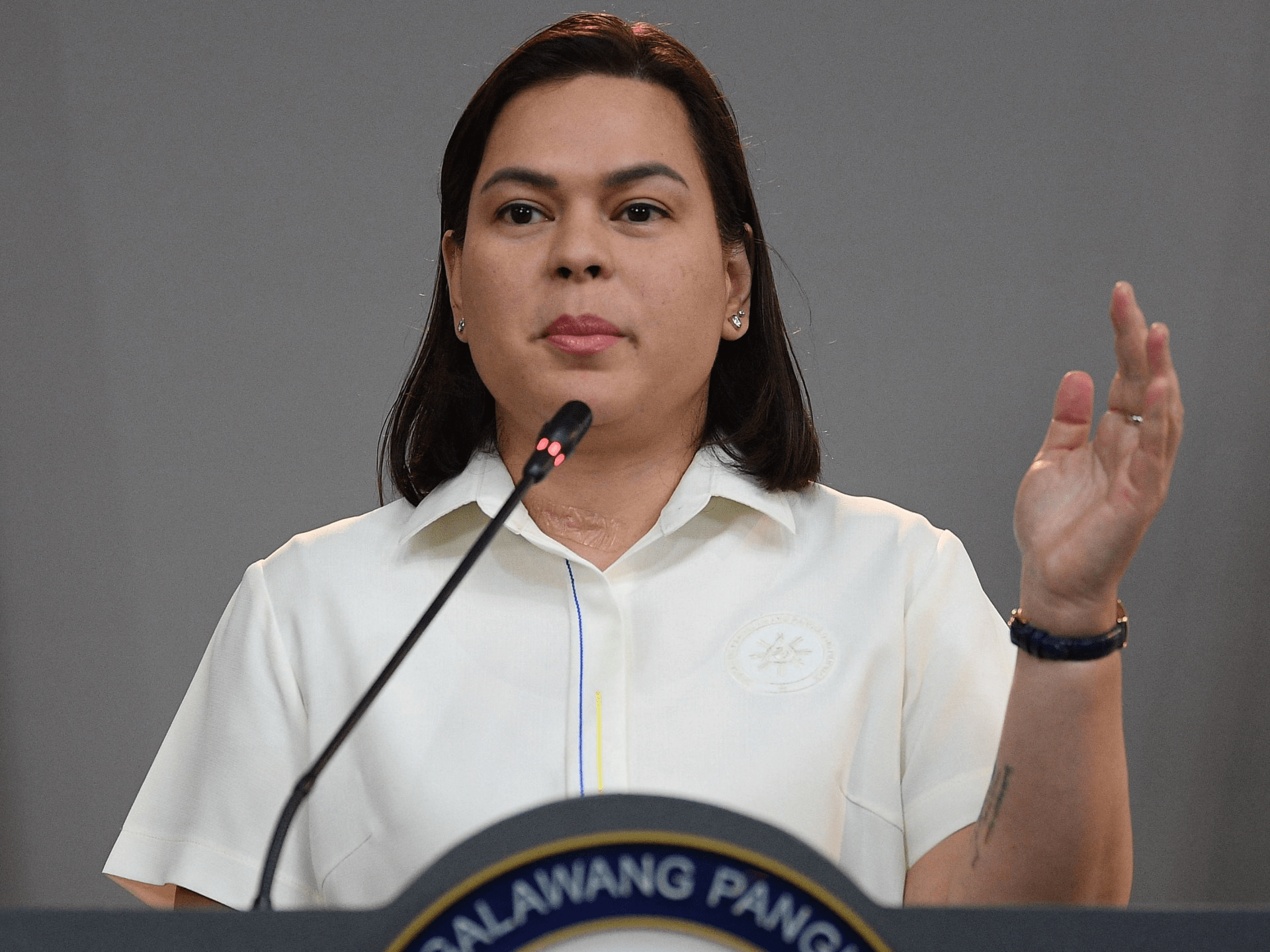
Public hearings opened in the Philippine Congress on Tuesday on the impeachment case against Vice-President Sara Duterte, the latest escalation in a feud between two of the country’s most powerful political dynasties that has consumed Manila’s politics for more than a year and could end her career before it reaches its intended destination.
The House Committee on Justice began examining evidence and Duterte’s written response to charges that include misuse of public funds and threatening to kill President Ferdinand Marcos Jr., his wife, and the House Speaker. Duterte, 47, has denied all wrongdoing and dismissed the proceedings as a political “fishing expedition.” She has been invited to appear before the committee but had not confirmed attendance at the time hearings began.
The case is the second impeachment attempt against her in just over a year. The first, filed in February 2025, was struck down by the Supreme Court on technical grounds — Philippine law prohibits multiple impeachment proceedings against the same official within a single year. That ruling gave Duterte a twelve-month shield. Complaints were filed the moment it expired, this time from civil society leaders, Catholic priests and left-wing groups rather than from politicians alone, a broadening of the coalition against her that the Marcos camp has clearly been cultivating.
For the hearings to produce a trial, the committee must first forward its findings to the full House, where one-third of members must vote to approve Articles of Impeachment. The case would then move to the Senate, where all 24 senators would sit as judges under the presiding officer of the Supreme Court’s chief justice. Conviction requires a two-thirds majority and would result in Duterte’s removal from office and permanent disqualification from running in future elections.
Read also: China Arrests Fentanyl Precursor Traffickers In Hubei
That last consequence is the crux of everything. Duterte announced her candidacy for the 2028 presidential election just weeks before the House hearings began — a move that transformed what might have been a legal proceeding into an existential political confrontation. A conviction does not merely end her term. It ends her shot at the presidency she has been building toward, the office her father once held and from which he deployed the brutal drug war that has since landed him at The Hague facing crimes against humanity charges before the International Criminal Court.
The story of how Sara Duterte went from Ferdinand Marcos Jr.’s closest political ally to his most dangerous domestic adversary is one of Philippine democracy’s more spectacular recent dramas. Their 2022 electoral alliance — the children of two former strongmen, one a convicted plunderer later rehabilitated by the courts, the other a death squad president facing international justice — was hailed as a dream ticket and won by a landslide. The cracks appeared almost immediately. Duterte wanted the defence portfolio. She got education instead. The alleged financial misconduct at the centre of the current charges dates to her time running that ministry.
By late 2024, what had been managed tension broke into open warfare when Duterte went on a late-night live stream and declared that she had told someone that if she were killed, they should kill Marcos, First Lady Liza Araneta, and House Speaker Martin Romualdez. The statement was extraordinary even by the standards of Philippine political theatre — a sitting vice-president publicly threatening the president and his inner circle on social media. It accelerated the legal machinery that the Marcos camp had already set in motion.
The most dramatic blow came in March 2025, when Marcos allowed Interpol to arrest Rodrigo Duterte and transfer him to The Hague, where he is now detained pending a determination of whether he should stand trial. The elder Duterte’s arrest on international warrant while his daughter was already facing impeachment sharpened the conflict into something that resembles less a political dispute than a dynastic war.
Read also: Philippines Dismisses China’s Sweeping Sea Sovereignty Bid
The structural conditions for exactly this kind of conflict are baked into the Philippine system. The president and vice-president are elected on separate tickets, meaning they may come from opposing camps or, as in this case, former allies whose interests diverge once in office. A president limited to a single six-year term has every incentive to consolidate influence before it expires. A vice-president eyeing the presidency has every incentive to build an independent base rather than serve the president’s agenda. History shows this tension reliably produces friction.
The precedents for impeachment in the Philippines offer little comfort about where this ends. Joseph Estrada’s 2000 Senate trial gripped the nation and ended when his lawyers blocked key evidence, triggering a military-backed uprising that toppled his government. The only completed impeachment process since the restoration of democracy in 1986 was that of Supreme Court Chief Justice Renato Corona, convicted in 2012 of misdeclaring his assets.
What the Senate does with Sara Duterte’s case — if the House votes to send it there — will be shaped by political calculations that have little to do with the evidence the committee is now beginning to examine. In the Philippines, as elsewhere, impeachment is politics conducted in legal language. The hearings have started. The war has been running for longer.