
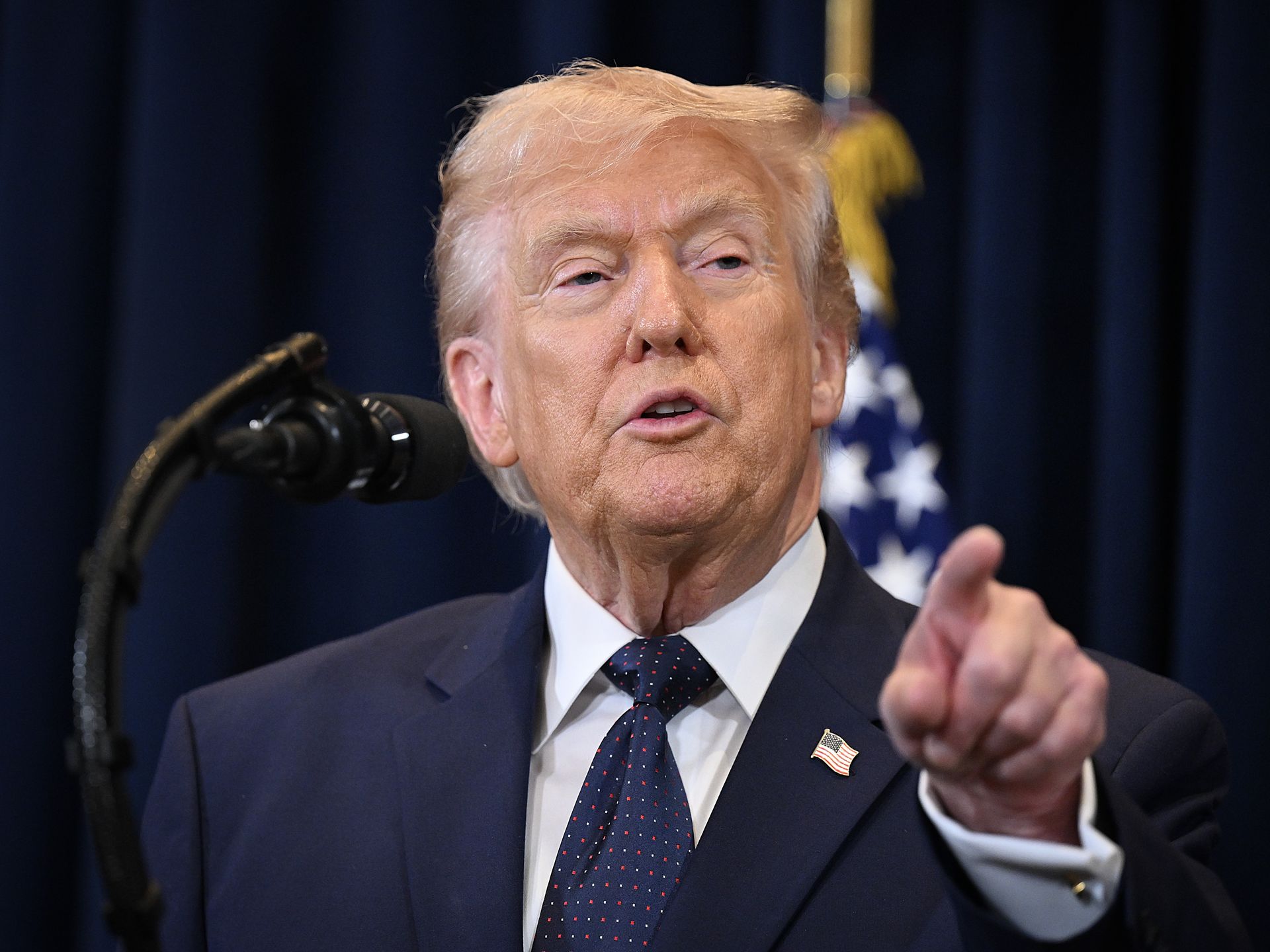
President Donald Trump disclosed Thursday that the mysterious “present” he said Iran had delivered earlier in the week was the passage of 10 oil tankers through the Strait of Hormuz, a limited but symbolically significant gesture that Washington had specifically requested as a diplomatic signal, even as the war entered its 27th day with no ceasefire in sight and Iran’s navy chief was killed in a new Israeli strike.
Trump made the disclosure at a Cabinet meeting in the White House, recounting how Washington had asked Tehran through intermediaries to demonstrate it was a credible negotiating partner.
“They said, ‘To show you the fact that we’re real and solid and we’re there, we’re going to let you have eight boats of oil, eight boats, eight big boats of oil,'” Trump said. He described watching news coverage showing tankers moving through the waterway. “I said, ‘Well, I guess they were right, and they were real, and I think they were Pakistani-flagged,'” he added. An Iranian follow-up, which Trump described as an apology linked to a separate point of friction, expanded the gesture to 10 vessels.
A senior U.S. official and a senior Arab diplomat confirmed to The Times of Israel that when the Trump administration began passing messages to Tehran through mediators over the weekend to test whether a diplomatic off-ramp was possible, it asked Iran to make a goodwill gesture. In response, Iran agreed to allow a number of fuel tankers not linked to the United States or Israel to transit the strait in order to help calm global markets. However, independent verification of the specific tankers described by Trump proved difficult. No public reporting confirmed eight Pakistani-flagged tankers crossing the channel, and none of the vessels that had been successfully reported transiting the strait since Sunday appeared to be Pakistani-flagged. The White House did not respond to requests for additional details on the identities or flags of the vessels.
The Arab official acknowledged that the safe passage of a small number of tankers was unlikely to have a significant or lasting impact on global oil prices, a broader concession that Iran was not yet prepared to offer while U.S. and Israeli strikes continued. The Strait of Hormuz has been effectively closed since the war began on February 28, disrupting the flow of roughly a fifth of the world’s oil supply and driving energy and food prices higher across Asia, Europe, and beyond.
Read Also: Germany Backs U.S.-Iran Peace Talks
At the same Cabinet meeting, Trump’s special envoy Steve Witkoff said the United States had presented Iran with a 15-point framework for ending the war, which he described as a comprehensive peace proposal. Witkoff said Trump had directed him to “maintain confidentiality on the specific terms and not negotiate through the news media,” adding only: “I can say this, we will see where things lead.” Trump sought Witkoff’s permission before discussing the tankers publicly, a procedural aside that underscored the sensitivity of the channel.
Despite the diplomatic signals, Trump’s own statements at the meeting were contradictory in tone. He said the United States did not “need” the Strait of Hormuz, citing domestic energy production, and suggested he was not urgently seeking a deal. “I read a story today that I’m desperate to make a deal,” he said. “I don’t care about making a deal. It’s up to them.” He added that U.S. forces still had additional targets “to hit before we leave.” Defense Secretary Pete Hegseth said the military campaign was “way ahead of schedule,” reiterating a claim that the coalition had degraded roughly two-thirds of Iran’s missile and drone production capacity.
The day’s most consequential military development came in a separate announcement. Israel’s defense minister confirmed that Rear Admiral Alireza Tangsiri, the commander of the Islamic Revolutionary Guard Corps navy and the official described as principally responsible for the near-total blockade of the Strait of Hormuz, had been killed in an Israeli operation. The claim was corroborated by U.S. Central Command. Iranian authorities had not commented on the reports as of Thursday evening.
Read Also: Turkey Shuttles Messages Between U.S. & Iran To End War
Iran’s public posture remained one of rejection. Foreign Minister Abbas Araghchi said Tehran had “complete doubt” about Washington’s willingness to negotiate and dismissed the diplomatic framing as an attempt to project momentum that did not exist. Iranian media reported that Tehran viewed the tanker episode not as evidence of diplomatic progress but as a unilateral economic accommodation that carried no political implications. Iran has separately advanced its own conditions for ending hostilities, including war reparations, the lifting of all U.S. sanctions, and formal sovereignty over the Strait of Hormuz, conditions Washington has publicly rejected.
Trump on Monday had separately floated the possibility of joint U.S.-Iranian control over the strait, suggesting the waterway could be managed by “me and the ayatollah” as part of a broader resolution. Iran’s counter-proposal, which includes full sovereign control of the passage, was offered in response to Washington’s 15-point plan, though neither document’s full text has been published by either government.
Secretary of State Marco Rubio, speaking at the same Cabinet session, said the other G7 nations had strong incentives to help reopen the Strait of Hormuz.
“The other countries get far more of their fuel from there than we do,” he said, when asked whether Washington would seek allied assistance in restoring shipping through the waterway.
No confirmed date or venue for direct talks between the United States and Iran has been established. A senior IAEA official has said negotiations in Pakistan could come as early as this weekend. Iran has not confirmed that assessment.