
India cut excise duties on petrol and diesel to their lowest levels in years on Friday, absorbing an estimated 1.55 trillion rupees in lost annual revenue to prevent domestic fuel prices from surging as the Iran war drives crude oil past $122 a barrel and the near-closure of the Strait of Hormuz squeezes supplies to the world’s third-largest oil importer.
India’s finance ministry reduced the special excise duty on petrol from 13 rupees per litre to 3 rupees, and eliminated the 10-rupee-per-litre levy on diesel entirely, effective immediately. The changes were published in a gazette notification late Thursday and took force the following morning. Simultaneously, the government reimposed export levies on diesel and aviation turbine fuel to prevent the domestic supply from being diverted abroad. Finance Minister Nirmala Sitharaman said the 21.5-rupee-per-litre duty on diesel exports and the 29.5-rupee-per-litre levy on aviation fuel exports were designed to “ensure adequate availability of these products for domestic consumption.”
Petroleum Minister Hardeep Singh Puri said international crude prices had surged from roughly $70 a barrel to approximately $122 since the war began on February 28, a rise he described as having “gone through the roof.” The government, he said, had chosen to absorb the increase rather than pass it on. “The government has taken a huge hit on its taxation revenues to ensure very high losses of oil companies, approximately 24 rupees per litre for petrol and 30 rupees per litre for diesel, at this time of sky-high international prices, are reduced,” Puri said.
Economists estimated the annualised fiscal cost at approximately 1.55 trillion rupees, equivalent to $16.3 billion. Madhavi Arora of Emkay Global said the cuts would absorb between 30 and 40 percent of the annual losses being incurred by state-owned oil marketing companies on domestic auto fuel at current prices. The yield on India’s 10-year government bond rose seven basis points to 6.95 percent, its highest level in 20 months, as markets priced in the broader fiscal deterioration. Shares of Hindustan Petroleum, Bharat Petroleum, and Indian Oil Corporation rose at the open before paring gains.
Read Also: Iran Permits Tanker Passage Through Hormuz As “Goodwill” Present
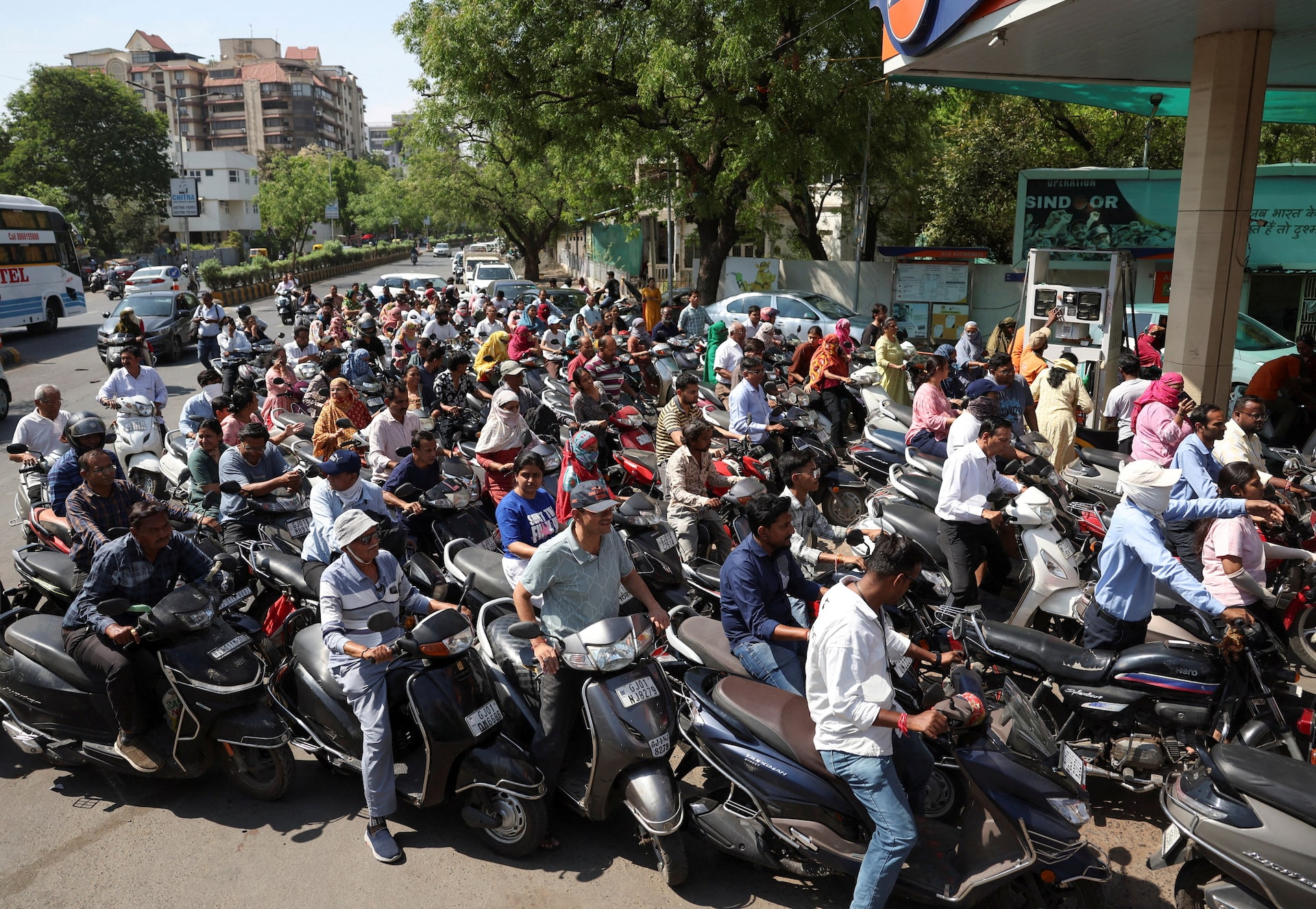
Despite the tax reduction, retail pump prices for ordinary consumers are unlikely to fall immediately, or at all. Fuel prices in India have been effectively frozen since April 2022, with state-run oil companies absorbing losses when global crude is high and banking profits when it is low. The excise cuts will primarily reduce the losses incurred by those companies rather than translate into lower prices at the forecourt. Private retailer Nayara Energy, which operates roughly 6,967 fuel outlets, had already raised prices unilaterally. Reliance’s Jio-bp network had not done so as of Friday, despite incurring losses on every litre sold.
The Petroleum Ministry pushed back against what it described as a wave of misinformation about fuel availability.
“All one lakh-plus retail fuel outlets across the country are open and dispensing fuel without interruption. Not a single outlet has been asked to ration supply,” it said. Puri separately denied rumors circulating on social media that the government was planning a lockdown in response to the energy crisis, calling them “completely false” and saying India was “resilient.” The government stressed that current reserves were sufficient to cover 74 days of domestic consumption, and that adequate arrangements were in place for fertilizer supplies ahead of the summer sowing season and coal for power generation.
The stakes for India are considerable. The Strait of Hormuz serves as a conduit for approximately 40 percent of India’s crude oil imports, and the near-closure of the waterway since February 28 has created supply pressures that India has managed through alternative routes and emergency reserve drawdowns. Between April 2025 and January 2026, India exported 14 million metric tonnes of gasoline and 23.6 million tonnes of gasoil, mostly through Reliance Industries. The new export taxes will curtail those outflows sharply.
Read Also: Trump To Ease Oil Penalties As Iran Conflict Shakes Markets
India’s private-sector activity slowed to its lowest level since October 2022 in March, with the HSBC flash Purchasing Managers’ Index citing the Middle East conflict, unstable market conditions, and intensifying inflation pressures as factors weighing on growth. Cost inflation is running near a four-year high. One analyst estimated that if oil settles at $85 to $95 per barrel after the war, it could lead to incremental capital outflows of $40 billion to $50 billion, more than one percent of India’s GDP, and trim economic growth from 7.2 percent to 6.5 percent.
The government has not specified how long the emergency duty structure will remain in place. Its duration will depend on the trajectory of global oil prices and whether diplomatic efforts to reopen the Strait of Hormuz produce results before April 6, the deadline President Trump has set for resuming attacks on Iranian energy infrastructure.