
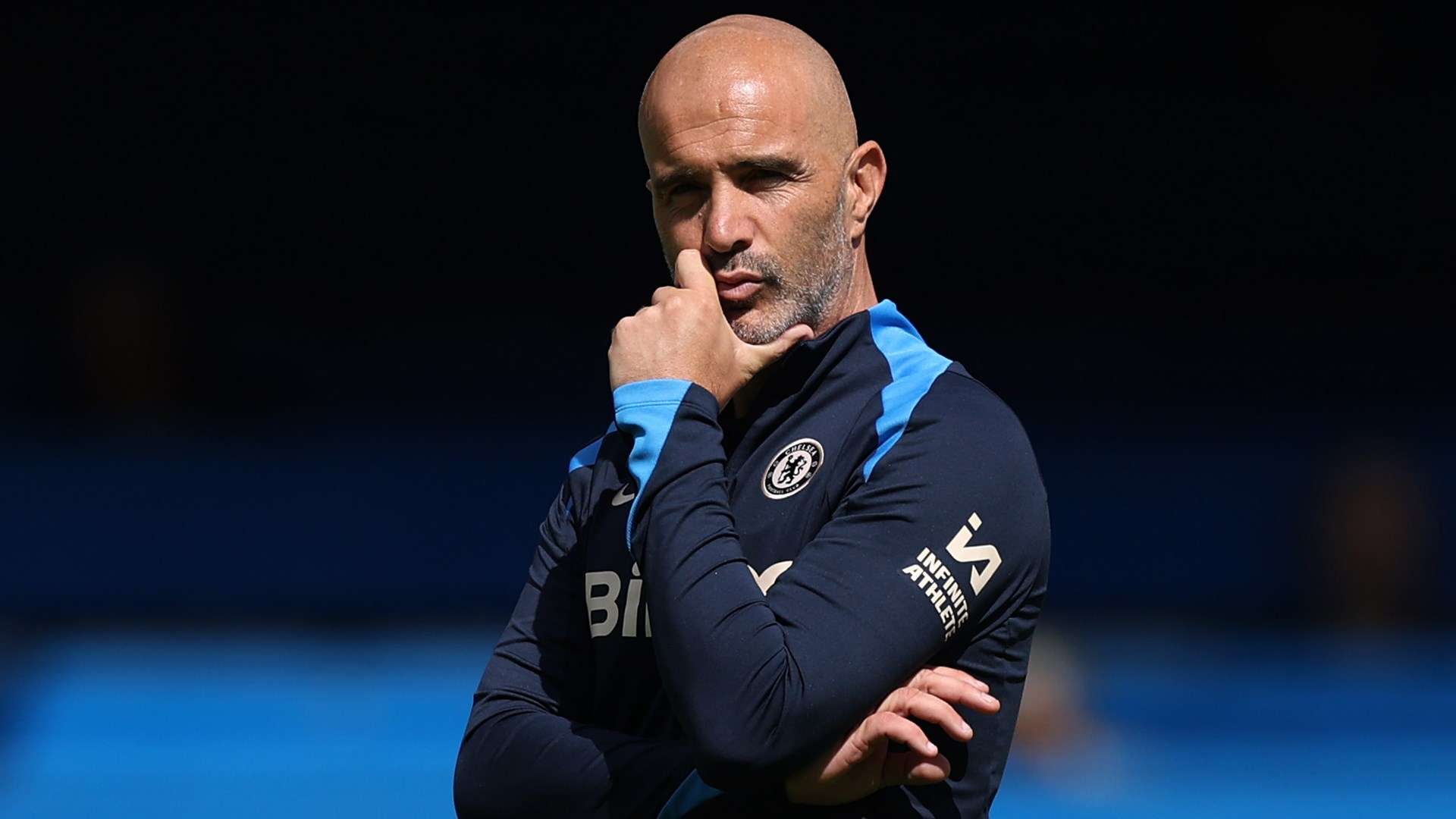
Manchester City are already laying the groundwork for a post-Guardiola era, with internal planning increasingly focused on a succession model that prioritizes continuity over disruption. At the center of that long-term strategy is Enzo Maresca, who has emerged as the leading candidate to eventually replace Pep Guardiola when the current cycle at the club comes to a close.
The timing of that transition remains fluid. Guardiola’s tenure, one of the most influential managerial periods in modern football, could extend through the next two seasons or conclude earlier depending on evolving circumstances. What is clear, however, is that Manchester City’s leadership is not approaching succession as a reactive decision. Instead, the club appears to be executing a structured and forward-looking plan designed to preserve the tactical and institutional identity that has defined its recent dominance.
Read Also: Haftar Obtains Combat Drones In Defiance Of UN Arms Ban
Maresca’s positioning within that framework reflects more than opportunistic interest. His association with City is rooted in familiarity with the club’s internal philosophy and operational structure. Having previously worked within the City Football Group ecosystem, he is seen as a figure capable of sustaining the positional play principles and high-control football that Guardiola has embedded across the organization. This continuity is not incidental; it is central to how City conceive of long-term success.
The significance of Guardiola’s eventual departure cannot be overstated. Since his arrival, Manchester City have undergone a profound transformation, not only in terms of silverware but also in the articulation of a distinct footballing identity. Under his leadership, the club has become synonymous with structured build-up play, spatial control, and tactical precision. Replacing such an influence requires more than identifying a successful coach; it demands a candidate who can operate within an established system while also adapting it to new competitive realities.
In this context, Maresca’s candidacy is shaped by both his technical credentials and his alignment with the club’s broader philosophy. His managerial approach has drawn heavily from the positional frameworks popularized by Guardiola, emphasizing structured possession, disciplined spacing, and controlled progression through the thirds. These characteristics have made him an attractive option for a club intent on minimizing systemic disruption during a leadership transition.
Manchester City’s approach reflects a broader trend among elite European clubs, where succession planning is increasingly institutionalized. Rather than seeking high-profile external appointments at moments of transition, clubs are investing in managerial profiles that can integrate seamlessly into existing sporting structures. This model reduces the risks associated with abrupt philosophical shifts and helps maintain continuity across recruitment, player development, and tactical execution.
Financial considerations also play a role, albeit indirectly. Stability at managerial level supports long-term investment strategies, ensuring that player acquisitions align with a consistent tactical framework. For Manchester City, whose squad has been assembled with specific positional and technical demands in mind, the appointment of a philosophically aligned successor is essential to preserving the value of that investment.
The timeline under discussion—whether a transition occurs next summer or extends to 2027—introduces a degree of strategic flexibility. It allows the club to monitor Maresca’s continued development while also assessing broader market conditions. Should Guardiola choose to extend his tenure, City retain the option of delaying the transition without disrupting their overarching plan. Conversely, if an earlier departure becomes necessary, the groundwork for succession is already in place.
For Maresca, the potential appointment represents a significant professional milestone. Taking charge of a club operating at the highest level of European competition would place him under immediate and sustained scrutiny. Expectations at Manchester City are not limited to domestic success; they encompass consistent performance in continental tournaments and the maintenance of a distinct playing identity. Navigating these demands would require both tactical acumen and institutional awareness.
The dynamics of succession also carry implications for the dressing room. Guardiola’s influence extends beyond tactical instruction to encompass leadership culture and player relationships. Any successor must not only replicate elements of his footballing philosophy but also command authority within a squad accustomed to a highly demanding and detail-oriented environment. Maresca’s prior exposure to similar systems may offer an advantage in this regard, though the transition from assistant roles and smaller managerial contexts to leading a global powerhouse presents its own challenges.
From a broader perspective, Manchester City’s planning underscores the increasing professionalization of football governance. The club’s ownership structure and executive leadership have consistently emphasized long-term strategy over short-term reaction. Identifying a successor well in advance of a managerial departure is consistent with this approach, reflecting a desire to manage change proactively rather than respond to it under pressure.
The potential appointment of Enzo Maresca also raises questions about the evolution of managerial careers. His trajectory illustrates a pathway in which tactical alignment and institutional familiarity can be as significant as headline achievements. In an environment where elite clubs prioritize coherence and continuity, such attributes are increasingly valued alongside traditional measures of success.
For Guardiola, the prospect of a planned succession may offer a measure of stability as he approaches the latter stages of his tenure. Knowing that the club has identified a successor aligned with his principles could facilitate a smoother transition, preserving elements of his legacy within the organization. At the same time, it reinforces the notion that Manchester City’s identity extends beyond any single individual, however influential.
Read Also: Rashford Transfer Picture Shifts As Key Detail Emerges
The coming years will ultimately determine how this strategy unfolds. Much will depend on Guardiola’s own timeline, Maresca’s continued progression, and the evolving competitive landscape within European football. Yet the contours of Manchester City’s approach are already visible: a commitment to continuity, a preference for structural coherence, and a recognition that sustained success requires careful planning at every level of the organization.
In positioning Enzo Maresca as the leading candidate to follow Pep Guardiola, Manchester City are not merely identifying a future manager. They are defining the terms of their next phase, seeking to ensure that the principles underpinning their recent dominance remain intact even as leadership evolves.