
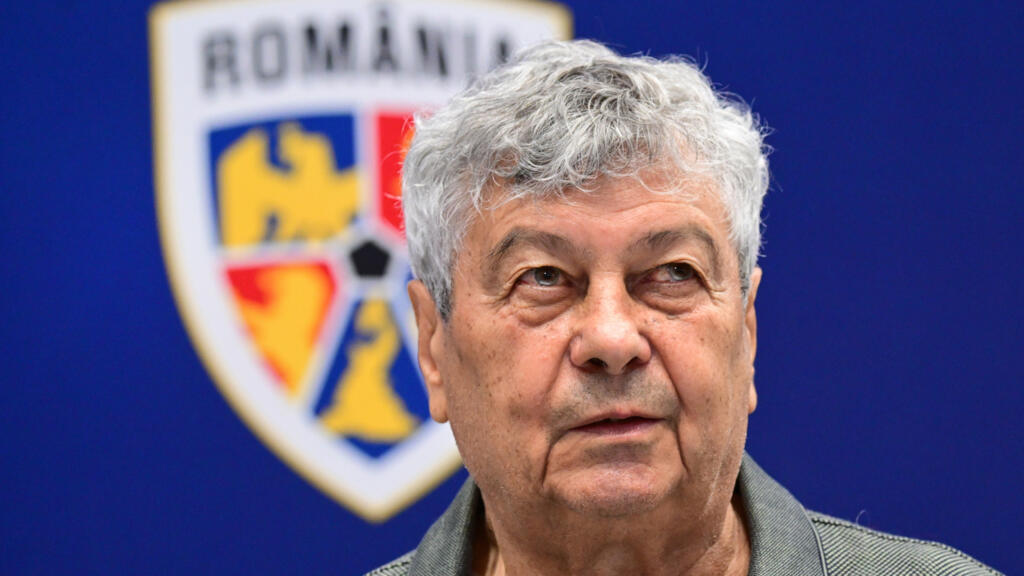
The death of Mircea Lucescu at the age of 80 marks the end of one of the most enduring and influential managerial careers in modern football, closing a chapter that spanned decades, continents, and multiple generations of the game.
Lucescu’s passing is not only a moment of reflection for European football but also for the broader global sporting community, where his work helped shape tactical evolution, player development, and the institutional growth of clubs across Eastern and Western Europe. His career, defined by longevity and adaptability, positioned him among a select group of managers whose influence extended well beyond the touchline.
Read Also: Weakened Hormuz Resolution Faces UN Vote Tuesday
Born in Romania, Lucescu emerged during a period when Eastern European football operated within a distinct political and sporting framework. His early managerial years were closely tied to the domestic game, where he built a reputation for discipline, organization, and a deep understanding of player psychology. These qualities would later define his approach as he transitioned to larger stages.
His tenure across clubs in Romania laid the foundation for a career that would become increasingly international. Lucescu’s ability to navigate different football cultures proved central to his success. He managed in Italy, Turkey, and Ukraine, among other countries, adapting his methods to varying tactical traditions and institutional expectations. This capacity for reinvention allowed him to remain relevant in a sport that has undergone significant transformation over the past half-century.
One of the defining aspects of Lucescu’s career was his work in Eastern Europe, particularly during periods of transition following the end of the Cold War. Football clubs in the region were undergoing structural and financial changes, requiring leadership that combined tactical expertise with institutional rebuilding. Lucescu’s role in this context extended beyond coaching; he became a figure capable of stabilizing and advancing organizations navigating uncertain environments.
His achievements in European competitions further solidified his reputation. Lucescu demonstrated an ability to compete at the highest level while working with squads that often operated outside the financial elite of the sport. His teams were characterized by tactical discipline, technical balance, and an emphasis on collective structure over individual prominence. These qualities enabled him to achieve success in environments where resource constraints demanded strategic precision.
In Turkey, Lucescu’s impact was particularly notable. His time in the country coincided with a period of growing ambition among domestic clubs seeking to establish themselves on the European stage. Through his leadership, he contributed to raising competitive standards and enhancing the international profile of Turkish football. His influence extended into player development, where he worked with emerging talents and helped integrate them into systems capable of competing at higher levels.
Similarly, his tenure in Ukraine stands as one of the most significant chapters of his career. At Shakhtar Donetsk, Lucescu oversaw a period of sustained success, both domestically and in European competitions. Under his guidance, the club developed a distinctive identity, combining local talent with international recruitment, particularly from South America. This model not only delivered results but also reshaped perceptions of what clubs from the region could achieve.
Lucescu’s approach to management was rooted in a detailed understanding of the game’s technical and tactical dimensions. He was known for his meticulous preparation, his emphasis on positional awareness, and his ability to adjust strategies in response to evolving circumstances. At the same time, he maintained a strong focus on discipline and structure, principles that underpinned his teams’ consistency over time.
Beyond tactics, his legacy is also tied to his role as a mentor. Over the course of his career, Lucescu worked with numerous players who would go on to achieve significant success at club and international levels. His ability to identify potential and create environments conducive to development was a defining feature of his managerial philosophy.
His career also intersected with broader changes in global football, including the commercialization of the sport, the expansion of European competitions, and the increasing mobility of players and coaches. Lucescu navigated these shifts with a degree of continuity that few of his contemporaries matched, maintaining relevance across different eras and competitive landscapes.
The significance of his passing extends beyond individual achievements. It represents the departure of a figure who embodied a particular generation of football management—one shaped by deep institutional knowledge, long-term commitment, and a holistic approach to team building. In an era increasingly defined by short-term results and rapid managerial turnover, Lucescu’s career offers a contrasting model grounded in stability and sustained vision.
Read Also: To Lam Secures Vietnam Presidency, Gains Expanded Authority
For emerging football markets, including those across Africa, his trajectory holds particular relevance. Lucescu’s success in diverse environments demonstrates the value of adaptability, strategic planning, and investment in player development. His work illustrates how clubs operating outside traditional power centers can achieve competitiveness through coherent structures and disciplined execution.
As tributes continue to emerge from across the football world, the focus will remain on the breadth of his contributions. From domestic leagues to European competitions, from player development to institutional leadership, Lucescu’s influence is woven into multiple layers of the sport’s modern history.
The death of Mircea Lucescu therefore marks more than the loss of a respected coach. It signals the conclusion of a career that helped define an era, leaving behind a legacy that will continue to shape football’s evolution in the years ahead.