
Prosecutors in Tiger Woods’ driving under the influence case are seeking his full prescription medication records, including dosage information and the warning labels on his pill bottles, as they build their case against the golfer following last month’s crash in Florida.
Court documents filed Tuesday show that a legal subpoena for the records will be issued on April 22 unless Woods’ legal team objects within ten days. The filing signals that prosecutors intend to establish not only what medications Woods was taking but whether the warnings on those prescriptions explicitly cautioned against driving — information that could prove central to a case in which the golfer passed a breathalyser test but refused a urine screening and was found with opioids in his pocket.
Woods, who has pleaded not guilty to the DUI charge, has not commented publicly through his lawyers on the subpoena. His legal team did not respond to media requests for comment Tuesday.
Read also: Haftar Obtains Combat Drones In Defiance Of UN Arms Ban
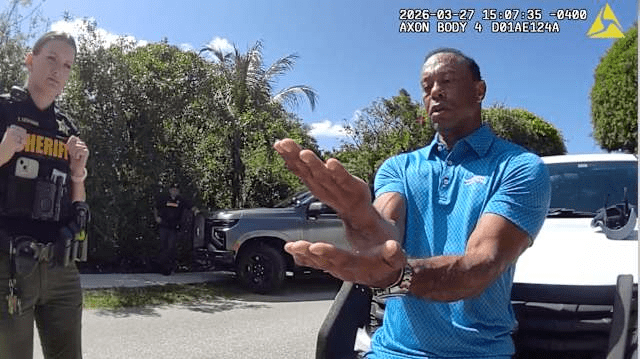
Police body camera footage released earlier this month showed Woods in the aftermath of the crash, kneeling calmly as he spoke with officers. “I looked down at my phone, and all of a sudden, boom,” he told them. He passed the breathalyser test and told officers he had not consumed alcohol that day. When asked about prescription medications, he said “I take a few” and indicated he had taken them earlier that morning. He then listed the medications — that portion of the footage was redacted.
Officers told Woods they suspected his “normal faculties” were impaired by an “unknown substance.” Authorities subsequently found two white pills in his pocket, identified as hydrocodone, an opioid commonly prescribed for pain management.
Shortly after the crash became public, Woods addressed the situation on X. “I know and understand the seriousness of the situation I find myself in today,” he wrote. “I am stepping away for a period of time to seek treatment and focus on my health. This is necessary in order for me to prioritise my wellbeing and work toward lasting recovery.”
Read more: Tiger Woods Says No To Ryder Cup Captain Job, Eyes Therapy
The crash occurred when Woods’ vehicle clipped a truck and rolled over on a Florida road. No one was injured, though Woods had to crawl out through the passenger door to free himself.
The case is the second time Woods has faced DUI-related charges. In 2017 he was found asleep in a car parked erratically on a Florida roadside, with a toxicology report later revealing five substances in his system including prescription pain medications and sleep aids. He pleaded guilty to reckless driving in that case and entered a diversion programme. In a 2009 incident, Woods was found to have sleeping pills in his system following a crash outside his home, though no DUI arrest was made.
Woods has spoken openly in recent years about managing chronic pain through medication following multiple surgeries — seven back operations in total, plus a severe leg injury from a 2021 rollover crash in California and a ruptured Achilles tendon last spring. He underwent a lumbar disc replacement as recently as October.
The April 22 subpoena deadline gives his legal team ten days to mount a challenge. Whether they do so will be an early indicator of the defence strategy in a case where the chemical evidence in his pocket and the refusal to provide a urine sample have already shaped the prosecution’s direction.