
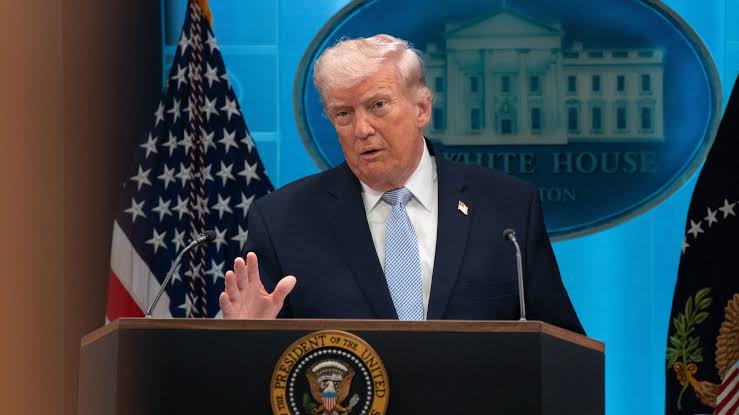
Peace talks between the United States and Iran collapsed in Islamabad over the weekend, oil prices surged on Monday as Trump threatened a naval blockade of the Strait of Hormuz, and the American president added Pope Leo XIV to his list of public adversaries — capping a day that moved the war several steps further from resolution and several steps closer to a new phase of escalation.
The Islamabad negotiations, described by Iran’s Foreign Minister Abbas Araghchi as the most substantive direct engagement between the two countries in 47 years, ended without agreement after the two sides could not bridge differences on reopening the strait and the future of Iran’s nuclear enrichment programme. Araghchi said the talks had been “intensive” and conducted in good faith, and that the two sides had come close. “When just inches away from an Islamabad memorandum of understanding, we encountered maximalism, shifting goalposts, and blockade,” he wrote on X. “Good will begets good will. Enmity begets enmity.”
Iranian President Masoud Pezeshkian added that an agreement remained reachable if Washington “abandons its totalitarianism and respects the rights of the Iranian nation.”
Read also: Tensions Flare Ahead Of US-Iran Truce Negotiations
Trump, speaking on the tarmac at Joint Base Andrews after returning on Air Force One, was characteristically unbothered by the failure. Asked how long he would wait for Iran to commit to a second round of talks, he said: “I don’t care if they come back or not. If they don’t come back, I’m fine.” He listed what he described as American achievements — Iran’s military “gone,” its missiles “largely depleted,” its manufacturing capacity for drones and missiles “largely defeated” — and suggested further negotiations were not essential to his definition of success.
The markets reached a sharply different conclusion. Oil surged after Trump said the United States would blockade the Strait of Hormuz in the wake of the collapsed talks. US crude jumped eight percent to above $104 a barrel. International Brent rose more than seven percent to $103. Wholesale gasoline spiked six percent and heating oil — a proxy for jet fuel — climbed ten percent. Stock futures fell sharply, with S&P 500 futures down one percent, Nasdaq 100 futures sliding 1.3 percent and Dow futures tumbling more than 500 points.
The intelligence picture darkened simultaneously. A person with knowledge of US intelligence reporting told NBC News that China appears to be planning to provide new air-defence weaponry to Iran in the coming weeks — a development that would directly address the vulnerability Iran has demonstrated throughout the war. Trump had been asked about the possibility Sunday. “If China does that, China’s going to have big problems,” he said. The Chinese Embassy denied the report, saying Beijing had “never provided weapons to any party to the conflict.”
Read also: Moon Mission Ends As Artemis II Crew Splashes Down Safely
Trump also found time Monday to publicly attack Pope Leo XIV, the first American pope, who had criticised the president’s threats to “wipe out” Iranian civilisation and called on people to contact their leaders and Congress members to press for peace. Leo had stated that attacks on civilian infrastructure violate international law and lamented in his Easter message that the world is “becoming indifferent” to violence. He has also criticised the administration’s immigration policies.
Trump’s response was withering. “I don’t think he’s doing a very good job. He likes crime, I guess,” he told reporters. On Truth Social he called Leo “WEAK on crime” and “terrible for Foreign Policy.” He added: “We don’t want a pope that says crime is OK in our cities.” The Vatican did not immediately respond.
In Lebanon, where Israeli military operations have continued despite the ceasefire framework that was supposed to pause the wider conflict, Prime Minister Nawaf Salam marked the 51st anniversary of the country’s 1975 civil war with a sombre appeal for national unity. “In the civil war, we fought each other, and everyone paid the price,” Salam said. “Today, what is required is for us all to stand together.” The civil war began on April 13, 1975 and ended in 1990, with Hezbollah emerging as the one armed faction not dissolved under the peace settlement — an exception whose consequences are still unfolding in the Israeli strikes hitting Lebanese territory as the anniversary was observed.
The two-week ceasefire announced last Tuesday was meant to create space for the Islamabad talks to produce something durable. Instead the talks produced nothing, the ceasefire’s terms remained disputed, Lebanon’s fighting continued, China may be rearming Iran’s air defences, and the American president has announced a naval blockade of the world’s most critical oil chokepoint.
The next two weeks, absent a sudden reversal, will look nothing like the two weeks that were supposed to end the war.