
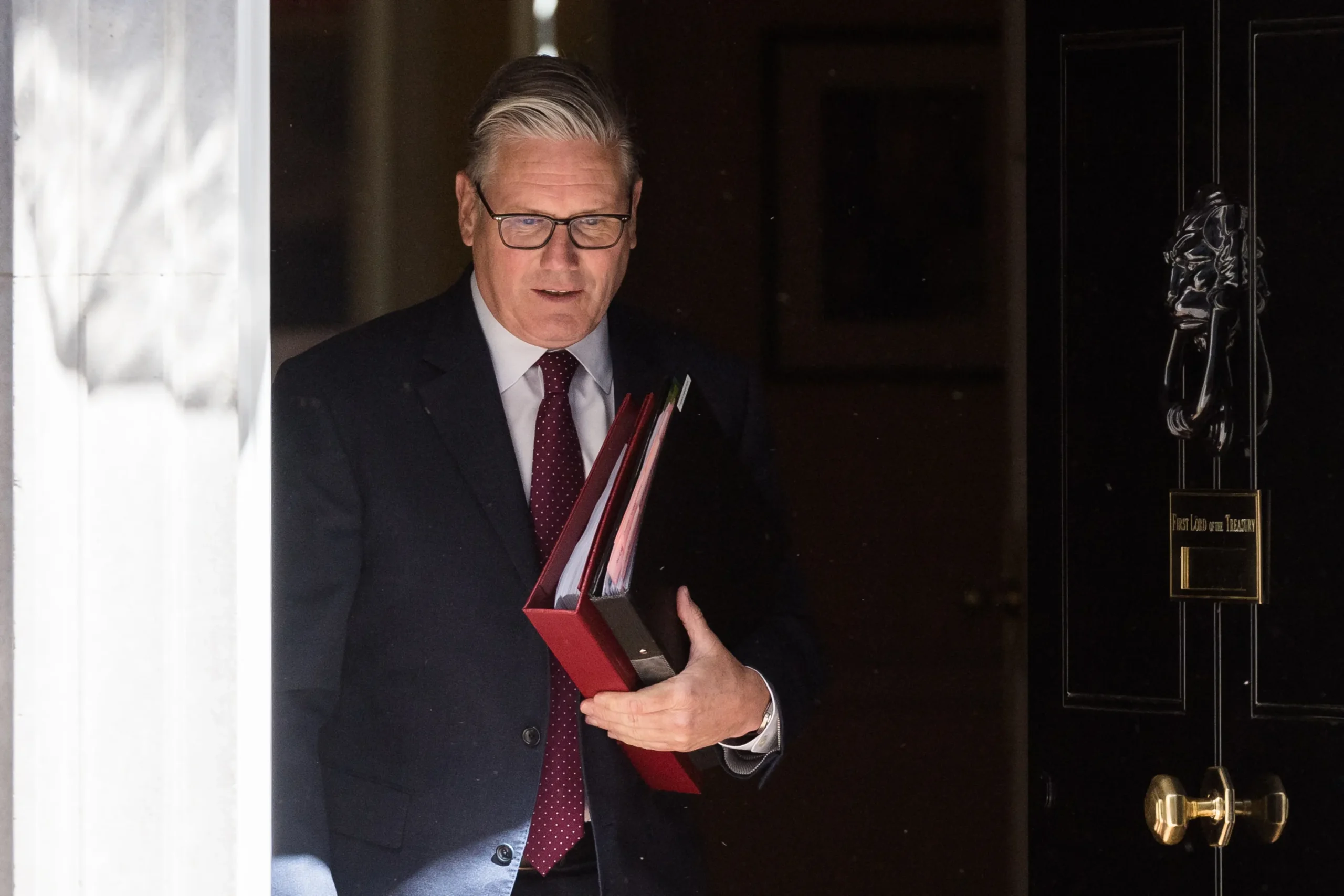
Keir Starmer is fighting for his political life in Downing Street, refusing to resign despite four ministerial resignations, a revolt by more than 80 Labour MPs and the looming presence of his Health Secretary — the man most likely to replace him — arriving at Number 10 on Wednesday morning for a meeting that will determine whether the prime minister survives the week.
The meeting between Starmer and Wes Streeting comes as Westminster braces for the King’s Speech, the formal opening of a new parliamentary session that was supposed to be a showcase for the government’s legislative ambitions and has instead become the backdrop to a leadership crisis that has consumed everything else. More than 35 bills are expected to be announced — immigration reform, NHS restructuring, police changes, a potential path to nationalizing British Steel — but whether the prime minister who commissioned that agenda will still hold his office long enough to deliver any of it is the question that has overtaken every other conversation in the building.
Starmer has been defiant to the point of impenetrability. At Tuesday’s cabinet meeting he told colleagues he would not discuss the election results or his leadership, and would only speak to ministers on those subjects individually — a remarkable posture for a leader whose authority has just been publicly shredded by his own party. Several cabinet ministers attempted to raise his leadership after the meeting concluded. He declined to speak with them. He told what remained of his cabinet that the country “expects us to get on with governing” and noted that no formal leadership challenge had been triggered.
Read also: UK Greens Challenge Labor Dominance In London Strongholds
That last point is technically accurate but politically fragile. Under Labour’s rules, a challenger must secure the support of 20 percent of Labour MPs — 81 names — before a formal contest can begin. Starmer’s allies have been telling the BBC they are convinced Streeting cannot produce that list. Whether that confidence reflects genuine intelligence or wishful arithmetic will become clearer after Wednesday’s meeting, which the BBC has been told Streeting intends to exit without saying anything that might distract from the King’s Speech — a form of tactical restraint that reads as deferred rather than abandoned ambition.
The public breach has been dramatic regardless of what happens next. Jess Phillips, one of Labour’s most recognizable and outspoken MPs, quit as safeguarding minister and produced a resignation letter that was less a political document than a character study. “I think you are a good man fundamentally, who cares about the right things,” Phillips wrote, “however I have seen first-hand how that is not enough.” She accused the prime minister of avoiding arguments to the point of paralysis. “The desire not to have an argument means we rarely make an argument, leaving opportunities for progress stalled and delayed.” She said she was not seeing the change she and the country expected and could not continue to serve under the current leadership.
Streeting ally Zubir Ahmed was among the other ministers who resigned. The pattern of who is leaving and who is staying has made the factional map of the Labour Party visible in a way that internal discipline normally keeps concealed — those departing cluster around Streeting’s wing of the party, while those holding firm include MPs who might otherwise have been assumed to be natural supporters of a challenge.
The unions that fund Labour are expected to issue a statement declaring Starmer should not lead the party into the next general election — a position that carries both financial and symbolic weight. Starmer has pulled out of a scheduled meeting with those unions, a cancellation that speaks to the brittleness of the relationship rather than any settled plan for managing it.
Read also: King Charles Calls For Western Solidarity In Congress Address
A speech Starmer delivered Monday — in which he promised to “face up to the big challenges” the country faced and insisted “incremental change won’t cut it” — was his attempt to reset the narrative before the crisis fully crystallized. It was not enough to hold Phillips, and it was not enough to quiet the 80-plus MPs who have publicly urged him to stand aside.
Streeting has been open about his leadership ambitions for years and commands genuine support among Labour’s centrist and right-leaning MPs — the same wing of the party that has been most uncomfortable with aspects of the Starmer project while remaining committed to the goal of maintaining the government’s grip on power.
The King’s Speech happens Wednesday. The meeting at Number 10 happens first. The order of those two events captures where British politics is this morning — a prime minister preparing to announce his government’s legislative programme while negotiating the terms of his own political survival in the same building, on the same morning, with the same man.