
A drone incursion targeting one of the United Arab Emirates’ most strategically significant energy installations has prompted a full-scale security investigation, intensifying scrutiny over the protection of critical infrastructure amid a deteriorating regional security environment.
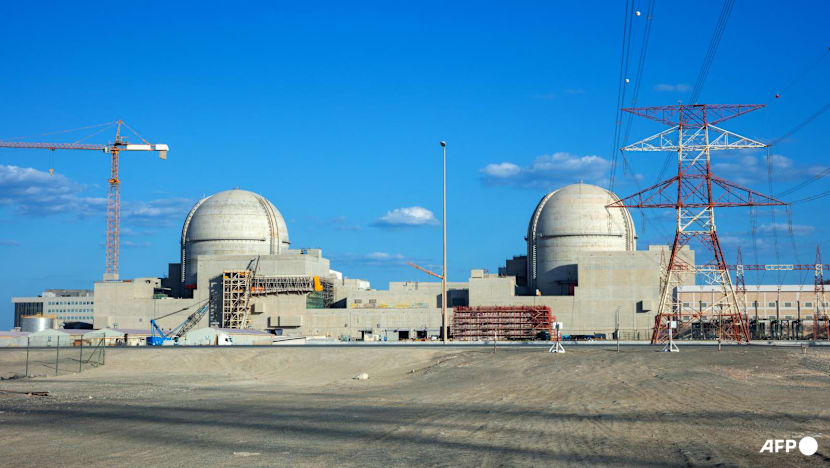
Sunday’s incident involved three unmanned aerial systems approaching Emirati territory from a western axis. National air defence units intercepted two of the drones before impact. A third, however, succeeded in striking an external electrical generator located outside the reinforced inner perimeter of the Barakah Nuclear Power Plant in Abu Dhabi. The resulting fire was contained, with authorities confirming there were no casualties and no compromise to radiological safety or the operational integrity of the nuclear facility.
While immediate damage was limited to auxiliary infrastructure, the symbolic and strategic implications have been significant. Barakah represents the cornerstone of the UAE’s civilian nuclear energy programme, and any breach of its surrounding infrastructure—regardless of scale—inevitably raises questions about deterrence, preparedness, and escalation thresholds in a region already defined by layered security tensions.
Emirati defence authorities have confirmed that investigations are underway to establish the origin of the drones and the intent behind the strike. Officials have emphasised that the country’s air defence architecture remains fully engaged, with a stated readiness to respond to further incursions through what they describe as calibrated defensive measures designed to safeguard national sovereignty and critical assets.
Read also: Top IS Leader Killed In U.S.-Nigeria Operation
At the operational level, the Abu Dhabi Media Office clarified that the fire originated in a peripheral generator system and was quickly brought under control without escalation to core facilities. The Federal Authority for Nuclear Regulation separately confirmed that reactor units remained stable and fully operational throughout the incident, underscoring the physical and procedural separation between auxiliary systems and nuclear safety infrastructure.
That distinction has become central to official communication strategy, particularly as nuclear energy infrastructure becomes increasingly embedded within broader national security frameworks. While the physical impact of the strike was contained, the proximity of the incident to a nuclear site has elevated its geopolitical sensitivity.
International attention has been swift. The International Atomic Energy Agency (IAEA) confirmed that Director General Rafael Grossi is monitoring developments closely, reiterating concerns about the risks posed by military activity near nuclear installations. The agency has consistently warned that even indirect strikes in the vicinity of nuclear facilities can heighten systemic risk, particularly in environments where attribution is unclear and escalation dynamics are volatile.
Although no party has been officially identified as responsible, the incident is unfolding against a backdrop of sustained regional friction. The UAE has previously attributed similar attacks on its energy infrastructure to state and non-state actors operating within wider Middle Eastern geopolitical disputes. Iran has been repeatedly cited by Gulf states in connection with proxy-linked activity targeting strategic infrastructure, though Tehran has consistently denied involvement and instead accused regional governments of enabling hostile actions against it.
The broader regional security architecture has remained unstable since the escalation of hostilities involving US and Israeli operations against Iranian targets earlier this year. Retaliatory exchanges have extended beyond traditional military domains into energy systems, shipping corridors, and cross-border infrastructure, creating a fragmented and unpredictable security landscape. A ceasefire agreement reached in April has not fully contained these dynamics, with intermittent incidents continuing to test its durability.
Maritime security remains another pressure point. The Strait of Hormuz, a critical artery for global energy flows, has experienced repeated disruptions since the conflict began, contributing to volatility in global supply chains and increasing risk premiums across energy markets. Diplomatic messaging from multiple capitals has increasingly centred on the need to prevent further escalation that could destabilise commercial shipping routes and energy exports.
Read also: Amnesty Documents ‘Extensive Brutality’ By Congo Rebels
Within this environment, Emirati authorities have sought to project continuity and institutional stability. Government statements have emphasised that nuclear safety protocols remain uncompromised and that Barakah continues to operate within internationally accepted regulatory parameters. This messaging reflects a broader strategic imperative: maintaining investor confidence in the UAE’s energy diversification agenda while demonstrating resilience in the face of asymmetric security threats.
Yet the incident also highlights a structural challenge facing Gulf states. The increasing use of low-cost, highly manoeuvrable drone systems has complicated traditional air defence models, particularly when attacks are directed at peripheral infrastructure rather than hardened central targets. This evolution in threat design is forcing a recalibration of defence planning, with greater emphasis on layered detection systems and expanded perimeter protection.
Security analysts expect the ongoing investigation to prioritise attribution analysis, air defence performance assessment, and a review of vulnerability gaps in auxiliary infrastructure protection. The broader policy question emerging from the incident is no longer limited to immediate response capability, but rather the resilience of critical infrastructure ecosystems under conditions of persistent asymmetric pressure.
For the UAE, the strike reinforces a long-term strategic dilemma: how to secure high-value civilian energy assets in an environment where conflict dynamics are increasingly diffuse, attribution is contested, and escalation risks are structurally embedded. As investigations continue, both national authorities and international oversight bodies remain engaged in close monitoring, recognising that even contained incidents at sensitive facilities carry implications that extend far beyond their immediate physical impact.