
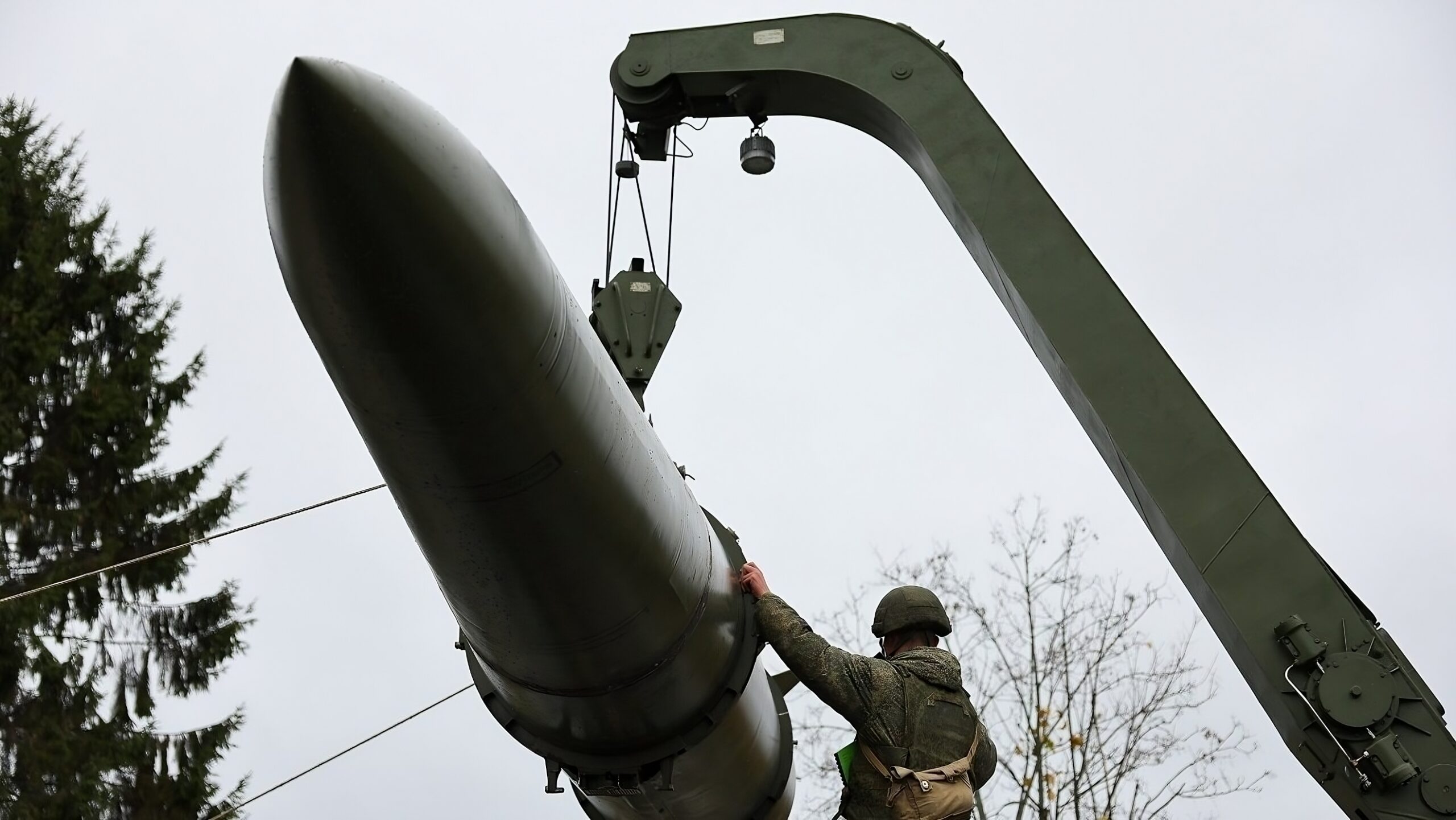
The legal architecture that governed nuclear weapons reduction between the United States and Russia for three decades is gone. New START, the last standing arms control treaty between the two countries that together hold the vast majority of the world’s warheads, expired in February. No replacement has been negotiated. Nothing is on the table.
Into that void, the nine nuclear-armed states collectively poured $119 billion last year — an all-time high, and $16.8 billion more than they spent the year before. The figures, published Tuesday by the International Campaign to Abolish Nuclear Weapons, capture a world that has not just paused disarmament but reversed course with accelerating momentum.
The United States accounted for $69.2 billion of that total, a year-on-year increase of $12.6 billion, and a sum that exceeded what the other eight nuclear powers spent in aggregate. China ranked second at an estimated $13.5 billion, followed by the United Kingdom at $12.6 billion, Russia at $9.5 billion and France at $7.7 billion. India, Pakistan, Israel and North Korea occupied the lower tier, with spending ranging from $656 million for Pyongyang to $2.8 billion for New Delhi.
Taken together, the nine states have spent $471 billion on their nuclear programs over the past five years.
The ICAN report arrived one day after the Stockholm International Peace Research Institute issued its own warning that nuclear states were sidelining and walking away from disarmament commitments in favor of modernizing and expanding their arsenals. The two assessments, from separate organizations using different methodologies, landed at the same conclusion within 24 hours of each other.
Read also: Russia Threatens Response As Finland Lifts Nuclear Weapons Ban
The timing of New START’s expiration adds a specific structural dimension to the numbers. From the early 1990s onward, a succession of bilateral agreements between Washington and Moscow set binding ceilings on deployed warheads and delivery vehicles, established inspection regimes, and created the institutional muscle memory for verified nuclear reductions. New START was the last of those agreements. Its expiration in February left no treaty framework limiting either country’s arsenal for the first time since the Cold War’s final decade — precisely the period when global nuclear spending began setting consecutive annual records.
The nine states collectively possess an estimated 12,000-plus warheads, with the United States and Russia holding the overwhelming majority. Those inventories are not shrinking. ICAN said all nine countries have stated plans to retain their arsenals for decades.
Read also: Washington Alleges Beijing Conducting Covert Nuclear Tests
In 2017, the United Nations adopted the Treaty on the Prohibition of Nuclear Weapons — the first legally binding global instrument barring states from developing, testing or acquiring nuclear arms. Ninety-nine countries have signed, ratified or acceded to it.
Not one of the nine nuclear-armed states has signed.
ICAN, in language accompanying the report, framed the spending surge against simultaneous retrenchment in areas of shared international investment. Countries were scaling back commitments to climate adaptation, pulling back from multilateral diplomacy, and retreating from global institutions, the organization said — while simultaneously directing record sums toward weapons designed, as the organization put it, to exterminate rather than preserve human life.
The critique is not new. What is new is the scale.
Twelve billion dollars additional from the United States in a single year. A $16.8 billion global increase over 12 months. Half a trillion dollars across five years from countries that, in diplomatic settings, continue to formally profess commitment to the eventual goal of a nuclear-free world. The Non-Proliferation Treaty, to which all five of the major nuclear powers are party, obligates them under Article VI to pursue disarmament negotiations in good faith. The spending data and the treaty record sit in direct contradiction to each other, and have for some time.
The Bulletin of the Atomic Scientists moved its Doomsday Clock to 89 seconds to midnight in January 2024 — the closest to midnight it has ever been set — citing, among other factors, the erosion of arms control agreements and the modernization drives underway across nuclear states. The clock is a metaphor. The $119 billion is not.
New START had verification mechanisms. It had inspection rights. It had a shared interest, built over decades of difficult negotiation, in both sides knowing what the other was doing. All of that expired in February. The nine states that between them could end organized human life several times over are now spending more than at any point in recorded history, operating under fewer legal constraints than at any point since 1991, and showing no urgency about changing either condition.