
JURISDICTIONAL NOTICE
U.S. FIRST AMENDMENT PROTECTED.
Any attempt by the Nigerian State or its proxies to suppress, threaten, hack, intimidate, or interfere with this publication will be documented, preserved as evidence, and reported to the FBI, U.S. Department of Justice, and relevant federal authorities.
♦♦♦♦♦♦♦♦♦♦♦♦♦♦♦♦♦♦♦♦♦♦♦♦♦♦♦♦♦♦♦♦♦♦♦♦♦♦♦♦♦♦♦♦♦♦♦♦♦♦♦♦
A forensic dissection of Flora Shaw’s colonial label, Decree No. 24, and the militarized elite cartel that turned Nigeria into a republic no president can redeem without restructuring.
The Leadership Delusion: Presidents Inside a Broken Machine
A forensic challenge to the leadership myth and the presidential theater staged inside a system designed to defeat reform.
A country can spend generations blaming men and still refuse to examine the state that manufactures their limits. Nigeria has perfected that escape. Every election season brings another promise that the right president will rescue the republic by force of courage, charisma, discipline, or personal morality. A candidate is presented as healer, manager, soldier, accountant, democrat, reformer, or messiah. The crowd is asked to forget the older record: Nigeria has changed presidents, parties, uniforms, slogans, transition programs, and policy teams while the basic terms of failure remain stubbornly alive.
The leadership argument is attractive because it is emotionally simple. It gives the public a face to love and a face to hate. It allows parties to sell hope without confronting the system that converts power into extraction. It lets elites speak of renewal while leaving untouched the laws, incentives, revenue habits, and security arrangements that defeat renewal before it reaches the village, school, farm, port, factory, court, hospital, or police station. Bad leaders have damaged Nigeria, but the country’s decay cannot be explained by bad leaders alone. A good driver cannot make a broken vehicle fly.
Institutions decide what leadership can become. North’s account of institutions as the rules that structure political and economic life helps clarify the Nigerian case: incentives are not background noise; they are the silent commands under which leaders act (North, 1990). A president enters office through national ceremony, but he governs through inherited rules. Those rules concentrate money at the center, weaken production at the edges, turn states into monthly petitioners, keep policing under distant command, and reward access to federal power as the main route to wealth. Personal virtue may slow the rot in one office. It cannot cleanse the state by speeches.
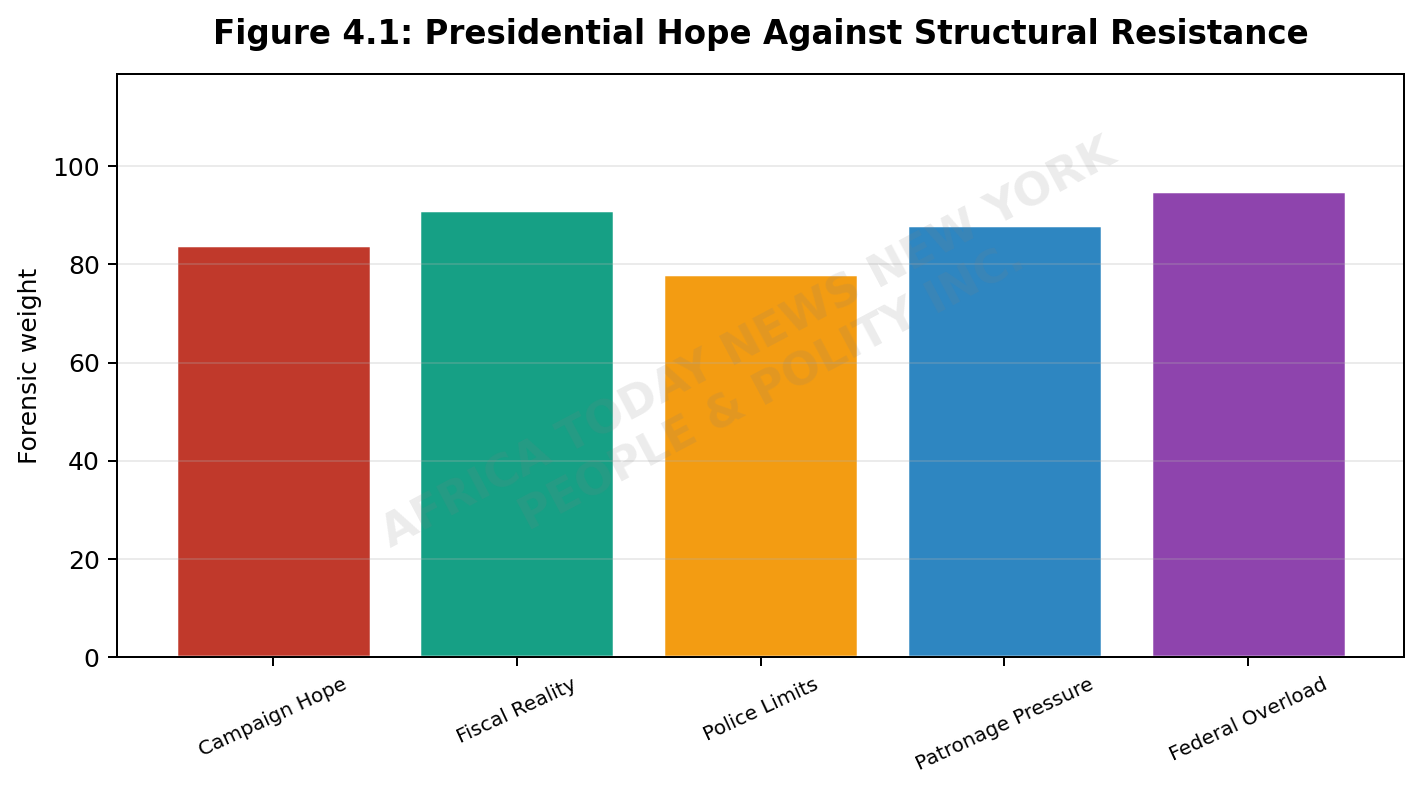
Figure 4.1: Presidential Hope Against Structural Resistance.
Forensic visualization by People & Polity Inc.; interpretive scale derived from documentary analysis, not official data.
Nigeria’s political culture has long been shaped by what Richard Joseph called prebendal politics: public office treated as an entitlement through which holders and their communities expect material return (Joseph, 1987). That habit is not just a moral weakness. It is fed by the structure of the republic. When revenue is centralized and distributed through political channels, the contest for office becomes a contest for survival, status, and distribution. Elections then become battles over access to the vault. Policy becomes secondary. Federal capture becomes the real prize.
The tragedy is that each presidential cycle renews the illusion. Citizens are invited to invest emotional energy in a single man while the deeper operating rules remain protected. A president may promise to fight corruption, yet corruption survives because it is attached to contracts, appointments, subsidies, security votes, procurement routes, patronage demands, weak institutions, and a public finance system detached from local productivity. A president may promise unity, yet unity remains fragile because the union itself was not renegotiated by its peoples. A president may promise security, yet the police system remains centralized in a country whose violence is local, intimate, mobile, and varied.
Achebe was right to insist that leadership mattered, but the later record forces a harder reading of his warning. Leadership failure is real; the Nigerian state also has a remarkable ability to swallow reform. It absorbs the language of change, converts it into appointments, committees, summits, slogans, and white papers, then returns to the habits that sustain the ruling class. Ake’s argument about democracy and development in Africa points toward the same wound: political forms without social accountability and productive foundations cannot deliver freedom simply by holding elections (Ake, 1996).
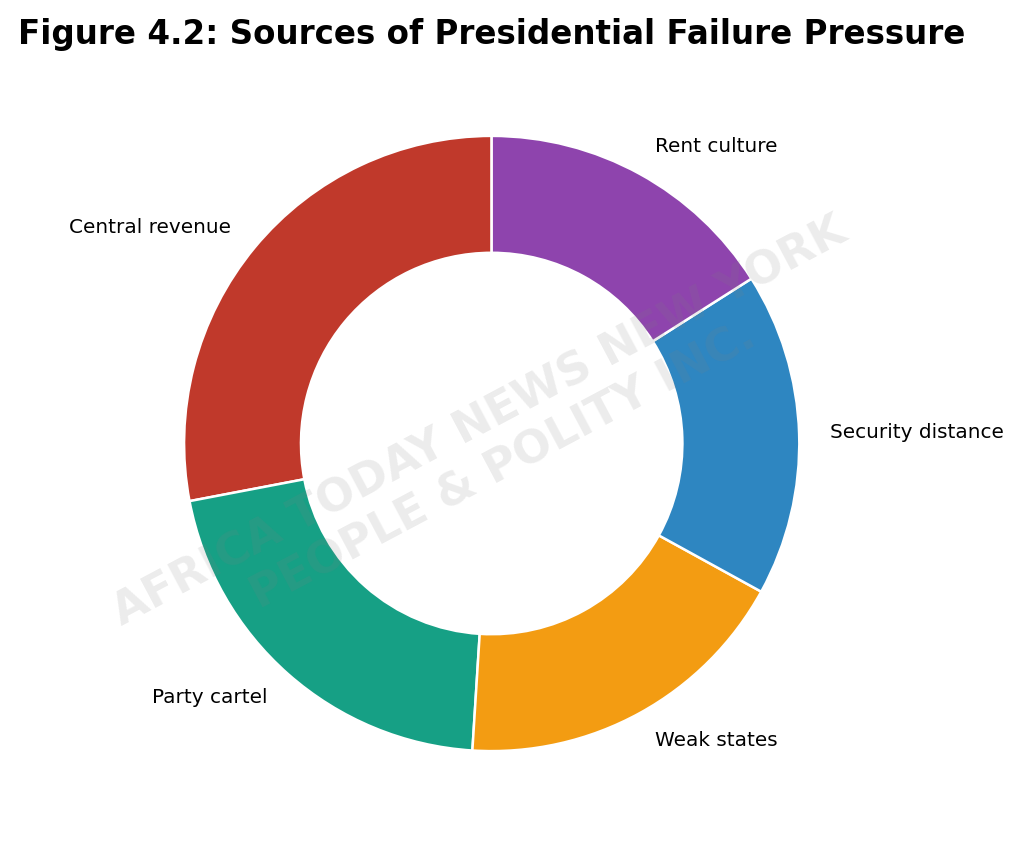
Figure 4.2: Sources of Presidential Failure Pressure.
Forensic visualization by People & Polity Inc.; interpretive scale derived from documentary analysis, not official data.
Presidential power in Nigeria is large enough to seduce the public and limited enough to excuse failure. It is large because the center controls revenue, security institutions, national appointments, federal infrastructure, and the political imagination of the country. It is limited because the president governs through a system guarded by courts, legislatures, governors, party barons, civil servants, contractors, security chiefs, foreign creditors, and entrenched interests whose survival does not require national transformation. The office appears majestic. The tools are compromised. The result is repeated disappointment sold as a new beginning.
Oil made the delusion worse. Lewis’s comparison of Indonesia and Nigeria shows how petroleum wealth can shape economic and political outcomes by changing incentives, weakening tax accountability, and funding state power without broad-based productivity (Lewis, 2007). In Nigeria, oil rents helped turn the federal center into a site of accumulation. The president became not only head of government, but the symbolic gatekeeper of distribution. That elevated the myth of the savior because the public came to imagine national rescue as a function of who controls the center, not whether the center should control so much at all.
No serious inquiry can ignore corruption, but corruption should be read as a system of practice, not a collection of isolated sins. Smith’s work on everyday corruption captures how public deception and private survival become entangled in Nigerian life (Smith, 2007). When the state fails to provide reliable services, citizens maneuver. When office becomes the fastest route to wealth, politics becomes investment. When accountability is weak, patronage becomes protection. When law rewards central access, the nation trains its brightest actors to chase proximity to power rather than production.
Read also: Nigeria: The Slave Name And The Restructuring Verdict — Part 3
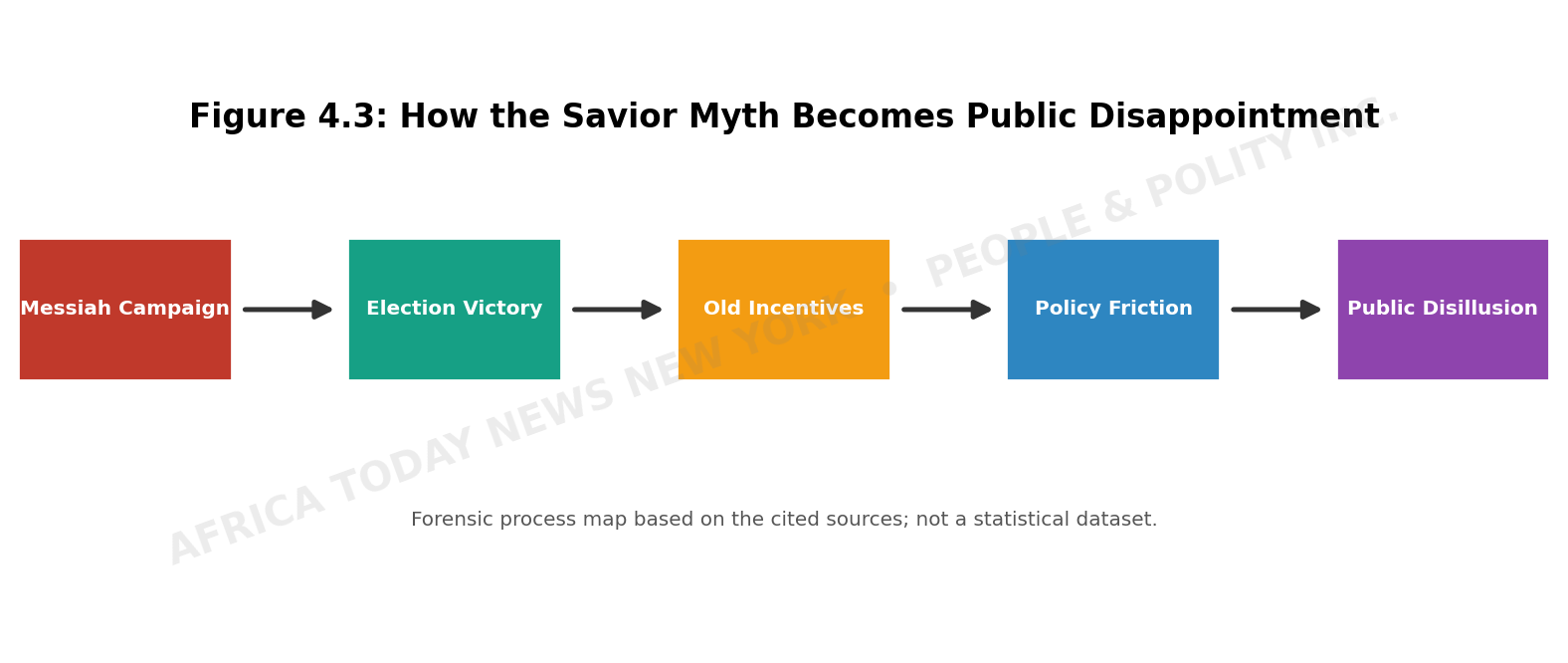
Figure 4.3: How the Savior Myth Becomes Public Disappointment.
Forensic visualization by People & Polity Inc.; interpretive scale derived from documentary analysis, not official data.
One reason the “good leader” myth survives is that it flatters the public. It suggests that citizens can avoid the harder work of constitutional redesign by voting harder, hoping better, or discovering a cleaner candidate. That is political narcotic. It delays the necessary argument. Nigeria does not need a president who promises to manage the cage more efficiently. It needs a constitutional settlement that reduces the cage. Leadership without restructuring becomes performance inside a locked room.
A true reformer inside the current order faces immediate contradictions. He must govern states that lack full fiscal responsibility but demand federal rescue. He must fight insecurity with centralized police structures that do not answer to governors on the ground. He must stimulate production in a system where monthly sharing weakens the pressure to produce. He must confront corruption among elites who financed elections, populate parties, influence legislatures, and expect repayment. He must promise unity while avoiding honest renegotiation of the union. Every path back to sanity runs through restructuring. Every path around it returns to illusion.
The public should stop asking only whether Nigeria can find a better president. A more serious question is whether any president can govern a country whose rules reward the failure he is elected to end. Acemoglu and Robinson’s distinction between inclusive and extractive institutions gives this part its larger meaning: countries fail when power and wealth are arranged to serve narrow interests instead of broad opportunity (Acemoglu & Robinson, 2012). Nigeria’s challenge is not the absence of talented people. It is the entrapment of talent inside extractive arrangements.
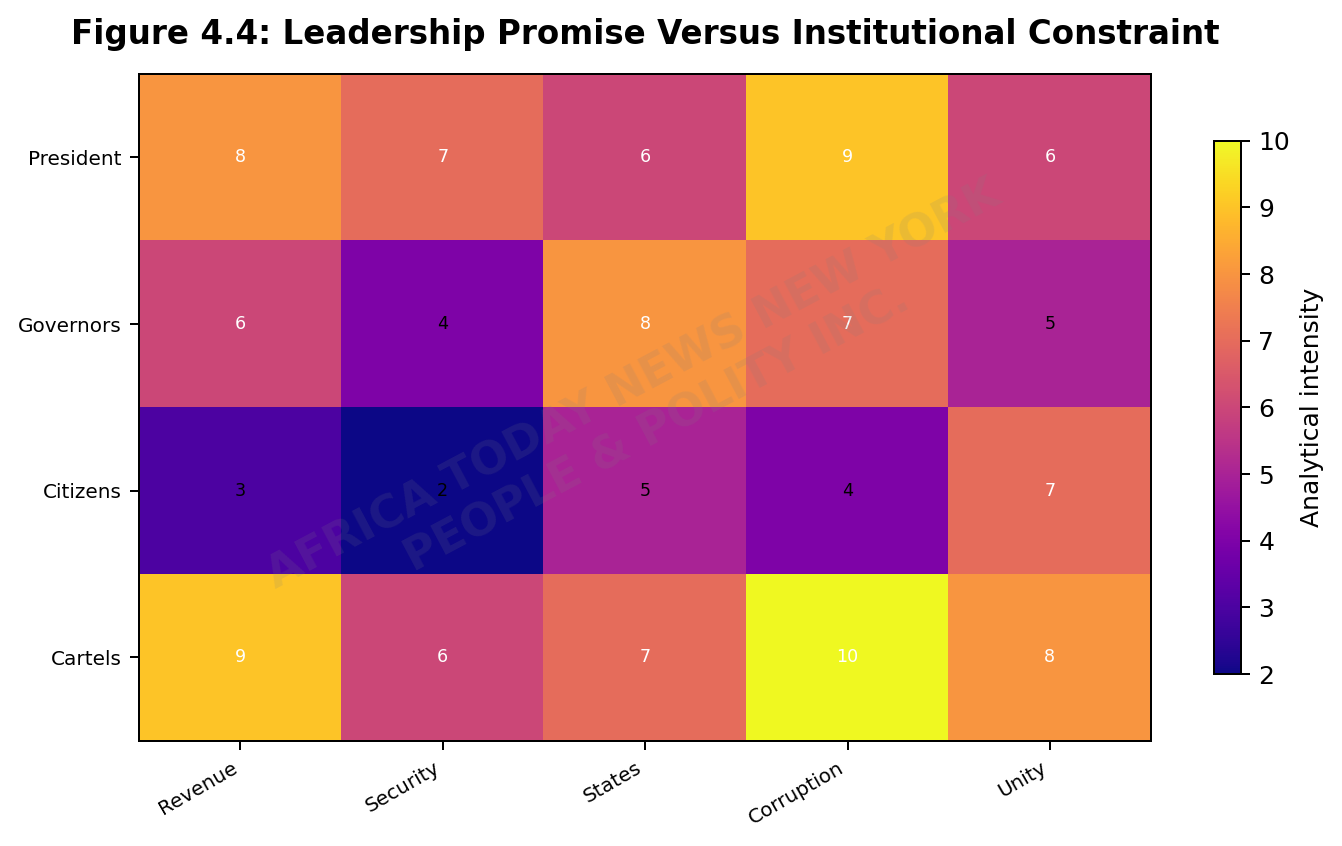
Figure 4.4: Leadership Promise Versus Institutional Constraint.
Forensic visualization by People & Polity Inc.; interpretive scale derived from documentary analysis, not official data.
Part 4 rejects the cult of the national savior. It does not absolve leaders. It strips them of the excuse that personality can redeem a defective state. Nigeria has had enough campaigns built around moral theatre. What the country needs is a reckoning with the rules beneath the theatre: fiscal centralization, patronage, resource control, weak subnational autonomy, centralized policing, and constitutional legitimacy. A president who refuses to restructure becomes another manager of inherited failure. A citizenry that keeps expecting salvation from the same office becomes a participant in its own disappointment.
The verdict is blunt. No president can rescue Nigeria while the republic remains organized to defeat local production, reward elite access, centralize security, and distribute mineral rents through a political class that profits from dependency. Leadership matters after the rules are honest. Until then, every election is a new driver handed the same wreck and ordered to fly.
The evidence also lies in the way Nigerian elections are financed and narrated. Campaigns become national auctions of expectation. Billboards promise redemption. Parties sell access as vision. Debates rarely begin with the hard question of what the constitution allows, rewards, blocks, and hides. Voters are asked to choose a pilot without being shown the aircraft’s broken engine. That is why disappointment returns with ritual precision. The system converts campaign hope into administrative exhaustion.
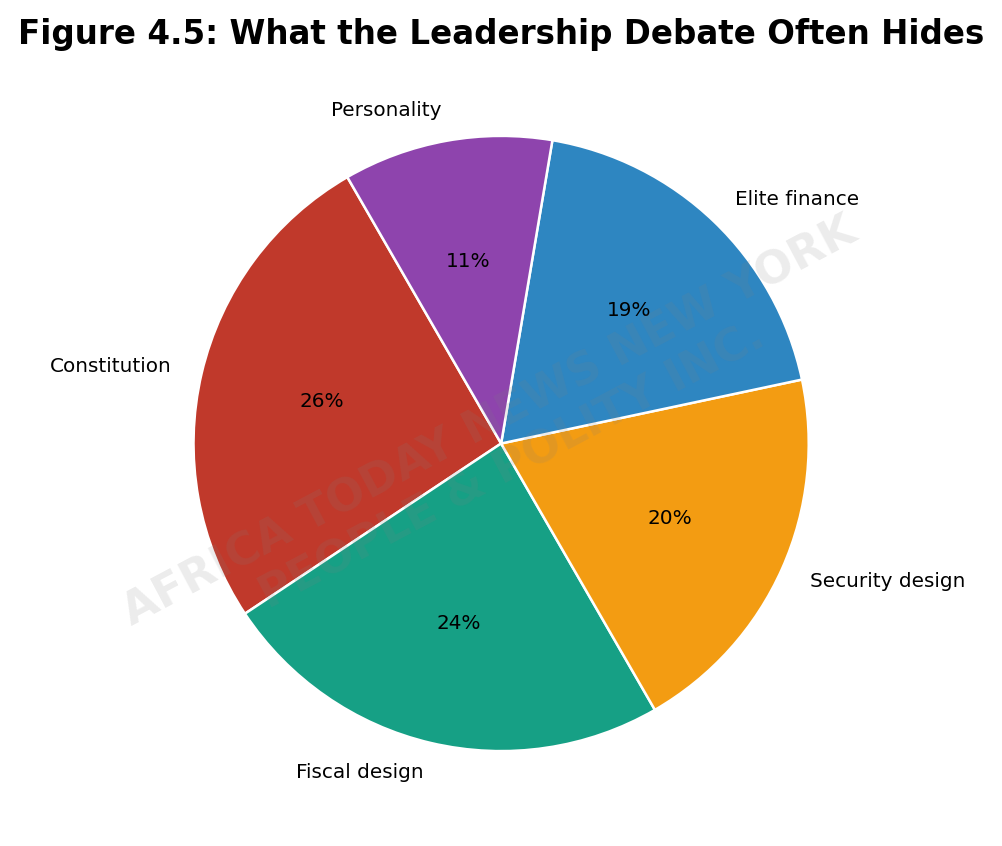
Figure 4.5: What the Leadership Debate Often Hides.
Forensic visualization by People & Polity Inc.; interpretive scale derived from documentary analysis, not official data.
Serious reform has to begin by demoting the presidency in the national imagination. The president should not be the country’s parent, priest, treasurer, security commander, development officer, emotional symbol, and final dispenser of opportunity. No plural republic can survive that concentration of expectation. A healthy federation reduces the presidency to its proper size by giving regions and states enough power to solve problems close to the people. Nigeria’s obsession with presidential rescue is itself evidence of how unhealthy the union has become.
Because the presidency has been made emotionally oversized, every failure becomes personalized and every structure escapes judgment. That habit protects the very people who should be examined. Party financiers, legislators, governors, permanent officials, contractors, regulators, security chiefs, and local brokers all survive behind the drama of one man at the top. The president becomes lightning rod; the system keeps its shelter.
Structure, not personality, is the harder defendant. Now.
Evidence Exhibit Table — Part 4
| Claim | Evidence type | Forensic meaning | What it proves |
| Presidents inherit limiting rules | Institutional theory; fiscal federalism scholarship | The office cannot override incentives by personality | Leadership failure is tied to state design |
| Rent politics weakens reform | Joseph, Lewis, Smith | Public office becomes access to distribution | Anti-corruption cannot work without incentive change |
| Central security limits presidential promises | Constitutional and federalism scholarship | Security failures outpace distant command | Restructuring is tied to public safety |
| Election cycles recycle savior myths | Political history and party behavior | Hope is personalized while rules remain protected | Personality politics shields the deeper order |
Evidentiary Sources (APA 7th Edition)
Acemoglu, D., & Robinson, J. A. (2012). Why nations fail: The origins of power, prosperity, and poverty. Crown Business.
Achebe, C. (1983). The trouble with Nigeria. Fourth Dimension Publishers.
Ake, C. (1996). Democracy and development in Africa. Brookings Institution.
Bates, R. H. (1981). Markets and states in tropical Africa: The political basis of agricultural policies. University of California Press.
Diamond, L. (1988). Class, ethnicity and democracy in Nigeria: The failure of the First Republic. Syracuse University Press.
Joseph, R. A. (1987). Democracy and prebendal politics in Nigeria: The rise and fall of the Second Republic. Cambridge University Press.
Lewis, P. M. (2007). Growing apart: Oil, politics, and economic change in Indonesia and Nigeria. University of Michigan Press.
North, D. C. (1990). Institutions, institutional change and economic performance. Cambridge University Press.
Osaghae, E. E. (1998). Crippled giant: Nigeria since independence. Indiana University Press.
Smith, D. J. (2007). A culture of corruption: Everyday deception and popular discontent in Nigeria. Princeton University Press.
Suberu, R. T. (2001). Federalism and ethnic conflict in Nigeria. United States Institute of Peace Press.
World Bank. (2022). Nigeria public finance review: Fiscal adjustment for better and sustainable results. World Bank.