
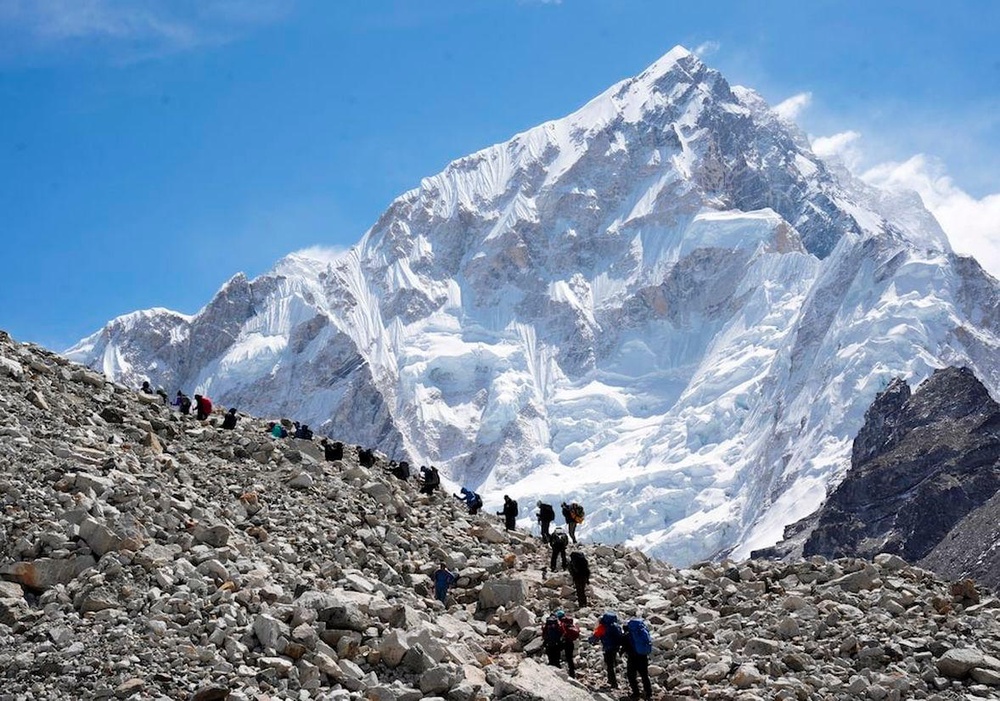
Chinese authorities have completed a major rescue operation after an unexpected Himalayan blizzard trapped hundreds of trekkers near the eastern face of Mount Everest in Tibet, state media reported on Sunday. The storm, described by meteorologists as the region’s most intense October snowfall in recent years, cut off mountain routes and left scores stranded in freezing, high-altitude conditions.
According to China Central Television, roughly 350 trekkers reached the township of Qudang by Sunday morning, while another 200 remained en route under the supervision of rescue teams. The tourists had been hiking through Karma Valley, a remote route leading to the Kangshung face of Everest, during China’s eight-day National Day holiday — a period that typically draws thousands of domestic travellers to the Himalayas.
Rescue officials said the blizzard began late Friday with heavy snow, thunder, and lightning that lasted through Saturday, paralyzing communications and covering the trails with dense snowdrifts. The valley sits at about 4,200 metres above sea level, where sudden weather shifts are common but rarely this severe.
One survivor, identified by state media as Chen Geshuang, was quoted as saying that her group of 18 trekkers endured extreme cold and feared hypothermia as temperatures plunged overnight. She noted that their local guide, who had led expeditions for years, remarked that he had never witnessed such conditions in October.
Local authorities mobilized emergency workers and hundreds of villagers to reopen blocked trails and provide assistance. Earlier reports indicated that close to 1,000 people had initially been trapped before rescue coordination improved. Chen recounted that when her group finally reached Qudang, residents welcomed them with hot tea and warm food — a gesture she said offered relief after a night of exhaustion and fear.
Read also: Deadly Nepal Helicopter Mishap Claims 6 Lives
Officials have since suspended access to the Everest Scenic Area and halted ticket sales, according to a statement released by the Tingri County Tourism Company on its WeChat page. It remains unclear whether guides or support staff near other routes, including those toward Everest’s northern face, were affected.
Further south, in neighbouring Nepal, relentless rainfall triggered landslides and flash floods that have left at least 47 people dead since Friday. Authorities in Ilam district, which borders India, confirmed that most fatalities occurred in multiple landslides, with several others still missing after being swept away by floodwaters.
The twin crises — one of snow and one of rain — underscore the Himalayas’ growing vulnerability to increasingly erratic weather patterns linked to global climate shifts, a risk that continues to threaten both trekkers and local mountain communities alike.