
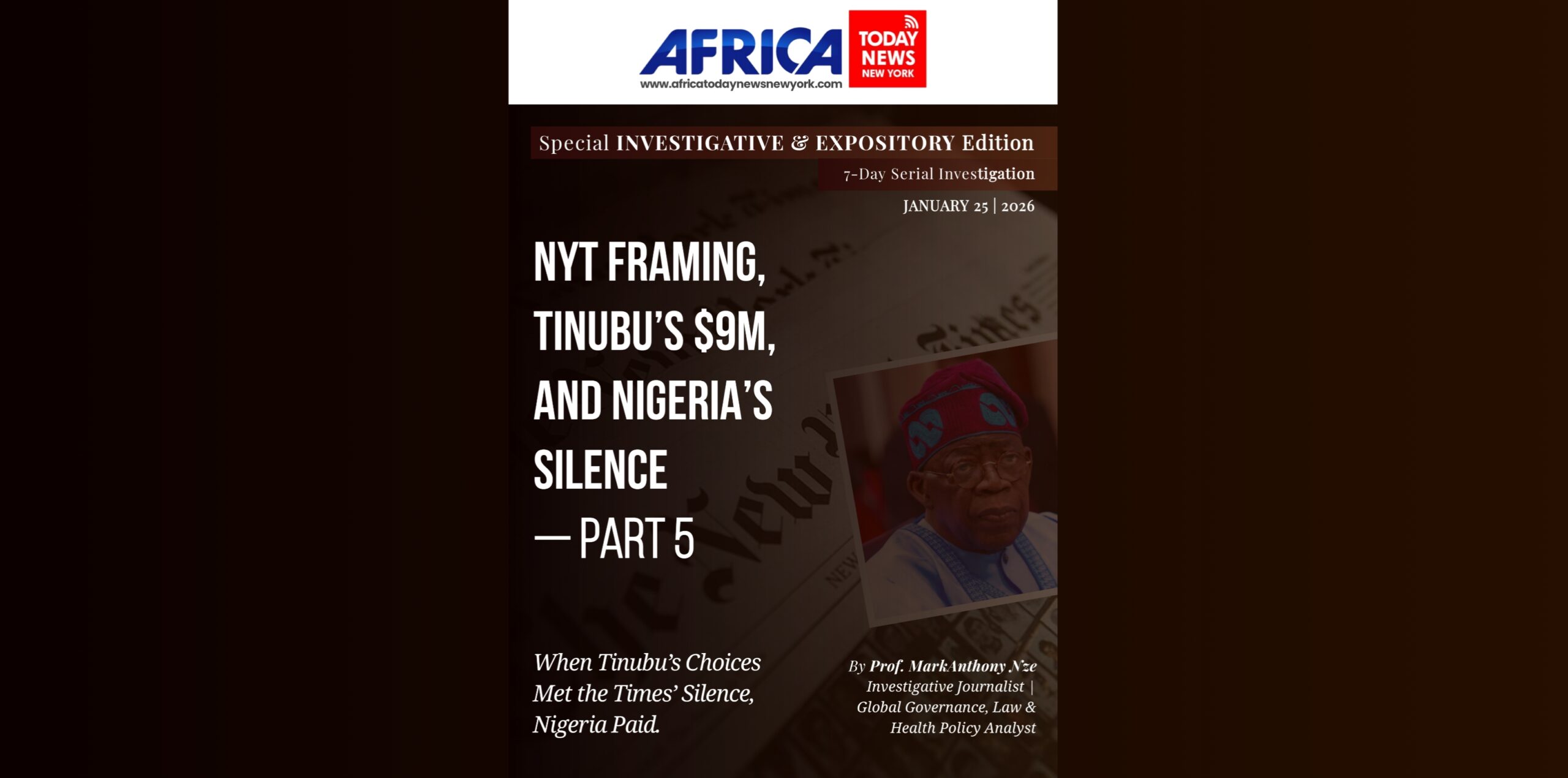
This was not decline by chance. It was decline by Choice.
The Cost of Misplaced Priorities
When governments fund perception instead of protection, citizens pay the difference.
Nigeria’s crisis is often described as complex, layered, or inherited. Those words soften what is, at base, a series of choices. Budgets are choices. Timing is a choice. Urgency is a choice. And in the last several years—accelerating under the current administration—Nigeria’s public choices have tilted decisively toward optics over outcomes, influence over investment, and short-term political insulation over long-term human survival. The cost of those choices is measurable, cumulative, and borne almost entirely by ordinary Nigerians.
This part traces that cost—through budgets, audits, humanitarian indicators, and institutional scores—and asks a simple question that no amount of messaging can evade: what did Nigeria choose to fund, and what did it leave unfunded, when the country needed governance the most?
Budgets as moral documents
Public budgets are not neutral spreadsheets. They are moral documents. They reveal what a government believes is urgent, whose lives are prioritized, and which failures are tolerated. Nigeria’s recent fiscal record tells a consistent story: spending that consolidates power and manages reputation is protected; spending that delivers services is fragmented, delayed, or diluted.
Independent budget analyses show a pattern of allocations that struggle to translate into outcomes. BudgIT’s 2024 review highlights recurrent underspending on capital projects alongside ballooning recurrent costs and opaque special expenditures—conditions that reliably weaken service delivery (BudgIT, 2024). The Office of the Auditor-General’s reports echo the concern, documenting lapses in compliance, poor project execution, and limited consequences for failure (Office of the Auditor-General for the Federation, 2022).
These are not accounting errors. They are governance signals.
The $9 million contrast
Nothing illustrates misplaced priorities more starkly than Nigeria’s decision to spend roughly $9 million on foreign lobbying in the United States during a period of deepening domestic crisis (Center for Responsive Politics, 2024; U.S. Department of Justice, 2024). The expenditure is lawful. It is also revealing.
At the same time that public disclosures show millions flowing to image management abroad, Nigeria’s hospitals were reporting shortages of basic equipment, internally displaced persons were living without adequate shelter, and schools were operating without materials or teachers. Premium Times Nigeria’s reporting connects these disclosures to a broader pattern of political spending insulated from public need (Premium Times Nigeria, 2025).
This is not a symbolic comparison. It is arithmetic. Every dollar spent shaping perception is a dollar not spent stabilizing lives.
Healthcare: scarcity by design
Nigeria’s health system did not collapse suddenly. It thinned over time, weakened by underinvestment, poor execution, and the steady exit of professionals. The World Health Organization’s 2024 profile places Nigeria among countries with severe workforce shortages and low per-capita health spending relative to need (World Health Organization, 2024). Outcomes reflect this: high maternal mortality, preventable deaths, and fragile emergency capacity.
Humanitarian data deepen the picture. The UN Office for the Coordination of Humanitarian Affairs reports escalating needs driven by insecurity, displacement, and weak health access—conditions that require sustained public investment, not episodic interventions (UNOCHA, 2024). When health budgets fail to land where they are allocated, the result is not inefficiency alone; it is mortality.
Displacement and insecurity: the unpaid bill
Nigeria’s insecurity crisis is not confined to insurgency. It includes mass displacement, farmer–herder violence, and criminal banditry that hollow out communities. The International Organization for Migration’s displacement tracking shows millions uprooted, many repeatedly, with host communities stretched beyond capacity (IOM, 2024). Amnesty International documents the human toll of sustained violence and the state’s failure to protect civilians (Amnesty International, 2024).
These crises demand resources: protection, shelter, health services, education for displaced children. Yet allocations remain insufficient and coordination weak. Reuters’ reporting on mounting civilian deaths underscores the gap between assurances and outcomes (Reuters, 2024). The bill accumulates when prevention is underfunded.
Poverty expanding in plain sight
Nigeria’s poverty profile has worsened, not because growth is impossible, but because growth has not been inclusive. The National Bureau of Statistics’ Multidimensional Poverty Index shows a majority of Nigerians experiencing overlapping deprivations (National Bureau of Statistics, 2024). The Nigeria Living Standards Survey confirms vulnerability even among working households (National Bureau of Statistics, 2023).
Global comparisons reinforce the trend. The UNDP’s Human Development Report situates Nigeria among countries where gains are too small to offset shocks (UNDP, 2024). Oxfam’s analysis of inequality explains why: when wealth concentrates and public services erode, poverty spreads even during periods of expansion (Oxfam International, 2023).
Poverty, here, is not an accident. It is the outcome of policy sequences.
Read also: NYT Framing, Tinubu’s $9m, And Nigeria’s Silence—Part 4
Institutions that do not constrain power
Weak institutions magnify bad choices. The World Justice Project’s Rule of Law Index places Nigeria low on constraints on government power and regulatory enforcement (World Justice Project, 2023). Where rules do not bind, priorities drift toward the politically expedient.
The African Development Bank and the IMF converge on this diagnosis. Both identify institutional weakness and fiscal inefficiency as central obstacles to translating spending into outcomes (African Development Bank Group, 2023; International Monetary Fund, 2023). Without credible enforcement, budgets become announcements and reforms become slogans.
The Tinubu pattern
President Bola Ahmed Tinubu inherited these constraints. What matters is how they were addressed. The record shows urgency where political capital was at stake and patience where human development required slow, expensive work.
Economic adjustment measures moved quickly. Protection for the most vulnerable lagged. Education and health reforms were discussed, not insulated. Meanwhile, resources were mobilized to manage perception abroad. Leadership is revealed by sequencing. On that measure, the priorities are legible.
This is not an argument about intent. It is a reading of decisions and their consequences.
Media framing and the softening of accountability
International media coverage has often emphasized Nigeria’s crises without interrogating the budgetary choices that shape them. This is not fabrication; it is framing. When spending trade-offs are omitted, accountability dissolves into atmosphere.
Transparency International warns that corruption and weak oversight flourish where scrutiny is episodic (Transparency International, 2023). The effect is not only domestic. Global audiences absorb narratives that describe suffering without assigning responsibility. Leaders benefit. Citizens do not.
Read also: NYT Framing, Tinubu’s $9m, And Nigeria’s Silence—Part 3
What $9 million could have done
Consider the counterfactual—not rhetorically, but practically. Independent health assessments show that relatively modest investments can expand primary care coverage, equip maternity wards, and stabilize emergency response (World Health Organization, 2024). Education analyses demonstrate that targeted spending improves learning outcomes and retention (African Development Bank Group, 2023).
The lobbying spend could not have solved Nigeria’s crises. But it could have saved lives at the margin. It could have signaled priorities aligned with survival rather than reputation.
Corruption and the tolerance of leakage
Nigeria’s corruption indicators remain stubborn. Transparency International’s index places the country among those where public resources leak with limited consequence (Transparency International, 2023). The UN Office on Drugs and Crime’s homicide study links weak governance to higher violence (UNODC, 2024). These are reinforcing loops: corruption weakens services; weak services fuel insecurity; insecurity justifies more opaque spending.
Breaking the loop requires choices that impose discipline. Those choices have not been sustained.
International finance, domestic outcomes
Multilateral institutions continue to stress the same point: fiscal reform without social protection widens inequality and deepens poverty. The World Bank’s Nigeria Development Update warns that adjustment must be paired with human capital investment to avoid permanent losses (World Bank, 2024). The IMF’s country reports echo the risk (International Monetary Fund, 2023).
Nigeria’s trajectory suggests the warning has not been heeded consistently.
A ledger, not a narrative
The argument here is not moralistic. It is empirical. Budgets show where urgency lies. Outcomes show who pays.
● Lobbying funded; hospitals ration care.
● Image managed; displacement grows.
● Reforms announced; poverty expands.
Apparently, this is not complexity. It is prioritization.
The cost, counted
The cost of misplaced priorities is not abstract. It is measured in maternal deaths, children out of school, workers priced out of food, families displaced without support. It is counted in audits noting uncompleted projects and in indices showing eroded trust.
Nigeria does not lack resources. It lacks discipline in how they are used.
A concluding judgment
Part 5 returns to a simple truth: governance is revealed by what is funded when everything cannot be funded. In Nigeria, the pattern shows money available for perception and politics, and scarcity for protection and people.
Until that pattern changes—until budgets insulate health, education, and social protection from political convenience—the crisis will persist, regardless of messaging. International coverage may soften the edges. Lobbying may adjust the narrative. Neither will change the ledger.
The cost of misplaced priorities has already been paid by Nigerians. The question now is whether it will continue to be ignored by those with the power to choose differently.
Professor MarkAnthony Ujunwa Nze is an internationally acclaimed investigative journalist, public intellectual, and global governance analyst whose work shapes contemporary thinking at the intersection of health and social care management, media, law, and policy. Renowned for his incisive commentary and structural insight, he brings rigorous scholarship to questions of justice, power, and institutional integrity.
Based in New York, he serves as a full tenured professor and Academic Director at the New York Center for Advanced Research (NYCAR), where he leads high-impact research in governance innovation, strategic leadership, and geopolitical risk. He also oversees NYCAR’s free Health & Social Care professional certification programs, accessible worldwide at:
https://www.newyorkresearch.org/professional-certification/
Professor Nze remains a defining voice in advancing ethical leadership and democratic accountability across global systems.
Selected Sources (APA 7th Edition)
African Development Bank Group. (2023). Nigeria economic outlook 2023: Sustaining recovery. African Development Bank.
https://www.afdb.org/en/countries-west-africa-nigeria/nigeria-economic-outlook
Amnesty International. (2024). Nigeria: Harvest of death—Three years of bloody clashes between farmers and herders. Amnesty International.
https://www.amnesty.org/en/documents/afr44/9753/2024/en/
BudgIT. (2024). Federal government of Nigeria budget analysis 2024. BudgIT Nigeria.
https://www.budgetoffice.gov.ng
Center for Responsive Politics. (2024). Foreign lobbying disclosures: Nigeria. OpenSecrets.
https://www.opensecrets.org/fara
International Monetary Fund. (2023). Nigeria: Selected issues (IMF Country Report No. 23/92). International Monetary Fund.
https://www.imf.org/en/Publications/CR
International Organization for Migration. (2024). Nigeria displacement tracking matrix. IOM.
https://dtm.iom.int/nigeria
National Bureau of Statistics. (2023). Nigeria living standards survey 2023. NBS Nigeria.
https://www.nigerianstat.gov.ng
National Bureau of Statistics. (2024). Multidimensional poverty index. NBS Nigeria.
https://www.nigerianstat.gov.ng
Office of the Auditor-General for the Federation. (2022). Annual report on public accounts of Nigeria. OAuGF.
https://oagf.gov.ng
Oxfam International. (2023). Survival of the richest: How we must tax the super-rich now to fight inequality. Oxfam.
https://www.oxfam.org/en/research/survival-richest
Premium Times Nigeria. (2025). Nigeria spends millions on foreign lobbying amid domestic crisis. Premium Times.
https://www.premiumtimesng.com
Reuters. (2024). Nigeria’s security crisis deepens as civilian deaths mount. Reuters.
https://www.reuters.com/world/africa/
Transparency International. (2023). Corruption perceptions index 2023. Transparency International.
https://www.transparency.org/en/cpi/2023
United Nations Development Programme. (2024). Human development report 2023/2024. UNDP.
https://hdr.undp.org
United Nations Office for the Coordination of Humanitarian Affairs. (2024). Nigeria humanitarian needs overview. OCHA.
https://www.unocha.org/nigeria
United Nations Office on Drugs and Crime. (2024). Global study on homicide. UNODC.
https://www.unodc.org/unodc/en/data-and-analysis/global-study-on-homicide.html
U.S. Department of Justice. (2024). Foreign Agents Registration Act (FARA) database.
https://www.justice.gov/nsd-fara
World Bank. (2024). Nigeria development update: Turning the corner. World Bank.
https://www.worldbank.org/en/country/nigeria
World Health Organization. (2024). Nigeria health system profile. WHO.
https://www.who.int/countries/nga
World Justice Project. (2023). Rule of law index 2023. World Justice Project.
https://worldjusticeproject.org/rule-of-law-index