
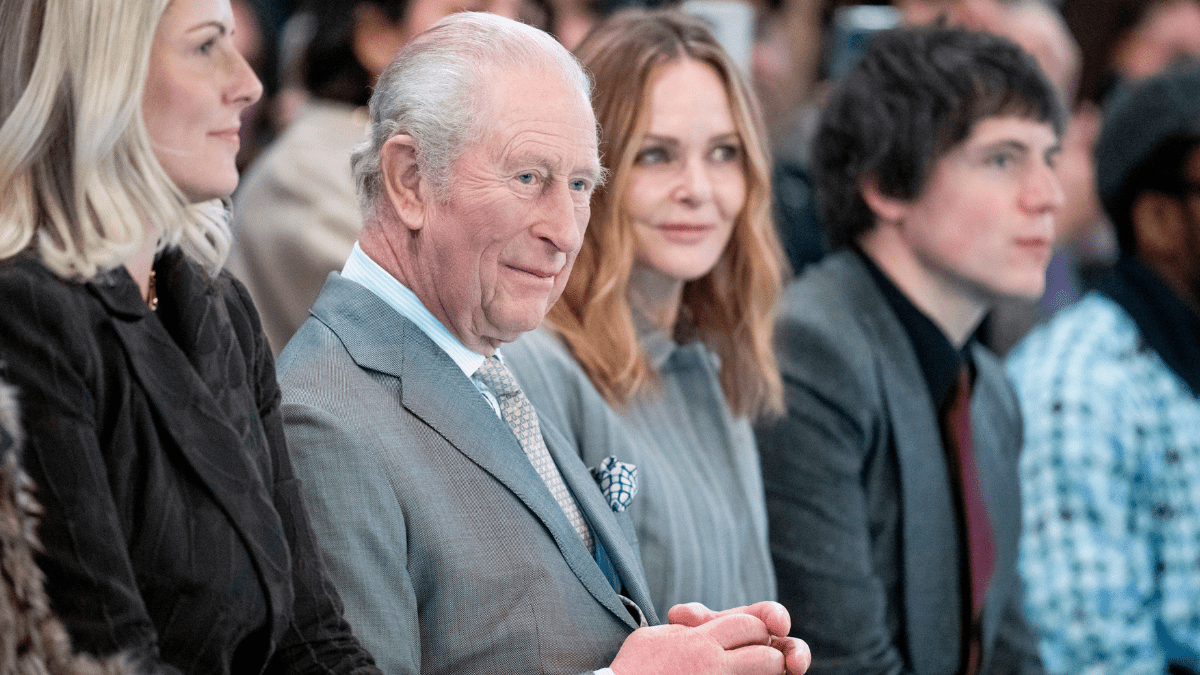
London Fashion Week opened Thursday with an unexpected royal appearance as King Charles III attended a runway presentation in the British capital, a visit that coincided with intense media attention surrounding the arrest of his brother, Prince Andrew, on suspicion of misconduct in public office linked to his past dealings with convicted U.S. sex offender Jeffrey Epstein.
The monarch arrived at a show by British Nigerian designer Tolu Coker, drawing crowds and photographers outside the venue. During the appearance, he greeted designers and fashion executives before taking a front row seat beside British Fashion Council chief executive Laura Weir and designer Stella McCartney.
At one point, a question from onlookers about Prince Andrew was shouted toward the king, though he appeared not to respond.
The visit formed part of several official engagements carried out by Charles the same day, projecting continuity in public duties despite developments involving the royal family.
Wearing a grey suit, he toured exhibition stands and later presented McCartney with a scarf.
Organisers said the king’s presence highlighted the cultural and economic significance of the event, which traditionally emphasises emerging designers rather than large luxury houses.
Read also: King Charles Hosts First Nigerian State Visit In Decades
London Fashion Week has long positioned itself differently from the more commercially dominant shows in Paris and Milan, focusing on creative experimentation and early career talent.
Among designers preparing to present collections is 27 year old Joshua Ewusie, a London born creator of Ghanaian heritage, who is staging the second runway show for his label E.W.Usie. Ewusie received support from the King’s Foundation, a charity established by Charles, which provided him with studio space after graduating from Central Saint Martins. Chanel is among organisations that collaborate with the foundation.
Ewusie said London offered opportunities for young brands that might struggle to gain visibility elsewhere.
The city hosts several fashion schools and development programmes that help new designers move from education to commercial production.
Coker, whose presentation the king attended, founded her label in 2018. Her collection featured largely unisex tailoring and references to multiple cultural identities. Organisers said the show emphasised craftsmanship and sustainability, themes increasingly central to British fashion’s international positioning.
Elsewhere in central London, the industry also marked the legacy of designer Paul Costelloe, who died in November aged 80. His collections had been a regular opening day fixture since London Fashion Week began in 1984. The brand is now led creatively by his son, William Costelloe, who is overseeing the Autumn Winter 2026 presentation.
Several established names are scheduled to return to the runway, including Harris Reed and Richard Quinn, while Burberry will conclude the week’s events on Monday evening.
Read more: How Jesse Jackson Redefined US Presidential Politics
Brands frequently worn by Catherine, Princess of Wales, such as Emilia Wickstead, Edeline Lee and Erdem, are also presenting collections.
One notable absence is Northern Irish designer Jonathan Anderson. After taking a senior role at Dior last year, he has not scheduled a show for his own label, JW Anderson, reducing one of the event’s most anticipated presentations in recent seasons.
In recent years London has faced increasing competition from Paris and Milan, whose larger luxury conglomerates dominate global sales. Despite that, the British capital has retained influence through its development pipeline for emerging talent. The British Fashion Council’s NewGen programme continues to fund and mentor young designers, many of whom debut in London before expanding internationally.
The week’s shows will continue through Monday, with industry observers watching both the creative output and the sector’s ability to maintain global relevance amid economic pressures and shifting consumer demand.