
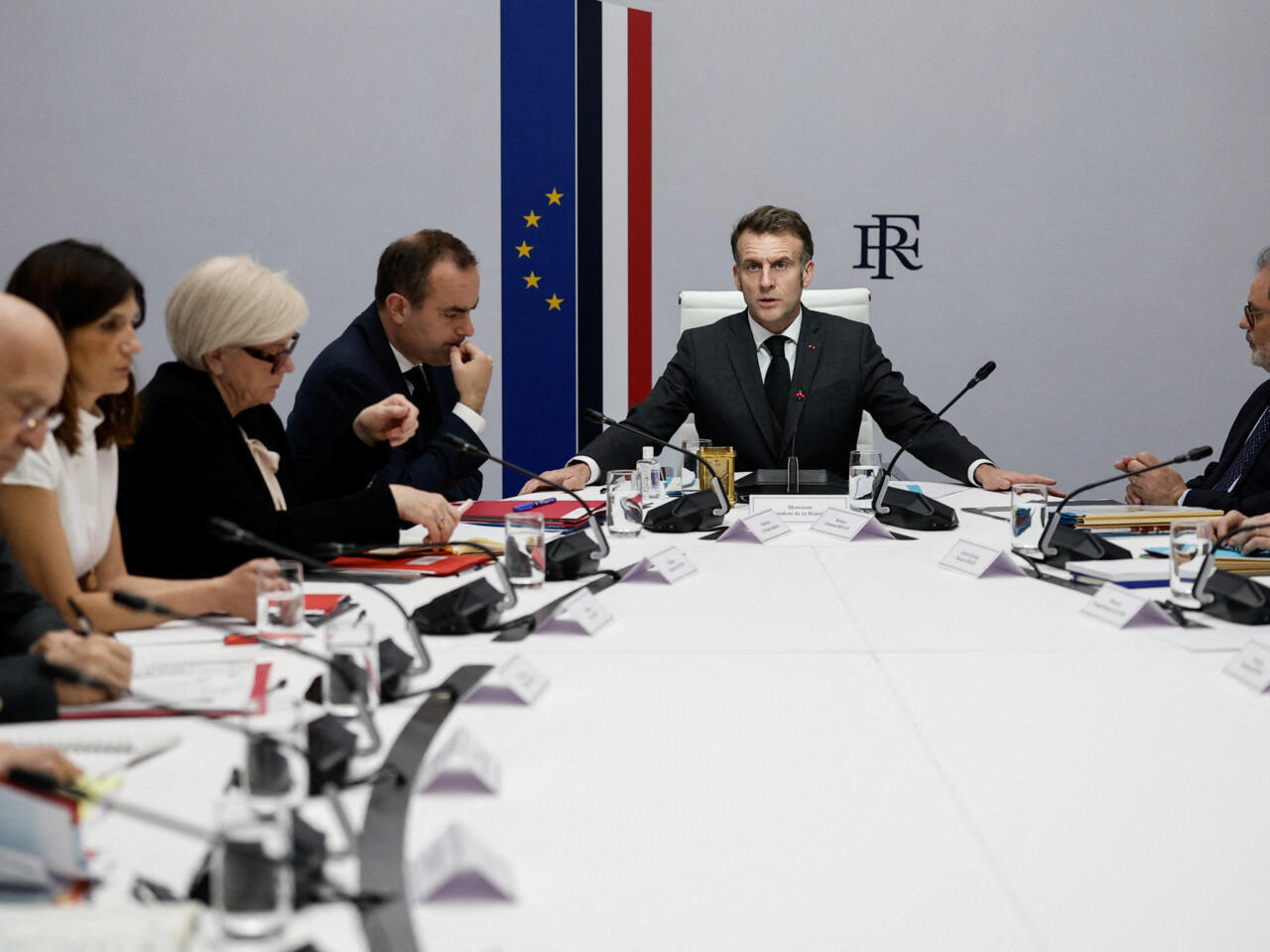
France’s top military commander held video conference calls with counterparts from roughly 35 countries Thursday, launching the most organised international effort yet to plan for reopening the Strait of Hormuz once the US-Israeli war on Iran ends — as concern grows that Tehran could threaten the waterway long after the fighting stops.
Armed Forces Chief Fabien Mandon convened the mass call with officials drawn from across every continent, the French defence ministry confirmed, though it declined to identify the participating nations. The discussions were described as exploratory — an early canvassing of how countries perceive the crisis and what shape a potential post-war maritime mission might take. No commitments were made. No operational details were locked down. But the breadth of the outreach, spanning all continents in a single day, signals that Paris is treating the planning horizon as urgent even before a ceasefire exists to plan around.
Separately, French Navy chief Admiral Nicolas Vaujour said he had spoken with 12 naval counterparts, including senior officers from Britain, Germany, Italy, India and Japan. “We are exchanging views on issues related to freedom of navigation and maritime security, as the sea is a vital artery for our global economy and regional stability,” he wrote on X.
The flurry of contacts reflects a calculation forming quietly among Western governments: the war will eventually end, but the Strait of Hormuz may not automatically reopen when it does. Iran has demonstrated both the capability and the willingness to strike commercial vessels transiting the 34-mile-wide waterway, through which roughly a fifth of global oil and liquefied natural gas supplies normally pass. Shipping has already slowed to near a halt under Iranian interdiction. Without a credible international presence in place when hostilities cease, the disruption could outlast the conflict itself.
Read also: Iran Permits Tanker Passage Through Hormuz As “Goodwill” Present
France has been careful to frame the planning in terms that distance it from the active military campaign. “This initiative, independent of the ongoing military operations in the region, is strictly defensive in nature,” the defence ministry statement said. “Its purpose is to organise the resumption of shipping through the Strait of Hormuz once hostilities have ceased.” None of Washington’s Western allies have offered support for the US-Israeli strikes on Iran, and the French framing is designed to preserve that position while still preparing for the aftermath.
President Emmanuel Macron has said any international mission in the strait should operate within a United Nations framework — a structure that would give participating governments political cover and signal multilateral legitimacy rather than a Western-imposed solution. He has also set out conditions that reflect the diplomatic complexity of what comes after: any action can only proceed once hostilities have calmed, insurance and shipping companies have been brought into the planning, and Iran itself has given its consent.
That last condition is the most fraught. Persuading a country that has just endured weeks of US and Israeli bombardment to consent to an international naval presence in its most strategically vital waterway is a diplomatic challenge without obvious precedent. What Iran would need to agree to such an arrangement — and what the international community would be willing to offer — remains entirely unresolved. Macron’s insistence on consent reflects an understanding that a mission imposed without Iranian agreement would face a different, and potentially more dangerous, operational environment than one it had tacitly accepted.
Read more: Japan Taps Emergency Oil Stockpile Starting Thursday
Britain has moved in parallel with France. Prime Minister Keir Starmer has said London is working with allies toward a “viable” plan to reopen the strait, while acknowledging that viability depends on de-escalation that has not yet materialised. British and French naval assets are already deployed in the region — France has positioned its aircraft carrier strike group in the eastern Mediterranean alongside two helicopter carriers and eight additional warships. The deployments were described as preparation for possible future missions rather than engagement in the current conflict.
A defence official familiar with planning discussions said any mission would likely unfold in stages. The first phase would focus on mine-hunting — clearing the waterway of the naval mines that Iran has the doctrine, inventory and strategic incentive to deploy in a confined chokepoint. The second phase would shift to escort operations, with warships protecting tankers as they transit a cleared but still volatile corridor.
The mine-hunting phase presents its own complications. Sources have said the United States, despite its overall military dominance, lacks sufficient specialised mine-countermeasure capacity to handle the task alone. European navies, which have invested more heavily in that capability, would be essential to any credible demining operation — giving the allies who have declined to participate in the war a central role in managing its consequences.
Whether the 35 countries that joined Thursday’s call translate into meaningful operational partners will depend on factors that no video conference can resolve: how the war ends, what condition Iran’s government is in when it does, and whether Macron’s UN framework can attract the institutional backing needed to give the mission international standing. For now, the conversations have started.