
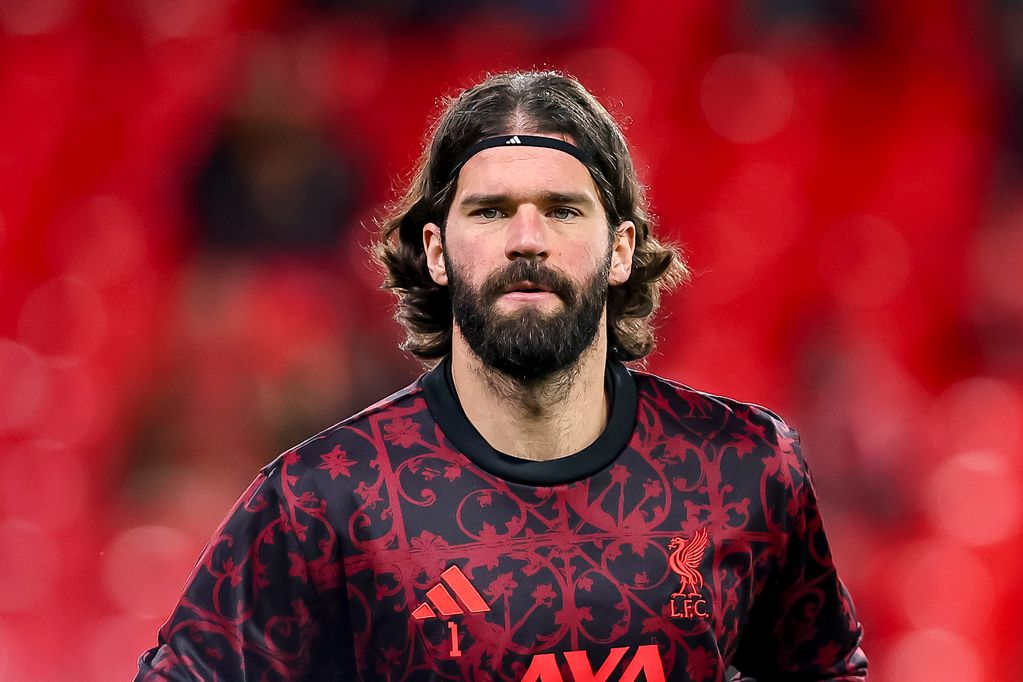
Liverpool’s preparations for the decisive stretch of the season have been significantly disrupted by the confirmed absence of Alisson Becker, with manager Arne Slot indicating that the club’s first-choice goalkeeper is unlikely to return to action until the closing weeks of the campaign.
The timeline outlined by Slot places Alisson’s recovery “towards the end of the season,” effectively ruling him out of several high-stakes fixtures, including both scheduled encounters with Paris Saint-Germain. For a team competing across multiple fronts, the absence of a goalkeeper widely regarded as one of the most reliable in world football introduces both tactical and psychological challenges at a critical juncture.
Read Also: Prof. Nze’s Emotional Tribute At People & Polity At 8
Alisson’s role within Liverpool’s system extends beyond conventional shot-stopping responsibilities. Over recent seasons, he has become integral to the team’s structural organization, particularly in initiating build-up play and maintaining composure under pressure. His distribution, decision-making, and positional awareness have allowed Liverpool to sustain a high defensive line while mitigating the risks associated with transitional play. Removing such a figure from the lineup inevitably alters the team’s equilibrium.
The timing of the injury compounds its impact. Liverpool are entering a phase of the season where margins are increasingly narrow, and the quality of opposition intensifies. Matches against Paris Saint-Germain carry particular significance, given the French club’s attacking depth and technical precision. Navigating these fixtures without Alisson places added responsibility on the defensive unit as well as on his replacement, who must adapt quickly to the demands of elite-level competition.
From a managerial perspective, Slot now faces a complex recalibration. The Dutch coach, still shaping his approach within Liverpool’s evolving framework, must balance continuity with necessary adjustments. Goalkeeping changes often have cascading effects on defensive communication, set-piece organization, and overall team confidence. Ensuring stability in these areas will be essential if Liverpool are to maintain competitiveness during Alisson’s absence.
The situation also highlights the broader issue of squad depth. Elite clubs are increasingly required to contend with congested fixture schedules, where injuries to key players can test the resilience of even the most carefully constructed squads. Liverpool’s ability to absorb this setback will depend not only on individual replacements but also on collective adaptation across the team.
Psychologically, the loss of a player of Alisson’s stature can influence dressing room dynamics. As a senior figure, his presence often provides reassurance in high-pressure moments. His absence removes a layer of experience and leadership that cannot be easily replicated. For younger or less established players stepping into critical roles, the challenge will be to perform with consistency while navigating heightened expectations.
At the same time, such circumstances can create opportunities. Backup goalkeepers, often limited in their exposure to top-level competition, are presented with a platform to demonstrate capability and reliability. How effectively Liverpool’s alternative options respond will shape the narrative of the coming weeks. Strong performances could mitigate the immediate impact of Alisson’s absence, while inconsistency would likely amplify existing concerns.
The broader competitive context further underscores the significance of this development. In both domestic and European competitions, Liverpool are operating within tightly contested environments where incremental advantages often determine outcomes. The absence of a key player during this period can influence not only individual matches but also the trajectory of an entire campaign.
For Paris Saint-Germain, the news alters the complexion of their upcoming encounters with Liverpool. Facing a side without its first-choice goalkeeper may present tactical opportunities, particularly in exploiting areas where defensive cohesion is still being recalibrated. However, such scenarios can also produce unpredictable outcomes, as teams often respond to adversity with heightened collective focus.
Medical timelines in football are inherently uncertain, and while Slot’s projection provides a general framework, the exact timing of Alisson’s return will depend on his recovery process. The club’s medical staff will prioritize long-term fitness over short-term risk, particularly given the importance of ensuring that the goalkeeper is fully prepared for the final stages of the season.
Looking ahead, Liverpool’s ability to navigate this period will be closely scrutinized. The club’s ambitions—whether in domestic competitions or on the European stage—remain contingent on maintaining performance levels despite key absences. The coming fixtures will test not only tactical adaptability but also the depth and resilience of the squad.
Read Also: Trump Ousts Attorney General Bondi, Picks Ex-Personal Lawyer
In strategic terms, the episode reinforces the importance of contingency planning within elite football. Injuries to pivotal players are an inevitable aspect of the sport, and the capacity to manage such disruptions often distinguishes successful teams from those that fall short. Liverpool’s response over the next several weeks will offer insight into the robustness of their current structure under Arne Slot.
Ultimately, the absence of Alisson Becker represents more than a temporary setback. It is a test of institutional strength, tactical coherence, and collective resolve at a moment when the stakes are at their highest. Whether Liverpool can sustain their competitive momentum without one of their most influential players will play a decisive role in shaping the outcome of their season.