
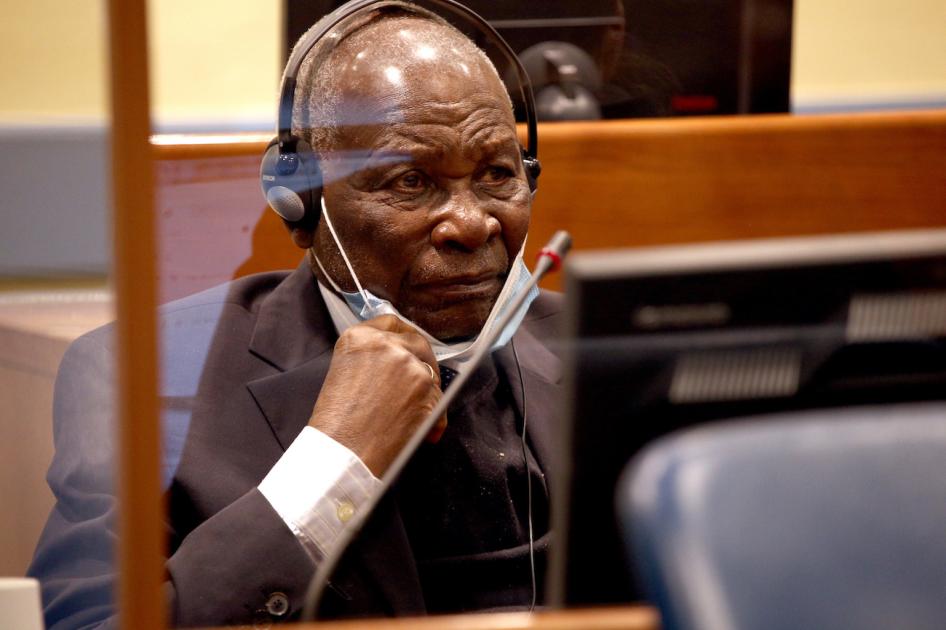
Felicien Kabuga, the Rwandan businessman who spent more than two decades as one of the world’s most wanted fugitives before dying in a UN detention facility without ever being convicted of the genocide charges against him, died Saturday at the age of 93. The UN International Residual Mechanism for Criminal Tribunals confirmed his death in custody and said it had ordered an inquiry into the circumstances.
The death closes a legal chapter that never delivered the reckoning survivors of the 1994 Rwanda genocide spent three decades waiting for — a man accused of financing and orchestrating mass murder dying in The Hague, in the care of the court that could not try him, in a country that had no obligation to keep him and no alternative arrangement for where he could go.
Kabuga was once among Rwanda’s wealthiest men and a close ally of President Juvenal Habyarimana, whose assassination — his plane shot down over Kigali on April 6, 1994 — triggered the hundred days of killing in which Hutu extremists murdered more than 800,000 Tutsi and moderate Hutu people.
Prosecutors accused Kabuga of being the financial engine behind Radio-Television Libre des Mille Collines, the broadcast outlet whose transmissions directed listeners to kill their Tutsi neighbors and provided operational information to the militias carrying out the massacres. He was charged with genocide, incitement to genocide, conspiracy to commit genocide, persecution, extermination and murder. He pleaded not guilty to all of it.
He never answered those charges in a verdict. After his trial opened in 2022, medical assessments determined that dementia had rendered him unfit to stand trial — a finding that outraged genocide survivors who had waited since 1994 for a legal accounting from one of the men they held most responsible for what happened to their families.
Read also: Top IS Leader Killed In U.S.-Nigeria Operation
The UN court subsequently suspended proceedings. Kabuga was deemed too ill to be returned to Rwanda. No country was prepared to accept him. He remained in the UN detention center in The Hague, in a legal limbo that the institution maintained until his death resolved it by other means.
His path to The Hague had been extraordinarily long. An arrest warrant was issued in 1997. A $5 million bounty was placed on his capture. For 23 years he evaded the international manhunt, moving through a network of former Rwandan allies using a succession of false passports, sheltered by relationships that persisted long after the genocide had been recognized by the international community as one of the worst atrocities of the twentieth century. He was finally arrested in a Paris suburb in May 2020, located after French authorities tracked him through his children living in France. He was 87 years old at the time of his arrest and had been living under a false identity.
The Rwanda genocide occurred between April and July 1994, a period of approximately 100 days during which the organized machinery of ethnic killing — radio broadcasts, distributed weapons, trained militias and a government that either directed or enabled the violence depending on the account — produced a death toll that international tribunals have placed at over 800,000 people. The RTLM broadcasts that prosecutors attributed to Kabuga’s financing and direction were among the most documented instruments of incitement in modern history, their role in accelerating the killing studied extensively in scholarship on media and genocide.
Read also: Amnesty Documents ‘Extensive Brutality’ By Congo Rebels
Kabuga pleaded not guilty in 2022 and called the charges against him lies. The dementia ruling meant those denials were never tested against the prosecution’s evidence in a completed trial.
For survivors still living in Rwanda and in diaspora communities around the world, his death without conviction is a specific kind of unfinished business — the kind that international justice mechanisms, with their procedural requirements and their vulnerability to the biological clock of elderly defendants, have repeatedly failed to close in the three decades since Kigali burned.
The IRMCT’s inquiry into the circumstances of his death is standard procedure for a death in custody. The circumstances of everything that preceded it will remain contested.