
Nuclear negotiations between Washington and Tehran were scheduled to open in Geneva on Tuesday under a heavy shadow — a second U.S. aircraft carrier now positioned in the Middle East, unresolved questions about Iran’s uranium stockpile, and both governments arriving with conditions the other has already rejected.
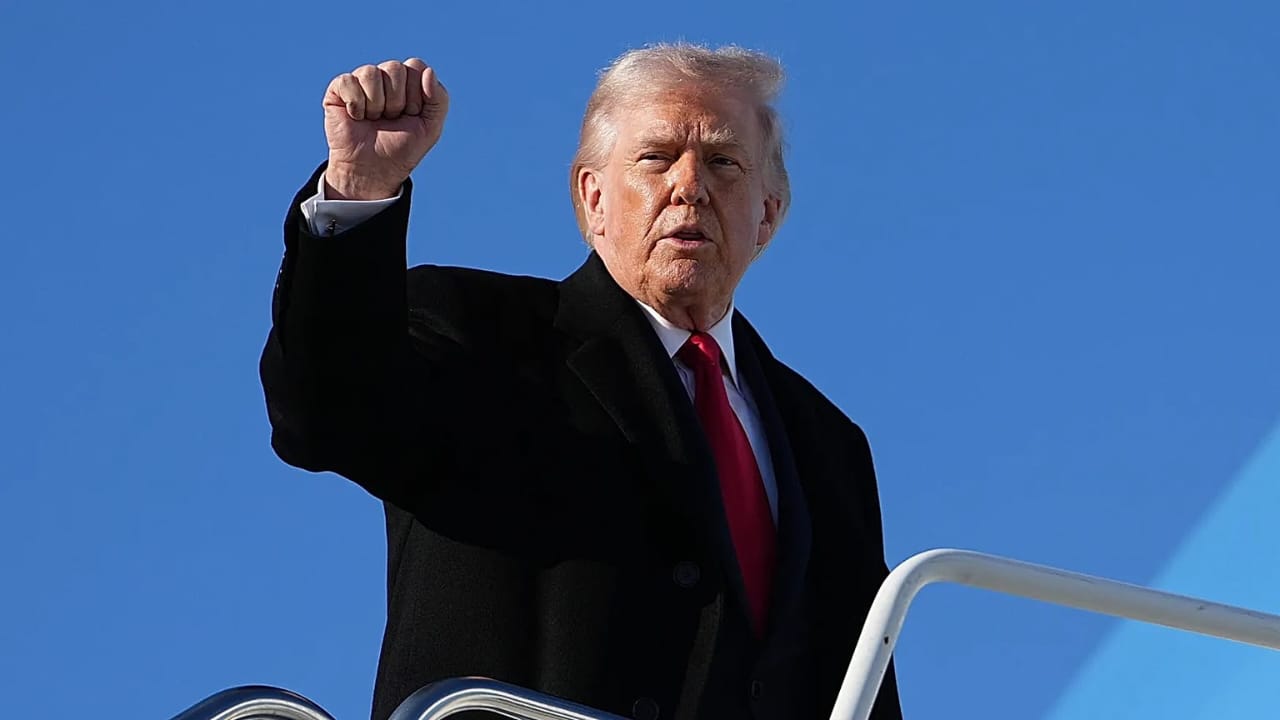
Donald Trump, speaking to reporters on Air Force One on Monday, confirmed he would have an indirect hand in the proceedings. “I’ll be involved in those talks, indirectly. And they’ll be very important,” he said.
The president tied Iran’s willingness to engage to the punishment already delivered. Last June, U.S. B-2 stealth bombers struck Iranian nuclear facilities after talks stalled over Washington’s demand that Tehran abandon uranium enrichment on its soil. Trump was unambiguous about the lesson he believed Tehran had drawn. “I don’t think they want the consequences of not making a deal,” he said.
He went further. “We could have had a deal instead of sending the B-2s in to knock out their nuclear potential. And we had to send the B-2s. I hope they’re going to be more reasonable.”
The tone was notably different from Friday, when Trump had spoken warmly about regime change in Iran and cast doubt on whether negotiating with the Islamic Republic had ever been worth the effort. Monday’s remarks leaned toward coercive optimism — pressure dressed as confidence.
Iran’s foreign minister, Abbas Araqchi, landed in Geneva the same day and met with the head of the International Atomic Energy Agency before the talks formally convened. His message to the public was precise. He was there, he wrote on X, to “achieve a fair and equitable deal.” He then drew the boundary: “What is not on the table: submission before threats.”
The gaps between the two positions are not subtle. Tehran has said it will entertain limits on its nuclear program only against concrete sanctions relief — and will not accept a condition of zero enrichment. Its missile arsenal, which Washington wants folded into any comprehensive agreement, is not up for discussion as far as Iranian officials are concerned.
Read also: Iranian Diplomacy Returns To Geneva Amid Nuclear Talks
Meanwhile the IAEA has been unable to account for 440 kilograms of highly enriched uranium that went unverified after the June strikes. The agency has repeatedly demanded access to three bombed sites — Natanz, Fordow and Isfahan — where inspections remain suspended. Iran has yet to provide satisfactory answers.
On the same morning the Geneva talks were set to begin, Iranian forces ran a military drill in the Strait of Hormuz. The exercise carried an implicit message: roughly a fifth of the world’s daily oil supply transits that waterway, and Tehran has previously threatened to close it in response to military action. Gulf states, which depend on the strait for the bulk of their crude exports, have been quietly urging a diplomatic outcome.
Secretary of State Marco Rubio, in Budapest for a separate engagement, did not project optimism. “I think that there’s an opportunity here to diplomatically reach an agreement,” he said, “but I don’t want to overstate it either.” He described the fundamental problem in blunt terms. “It’s going to be hard. It’s been very difficult for anyone to do real deals with Iran, because we’re dealing with radical Shia clerics who are making theological decisions, not geopolitical ones.”
Read more: Marco Rubio Reacts To European Report On Navalny Poisoning
U.S. officials told Reuters the Pentagon is preparing contingency plans for a sustained military campaign should the talks break down entirely.
The Geneva session is the first direct engagement between the two governments since the June bombing. Neither side has disclosed who will sit at the table, what format the talks will take, or whether there is an agreed framework for what a preliminary understanding might look like.
The IAEA has noted it cannot fully verify Iran’s current nuclear posture given the access restrictions still in place — a condition that has sharpened American demands for transparency before any relief is extended.
What brought both parties to the table is not agreement. It is, by most accounts, the arithmetic of risk on each side — and whether either government calculates that walking away costs more than staying.