
The U.S. Supreme Court will consider the scope of a law passed in the aftermath of the Cold War-era disputes between the U.S. and Cuba, as the justices heard arguments on Monday in two cases that could significantly change the way Americans pursue claims for seized property in the wake of Cuba’s revolution in 1959.
At the heart of the dispute is the Helms-Burton Act, passed in 1996, which implemented the U.S. trade embargo against Cuba and provided a mechanism for U.S. citizens to sue companies that allegedly profited from the seizure of their property by Fidel Castro’s communist government.
The Supreme Court’s review will be the first time that the justices have construed a key provision of the law, called Title III, which permits civil lawsuits in U.S. courts against companies that are “trafficking” in seized property.
The cases stem from lawsuits filed after the provision was triggered in 2019, when then-President Donald Trump lifted over two decades of waivers issued by previous presidents of both parties, allowing claims to proceed.
Previous administrations had suspended Title III repeatedly due to worries of diplomatic fallout with countries whose firms operated in Cuba.
The cases collectively before the court will reveal the scope of the law’s applicability and whether procedural requirements set by lower courts have limited the law’s effectiveness.
Legal analysts indicate that the outcome of the cases may affect the processing of claims for billions of dollars in damages.
In one of the cases, Exxon Mobil Corp. is seeking over $1 billion in damages for oil and gas properties that were nationalized by the Cuban government in 1960.
Exxon Mobil filed the lawsuit in the federal court in Washington against CIMEX, a Cuban government-owned firm, for allegedly deriving benefit from properties taken without compensation after the revolution.
Read Also: Trump To Visit China Amid Supreme Court Reversal Of Tariffs
The lower courts held in 2024 that CIMEX could assert foreign sovereign immunity, a legal principle that generally exempts foreign governments and their agencies from suits in U.S. courts.
Exxon has petitioned the Supreme Court to reverse the ruling, arguing that allowing such claims to be raised will frustrate Congress’s will to offer a real remedy for seized property.
In its court papers, Exxon’s attorneys argued that the decision “imposes yet another barrier to recovery for those affected by the Castro government’s illegal confiscations.”
CIMEX, on the other hand, has asked the justices to affirm the lower court ruling, arguing that the lower court struck the right balance between statutory interpretation and long-standing rules on suits against foreign states.
The second case raises a different legal issue arising from suits asserted by Havana Docks Corporation, a U.S. firm that constructed port facilities in Havana before losing its rights shortly after Castro took power.
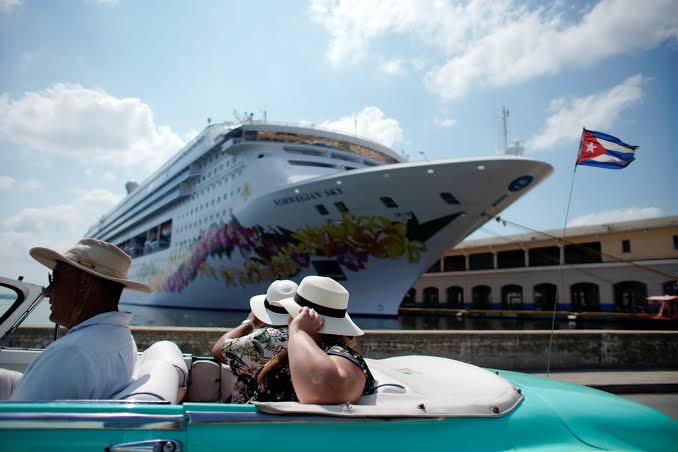
The firm filed suit against Carnival Corp., Royal Caribbean Cruises Ltd., Norwegian Cruise Line Holdings Ltd., and MSC Cruises in 2019, claiming that the cruise line companies trafficked in stolen property by calling at the docks during their Cuba-bound voyages from 2016 through 2019.
These departures took place after the Obama administration eased travel restrictions as part of a larger policy initiative to normalize relations with Cuba.
The cruise lines asserted in a joint pleading that it would be unfair to hold them responsible for conduct in reliance on U.S. government policy to encourage travel to the island at the time.
A federal trial judge in Florida initially ruled that the cruise lines were liable and awarded damages totaling approximately $440 million.
Read Also: Supreme Court Strikes Down Trump Tariffs On China Summit Day
But an appeals court later reversed the decision, determining that the plaintiff had failed to satisfy certain statutory requirements under the law.
The Supreme Court will now review whether plaintiffs must show that they would have retained a valid property interest to this day if the nationalization had never occurred.
The cases reflect lingering uncertainties about Title III, which Congress intended as a deterrent against foreign investment in expropriated Cuban properties.
The law permits U.S. nationals, including naturalized citizens whose property claims were certified by the U.S. government, to bring damage claims—potentially tripled—against firms that knowingly used expropriated property.
However, the tool has lain dormant since 1996 as Presidents Bill Clinton, George W. Bush, and Barack Obama exercised their statutory powers to suspend it every six months, citing that its activation could lead to conflict with European and Canadian allies.
Foreign companies, many of which are headquartered in those countries, operate hotels, ports, and infrastructure projects in Cuba.
The Trump administration overturned this stance, finding Cuba to be “an unusual and extraordinary threat” to the U.S. national security, and attempting to increase economic pressure on the Cuban government.
This move led to approximately 40 lawsuits filed between 2019 and 2020, many of which are currently mired in legal disputes.
Cuba nationalized extensive property owned by U.S. individuals and companies following the revolution led by Castro, including sugar plantations, refineries, public utilities, and factories.
The estimated value of certified claims is several billion dollars, although the economic effect has long been a source of contention between the two nations.