
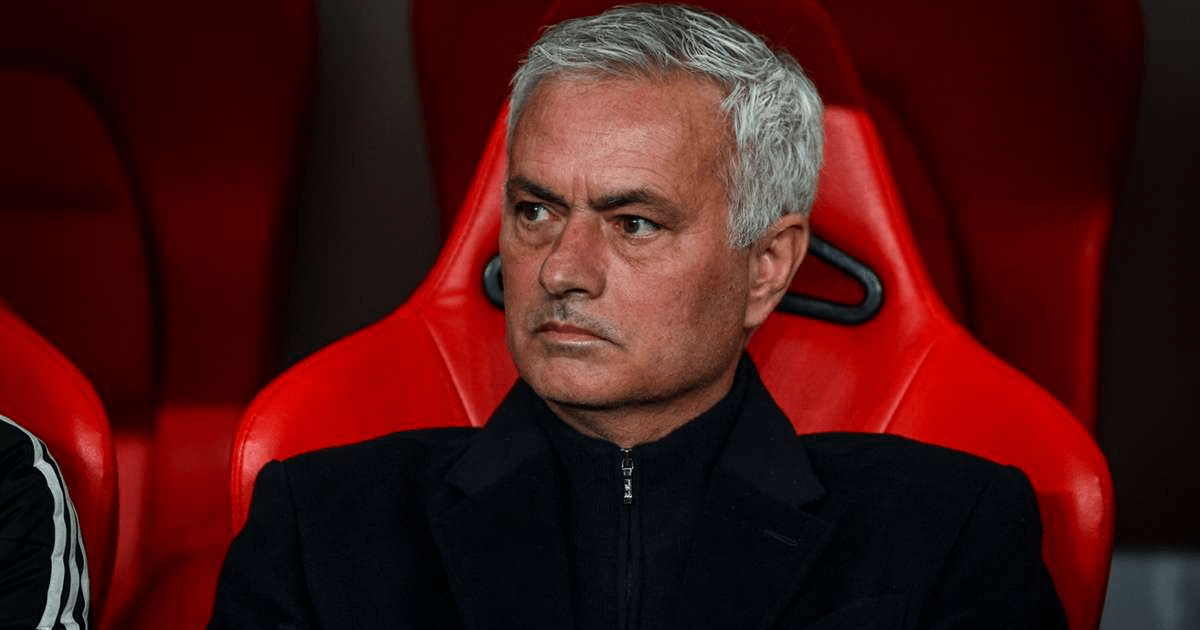
A contractual mechanism embedded within the managerial agreement of José Mourinho has introduced a decisive variable into the leadership planning cycle of Real Madrid, creating a narrow but strategically significant window that could reshape coaching leadership across two major European football institutions before the summer transfer period begins.
The clause in question, negotiated within Mourinho’s current tenure at SL Benfica, establishes a defined financial exit pathway valued at approximately €6 million gross, translating to nearly €3 million net. The operational feature that elevates its relevance is not solely its cost—widely considered modest by elite football standards—but its expiration timeline. The provision remains actionable only until the final days of May, compressing the decision-making cycle into a period that directly overlaps with preseason planning, squad restructuring, and commercial positioning across European football.
From a governance standpoint, the existence of a fixed-duration exit clause shifts negotiating leverage toward potential acquiring institutions, particularly those capable of mobilizing rapid internal consensus. Within the structure of Real Madrid, ultimate authority on managerial appointments is historically centralized. Strategic decisions of this magnitude are widely understood to fall under the direct jurisdiction of club president Florentino Pérez, whose track record demonstrates a preference for personal oversight in leadership transitions involving high-profile coaching figures.
Madrid’s awareness of the clause introduces a time-sensitive variable into an already complex managerial landscape. While no formal activation has occurred, the existence of the contractual pathway effectively places Mourinho into a conditional availability category, contingent upon Madrid’s internal strategic review. This creates a dynamic where Benfica’s operational continuity planning remains intact in the short term but vulnerable to external disruption should Madrid exercise its option.
Benfica’s internal posture appears oriented toward retention rather than transition. Club leadership has reportedly advanced forward-looking planning initiatives built around Mourinho’s tactical framework, reinforcing confidence in his role as a central architect of future competitiveness. This alignment reflects the broader trend among European clubs to emphasize continuity as a performance stabilizer, particularly in leagues where financial efficiency and squad cohesion are critical differentiators.
Read Also: UN Body Condemns Sweden’s Expulsion Of Disabled Minor
The financial architecture of the clause is noteworthy when examined against prevailing market benchmarks. Managerial buyouts at elite levels frequently exceed €10 million, particularly when tied to multi-year contracts with high-performance incentives. In this context, the €6 million figure functions less as a financial barrier and more as an administrative threshold—low enough to permit flexibility but high enough to discourage speculative movement without deliberate intent.
For Real Madrid, the strategic calculus surrounding Mourinho extends beyond immediate coaching considerations. Leadership selection at the club is closely tied to broader institutional positioning, including global brand alignment, sponsorship engagement, and competitive continuity within European tournaments. Managerial identity functions as both a sporting and commercial signal, influencing investor confidence, supporter sentiment, and media market visibility.
Mourinho’s historical association with Real Madrid introduces an additional layer of institutional memory into the equation. During his previous tenure, the club experienced one of its most intense competitive phases domestically, characterized by high-output tactical systems and significant defensive restructuring. While the broader football landscape has evolved since that period, the legacy of that era continues to shape perceptions of Mourinho’s compatibility with Madrid’s operational culture.
From Mourinho’s standpoint, available signals suggest readiness to re-engage should Madrid initiate formal proceedings. This posture reinforces the asymmetry of the current situation, where the decisive variable resides not with the coach or Benfica but with Madrid’s internal governance cycle. Such alignment positions Mourinho in a holding pattern, maintaining operational continuity at Benfica while preserving optionality for a potential transition.
The timing dimension of the clause introduces operational risk for both institutions. Benfica must continue executing preseason planning, transfer negotiations, and tactical preparation under the assumption of managerial stability, even as the contractual framework leaves open the possibility of sudden leadership change. Real Madrid, by contrast, faces pressure to reach clarity within a compressed timeline that intersects with critical squad-building milestones.
Modern football governance increasingly treats managerial transitions as integrated business decisions rather than isolated sporting events. Leadership appointments influence recruitment algorithms, contract negotiations, and financial projections tied to competition outcomes. In this environment, uncertainty surrounding managerial status can cascade into broader organizational inefficiencies if not resolved within structured timelines.
The potential activation of the clause also reflects the evolving role of contractual flexibility within elite sports management. Short-duration release mechanisms are becoming more prevalent, allowing clubs to retain talent while preserving exit pathways that support career mobility and institutional adaptability. Such clauses function as regulatory tools within the football economy, balancing competitive ambition with market responsiveness.
Beyond club-level implications, developments surrounding Mourinho’s availability are being closely observed across European football networks. Rival clubs and player agents typically adjust strategic positioning based on perceived shifts in leadership alignment at major institutions. A managerial appointment at Real Madrid has historically triggered ripple effects across transfer markets, influencing player valuations, contract renewals, and tactical recruitment patterns.
Read Alslo: Musk’s OpenAI Battle Reaches Jury Selection Stage
The broader financial implications are equally significant. Real Madrid’s managerial decisions often coincide with commercial recalibration cycles, including sponsorship renewals and merchandising strategies. Leadership narratives shape brand identity in global markets, particularly across emerging football economies where club symbolism drives fan engagement and broadcast consumption.
For Benfica, maintaining Mourinho’s tenure supports continuity within Portugal’s competitive structure, where strategic stability remains essential for sustaining domestic performance and European qualification ambitions. The club’s preference to retain its current manager reflects a calculated effort to safeguard institutional coherence rather than enter a potentially disruptive transition phase.
Ultimately, the contractual window closing at the end of May introduces a definitive horizon for decision-making. In high-performance organizations, clearly defined deadlines often serve as catalysts for accelerated strategic alignment. Whether Madrid elects to activate the clause or allow it to lapse will determine not only the immediate leadership configuration of two prominent European clubs but also the broader narrative shaping the upcoming football cycle.
What emerges from this scenario is a clear illustration of how managerial contracts now function as strategic instruments within the global football economy. The interplay between financial structure, governance authority, and timing discipline demonstrates the increasing sophistication of leadership planning in elite sport. For stakeholders across Europe and beyond, the coming weeks will serve as a practical demonstration of how contractual architecture translates into competitive advantage—or institutional continuity—within the modern game.