
Roughly six in ten eligible Nepalis cast ballots Thursday in an election shaped by last September’s youth uprising, which left at least 77 people dead and forced the resignation of a prime minister who is now seeking to reclaim power through the same democratic process that protesters said had failed them.
Acting Chief Election Commissioner Ram Prasad Bhandari put turnout at 60 percent, slightly below the 61 percent recorded in 2022. He said the vote proceeded peacefully apart from isolated disruptions and that preliminary reports from observers suggested no major irregularities.
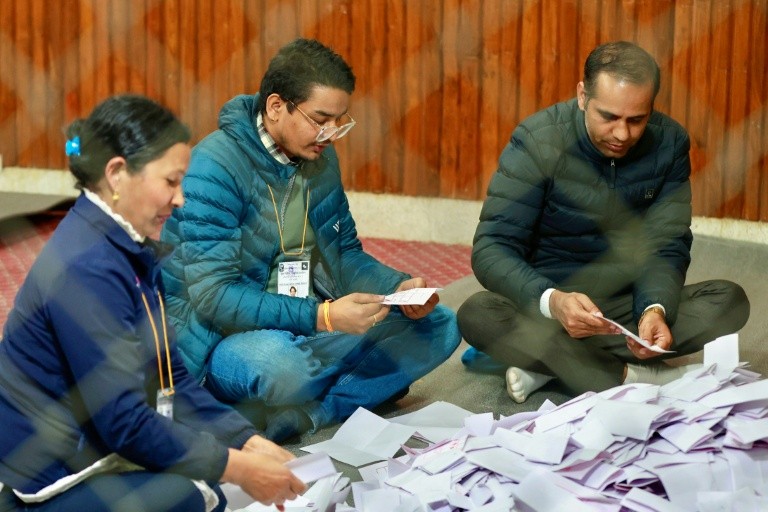
Counting was set to begin after polls closed at 5pm. Early trends could emerge by Friday, though complete results from the contest to fill 275 seats in the House of Representatives may take a week.
The election tested whether anger that drove thousands into the streets between August and September can translate into support for candidates promising to dismantle the political order those protesters blamed for corruption, unemployment and misgovernance. Campaign rhetoric focused heavily on jobs, accountability and reform—the same demands shouted during demonstrations that paralyzed Kathmandu and other cities for weeks.
Balendra Shah, a 35-year-old rapper turned politician who served as Kathmandu’s mayor and became a prominent voice during the uprising, emerged as the face of the Rastriya Swatantra Party.
The centrist movement, founded less than four years ago, is considered a leading challenger to the Nepali Congress and the Communist Party of Nepal (Unified Marxist-Leninist), both of which have dominated politics for decades.
Shah drew massive crowds during campaigning, tapping into frustration among young voters who see establishment parties as incapable of delivering change. His rallies packed public squares with supporters chanting slogans that echoed the September protests.
Khadga Prasad Sharma Oli, the prime minister who stepped down under pressure from the demonstrations, is running again under the Communist Party banner. He faces a field of more than 3,400 candidates from 65 parties, many of them splinter groups or regional movements with limited reach.
Luniva, voting for the first time, said she came to the polls because of the sacrifices made during the protests. She told the Associated Press she wanted to see Nepal improve through the changes so many had fought for, some with their lives.
Political analyst Puranjan Acharya told Reuters the election is critical for addressing aspirations expressed by young people during the Gen Z protests. If newly elected leaders fail to meet those expectations, he warned, further unrest could follow.
Voters directly elected 165 members to the lower chamber of parliament. The remaining 110 seats will be allocated through proportional representation, with parties nominating lawmakers based on their share of the vote.
Nepal’s youth-led movement began in August with small gatherings in Kathmandu and spread rapidly across the country as frustration over economic stagnation and political dysfunction boiled over.
Protesters called for Oli’s resignation, the dissolution of parliament and systemic reforms to a political class they accused of enriching itself while ordinary Nepalis struggled.
Security forces responded with tear gas, water cannons and in some cases live ammunition. The death toll climbed as clashes intensified, with hospitals overwhelmed and morgues filling. International human rights groups condemned the violence, but the government insisted it was maintaining order against what it called illegal assembly.
Read also: Shares Of Airlines Rebounce As Middle Eastern Flights Resume
Oli resigned in September after it became clear he had lost support within his own party and could not contain the unrest. An interim government organized Thursday’s vote under a caretaker arrangement designed to ensure neutrality.
The Rastriya Swatantra Party capitalized on the power vacuum.
Shah and other leaders positioned themselves as outsiders untainted by the corruption and incompetence they said defined traditional parties.
Whether that message resonates broadly enough to secure a governing majority remains uncertain.
Nepal has cycled through more than a dozen prime ministers in the past 15 years, with coalition governments collapsing repeatedly over power-sharing disputes and ideological divisions. Political instability has stalled development projects, discouraged foreign investment and left infrastructure crumbling.
The country’s economy depends heavily on remittances from Nepalis working abroad, many of them in Gulf states or Malaysia. Youth unemployment has driven hundreds of thousands to seek opportunities overseas, draining the country of skilled workers and leaving families separated for years.
Corruption permeates government at all levels. Transparency International ranks Nepal among the world’s most corrupt countries, with bribery commonplace in everything from obtaining permits to securing jobs. The perception that politicians enrich themselves while citizens suffer fueled much of the protest movement’s anger.
Read also: Middle East Violence Batters Yen, Euro Over Fuel Concerns
Shah’s appeal lies partly in his outsider status. Before entering politics, he gained fame as a rapper and later won Kathmandu’s mayoral race as an independent. His tenure was marked by efforts to clean up the capital and challenge entrenched interests, though critics say his achievements were modest.
Whether he can replicate that success nationally is an open question.
Governing Nepal requires navigating a fractured political landscape, managing relations with powerful neighbors India and China, and delivering on promises to millions of voters whose patience has run thin.
Oli’s return to the ballot reflects the resilience of established parties despite widespread dissatisfaction. His Communist Party retains strong organizational networks in rural areas and among older voters who remember when it led Nepal’s transition from monarchy to republic two decades ago.
The proportional representation system could complicate efforts by any single party to secure a majority. Coalition-building will likely be necessary, raising the possibility of the same backroom deals and unstable alliances that have characterized Nepali politics for years. If results show significant gains for the Rastriya Swatantra Party, it could signal a generational shift in the country’s political alignment. If traditional parties hold their ground, it may suggest that despite the protests, voters remain skeptical that newcomers can deliver change. The September uprising was the largest display of public anger since the movement that abolished the monarchy in 2008. Unlike that earlier period, when political parties united against the king, the recent protests targeted the parties themselves, accusing them of betraying the democratic ideals they once championed.
Security remained tight across polling stations Thursday, with police and election observers deployed to prevent violence or vote manipulation. Bhandari said isolated incidents of obstruction occurred but did not specify details or locations. International observers monitored the process, though their final assessments will not be released until counting concludes and results are certified. Nepal has a mixed record on electoral integrity, with past votes marred by allegations of ballot stuffing, intimidation and irregularities in vote tabulation.