
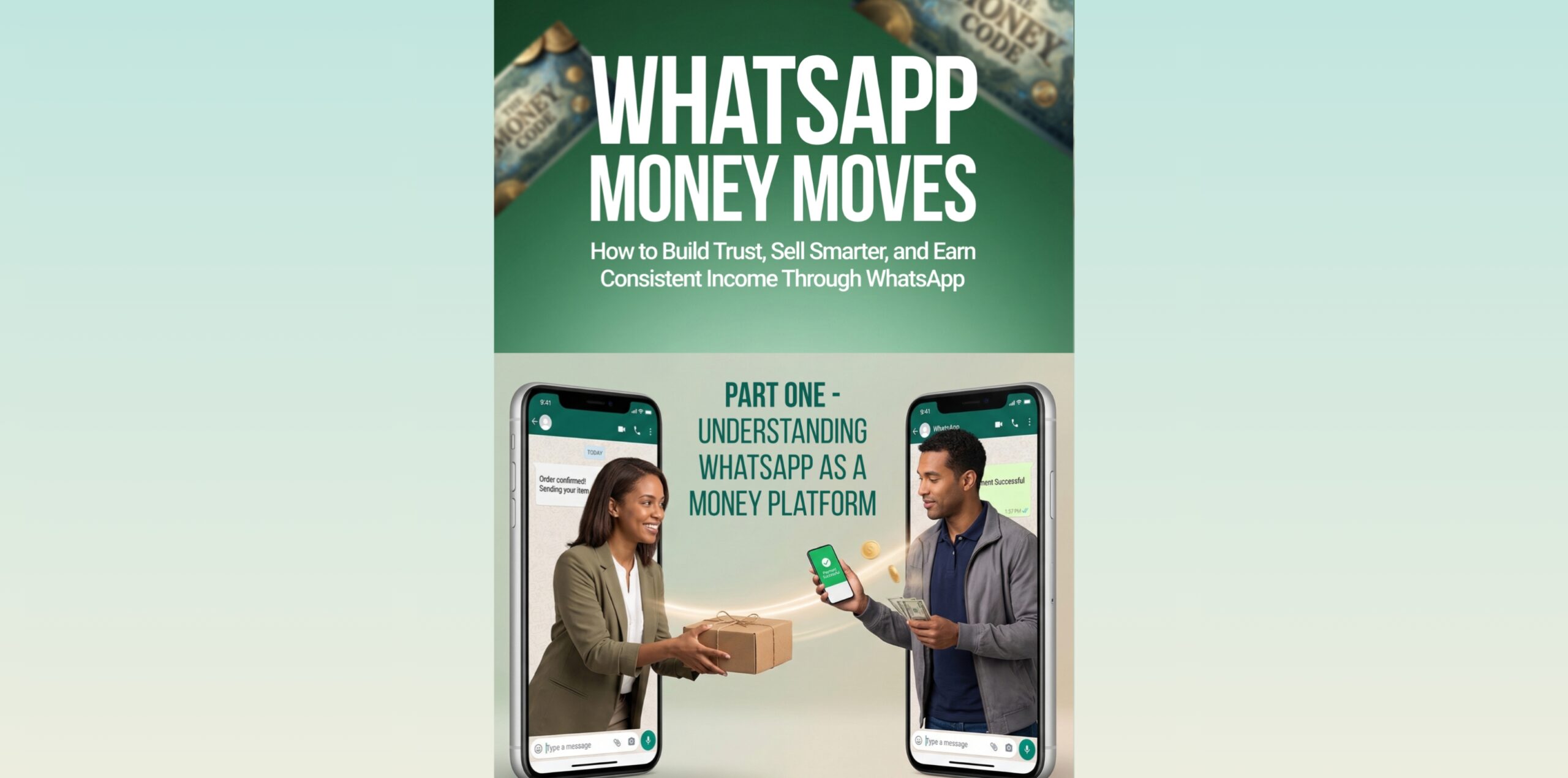
Part One — Understanding WhatsApp as a Money Platform
To make money on WhatsApp, you first need to understand what kind of platform it really is.
Many people start from the wrong assumption. They treat WhatsApp as a mini version of Instagram, a stripped-down email list, or a place to chase quick sales in bulk. In practice, WhatsApp behaves differently from all three. It is closer to a conversation economy.
On public platforms, visibility is the first challenge. On WhatsApp, the first challenge is trust. That shifts everything. On Instagram or TikTok, you can attract strangers with entertaining or useful content and worry about the relationship later. On WhatsApp, attention is often narrower but more intimate. That means lower volume, higher context, and stronger expectations.
People expect relevance inside WhatsApp.
They are more likely to respond if they know why you are messaging them, how they came into your orbit, and what value you bring. This is what makes WhatsApp such a powerful income tool for people who understand customer psychology. The app favors those who can build warmer relationships rather than colder noise.
Why does WhatsApp work commercially? There are five core reasons.
The first is familiarity. People already use it. You are not trying to drag them onto an unfamiliar platform or persuade them to create a new habit from scratch. You are meeting them in an environment they already check regularly.
The second is speed. A WhatsApp message is often seen and processed faster than an email. Questions are answered quickly. Objections can be handled in real time. Decision-making becomes more fluid. That matters in sales because hesitation thrives in silence.
The third is convenience. Customers can ask for details, request clarification, receive product information, check availability, and pay with fewer steps than in many traditional funnels.
The fourth is organization. This is where many amateurs fall behind. Business features such as labels, greeting messages, away messages, quick replies, and catalogs allow you to move from casual chatting to disciplined customer handling.
The fifth is audience structure. One-to-one messages matter, but so do channels, communities, status updates, and warm contact lists. Together, they make it possible to build an ecosystem rather than a string of isolated chats.
Most income activity on WhatsApp falls into one or more of three modes.
Mode one is direct selling through conversation. A customer asks a question, you respond, explain the offer, address concerns, and guide them toward purchase. This works especially well for service providers, consultants, coaches, freelancers, educators, event organizers, and micro-retailers.
Mode two is list-based or group-based nurturing. Here, WhatsApp becomes a relationship channel. You gather interested people into a group, a broadcast-style contact structure, or a community environment, then provide useful information, updates, reminders, and occasional offers.
Mode three is trust transfer from external platforms. Someone sees your Instagram reel, Facebook post, website, flyer, or referral and moves into WhatsApp for the actual conversation. In this setup, WhatsApp is where conversion happens.
The strongest businesses often combine all three.
They attract attention somewhere, move interested prospects into WhatsApp, then use direct conversation plus structured follow-up to close sales and retain customers.
Not every business model works equally well on WhatsApp.
The platform is particularly strong for offers that benefit from explanation, reassurance, customization, or personal interaction. Think about services such as graphic design, copywriting, tutoring, coaching, travel assistance, event planning, digital setup services, local retail, or small-batch curated product sales. It is also strong for product categories where repeat buying is possible and trust matters, such as skincare, fashion accessories, books, training materials, home items, and niche consumer goods.
It is excellent for information commerce too.
If you sell ebooks, mini-courses, templates, guides, checklists, paid communities, webinars, or downloadable resources, WhatsApp can function as both sales channel and customer-care layer. A buyer may need to ask one or two questions before committing. WhatsApp makes that easier. So long as your replies are sharp and your process is professional, the app reduces hesitation.
Affiliate marketing can work there as well, though with caution. The right way is not to spray links at everyone you know. The right way is to recommend products within a context of trust and relevance, often after building a themed audience or relationship.
Now the hard truth: WhatsApp is not a substitute for product quality. It is not a substitute for market research. It is not a rescue plan for weak offers. It is also not ideal for every kind of cold outreach. If your business depends on massive anonymous reach with minimal personalization, WhatsApp will often feel constraining.
The platform also punishes disorganization.
Read also: WhatsApp Money Moves —Intro
A business owner who forgets who asked what, answers slowly, mixes personal and business communication chaotically, or has no system for follow-up will create confusion fast. And confusion is expensive. In messaging environments, lost sales often happen quietly. The customer simply stops replying.
One reason WhatsApp is commercially potent is that it compresses emotional distance. When people message you on WhatsApp, they often feel they are already halfway into a relationship. That can be useful, but it can also become messy if boundaries are poor. A buyer may expect instant response at all hours. A prospect may ask endless questions without intention to buy. Someone may assume friendliness equals negotiability.
This is why making money on WhatsApp requires both warmth and structure.
Read more: WhatsApp Money Moves
Warmth without structure leads to exhaustion. Structure without warmth leads to low conversion. You need both. You need to sound human, but also operate like a business.
Most people get one or two of these elements right. Skilled operators get all four. They make customers feel seen without becoming trapped in endless chat. They answer thoroughly without writing essays. They sound confident without sounding arrogant. They guide people toward decisions without seeming pushy.
That balance is where revenue lives.
Who can realistically make money on WhatsApp? Anyone with a clear offer and enough seriousness to communicate well. It especially suits people who sell through trust and relationships, people whose buyers usually have questions before purchasing, people serving local or community-based markets, and people willing to follow up consistently.
A small, disciplined WhatsApp business often earns more than a large, noisy, chaotic one. The entrepreneur who has two hundred relevant contacts, a strong offer, good response systems, and a habit of thoughtful follow-up will often outperform someone with two thousand passive contacts and no plan.
When people hear “make money on WhatsApp,” they often imagine direct product sales. But WhatsApp can support several income models: service sales, product sales, digital product sales, community monetization, lead generation, and customer retention.
That last category deserves emphasis. Keeping a customer is often more profitable than chasing a new one. WhatsApp is excellent for reorder reminders, service updates, appointment confirmations, post-sale care, and reactivation. A business that uses WhatsApp to increase repeat purchases can grow income substantially without doubling its marketing effort.
At the beginning, many people assume WhatsApp income depends on posting more. In practice, money comes more from momentum than noise.
Noise is random activity: constant status updates, frequent forwards, repetitive offers, and scattered messaging.
Momentum is coherent activity: a clear offer, a growing list of interested people, relevant updates, consistent replies, structured follow-up, and repeat customer movement.
Noise makes you visible. Momentum makes you profitable.
When you understand that, your strategy changes. You stop asking, “How do I message more people today?” and start asking, “How do I build a process where the right people move steadily toward buying?”
That is a much better question. And it leads naturally into the next step: setting up your WhatsApp presence so that when people arrive, they find something credible, organized, and easy to trust.