
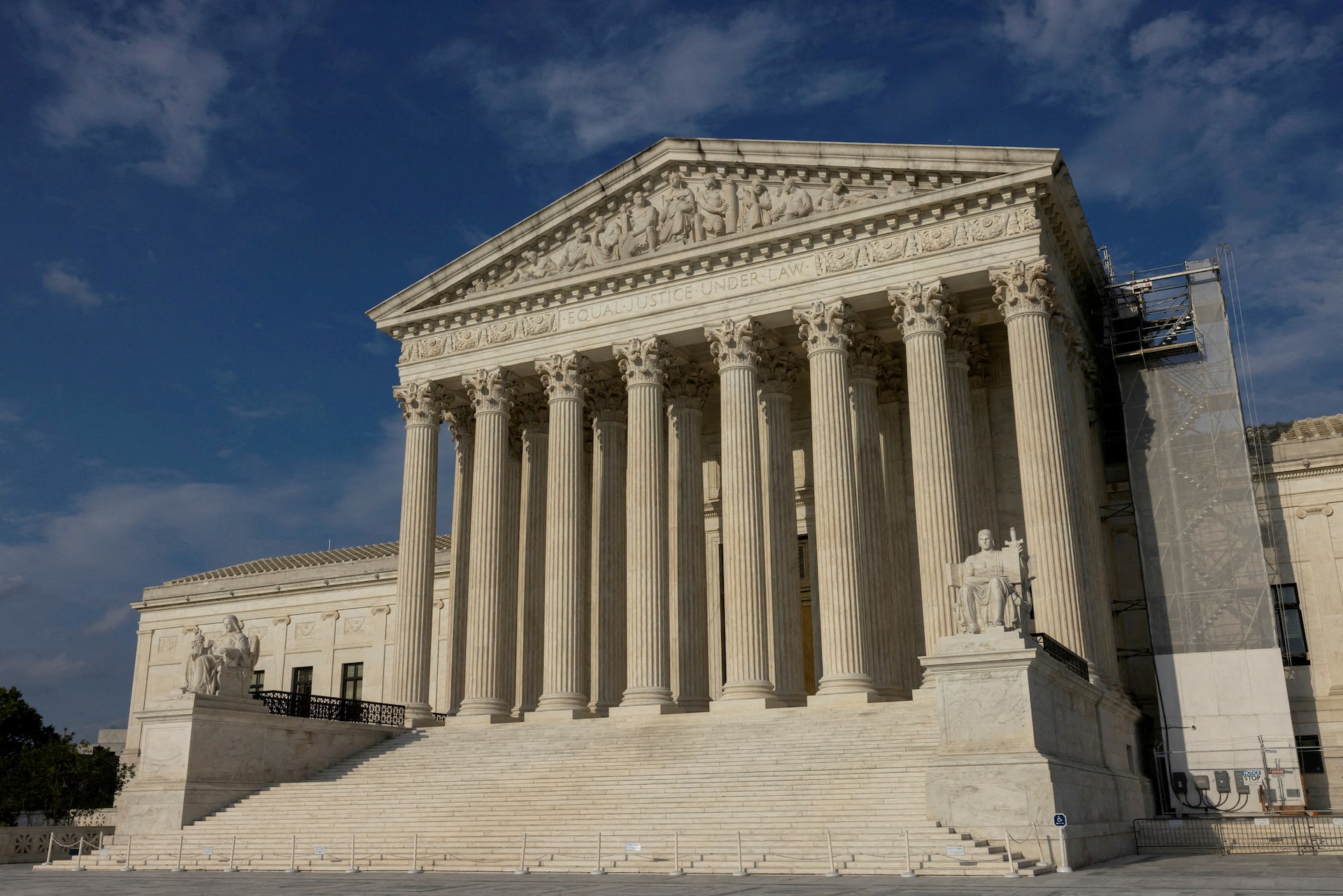
The U.S. Supreme Court ruled Tuesday that Colorado’s ban on conversion therapy for minors violates the First Amendment’s free speech protections, an 8-1 decision that casts doubt on similar laws in more than 20 states and establishes that a therapist’s verbal counseling sessions constitute protected speech rather than regulable professional conduct.
The court reversed a decision from the U.S. Court of Appeals for the Tenth Circuit that had found the law did not violate the free speech rights of Kaley Chiles, a licensed counselor who provides faith-based talk therapy and challenged the state’s Minor Conversion Therapy Law. Justice Neil Gorsuch wrote the majority opinion. Justice Ketanji Brown Jackson was the lone dissenter.
“Colorado’s law addressing conversion therapy does not just ban physical interventions. In cases like this, it censors speech based on viewpoint,” Gorsuch wrote. “Colorado may regard its policy as essential to public health and safety. Certainly, censorious governments throughout history have believed the same. But the First Amendment stands as a shield against any effort to enforce orthodoxy in thought or speech in this country.”
The ruling is narrow in technical scope. The court did not strike down Colorado’s law outright, but reversed the lower court’s decision and returned the case for further proceedings under a more rigorous First Amendment standard, one that few laws survive. The majority left open the possibility that the law could still apply to physical or aversive interventions, but held that it could not constitutionally be applied to the verbal counseling Chiles sought to provide. The court found the law impermissibly favors one viewpoint over another, allowing therapists to affirm a client’s gender identity or sexual orientation while barring them from helping a client change it, even when the client requests that outcome.
Read Also: Trump To Visit China Amid Supreme Court Reversal Of Tariffs
Chiles, represented by the Alliance Defending Freedom, a conservative Christian legal organization, argued that the ban prevented her from offering voluntary, faith-based therapy to minors and families who sought to reduce same-sex attraction or align gender identity with biological sex. She contended her approach differed from older conversion therapy practices such as electroshock treatment. No licensed therapist had been sanctioned under the Colorado law, which had been on the books since 2019. The Trump administration filed a brief supporting Chiles.
Jackson’s dissent warned the decision opened “a dangerous can of worms” with implications well beyond conversion therapy. She argued that First Amendment principles carry significantly less weight when applied to licensed medical professionals whose treatment-related speech is regulated as a condition of practice.
“The Constitution does not pose a barrier to reasonable regulation of harmful medical treatments just because substandard care comes via speech instead of scalpel,” she wrote. Eight health law scholars, in an amicus brief filed by the Human Rights Campaign, warned that treating therapeutic speech as fully protected expression could expose a wide range of medical professional standards to First Amendment challenges.
The ruling carries national implications. More than 20 states and the District of Columbia have enacted similar laws restricting or prohibiting conversion therapy for patients younger than 18. Tuesday’s decision is expected to render those laws vulnerable to legal challenge, with lower courts now required to apply the same rigorous standard the Supreme Court demanded of Colorado’s law.
Read Also: US Supreme Court To Review High-Profile US-Cuba Trade Clash
The American Psychological Association, American Medical Association, and American Academy of Pediatrics have each concluded that conversion therapy is medically unsound and potentially harmful. A study by The Trevor Project found that young people who reported undergoing conversion therapy were more than twice as likely to have attempted suicide compared to those who had not. Colorado’s solicitor general, Shannon Stevenson, had argued before the court that states possess well-established authority to regulate health care safety and that the law sat at the center of that power. The majority declined to accept that framing, holding instead that the state’s regulation targeted the content and viewpoint of speech, not merely the conditions of professional practice.
The decision is the latest in a line of Supreme Court rulings in which the court’s conservative majority has backed claims of religious discrimination while taking a more skeptical view of state measures directed at LGBTQ individuals. Colorado Governor Jared Polis, who signed the 2019 law and is the first openly gay man elected as a U.S. state governor, had not issued a statement on the ruling as of the time of this report. The case now returns to the Tenth Circuit for further proceedings under the standard the Supreme Court prescribed.