
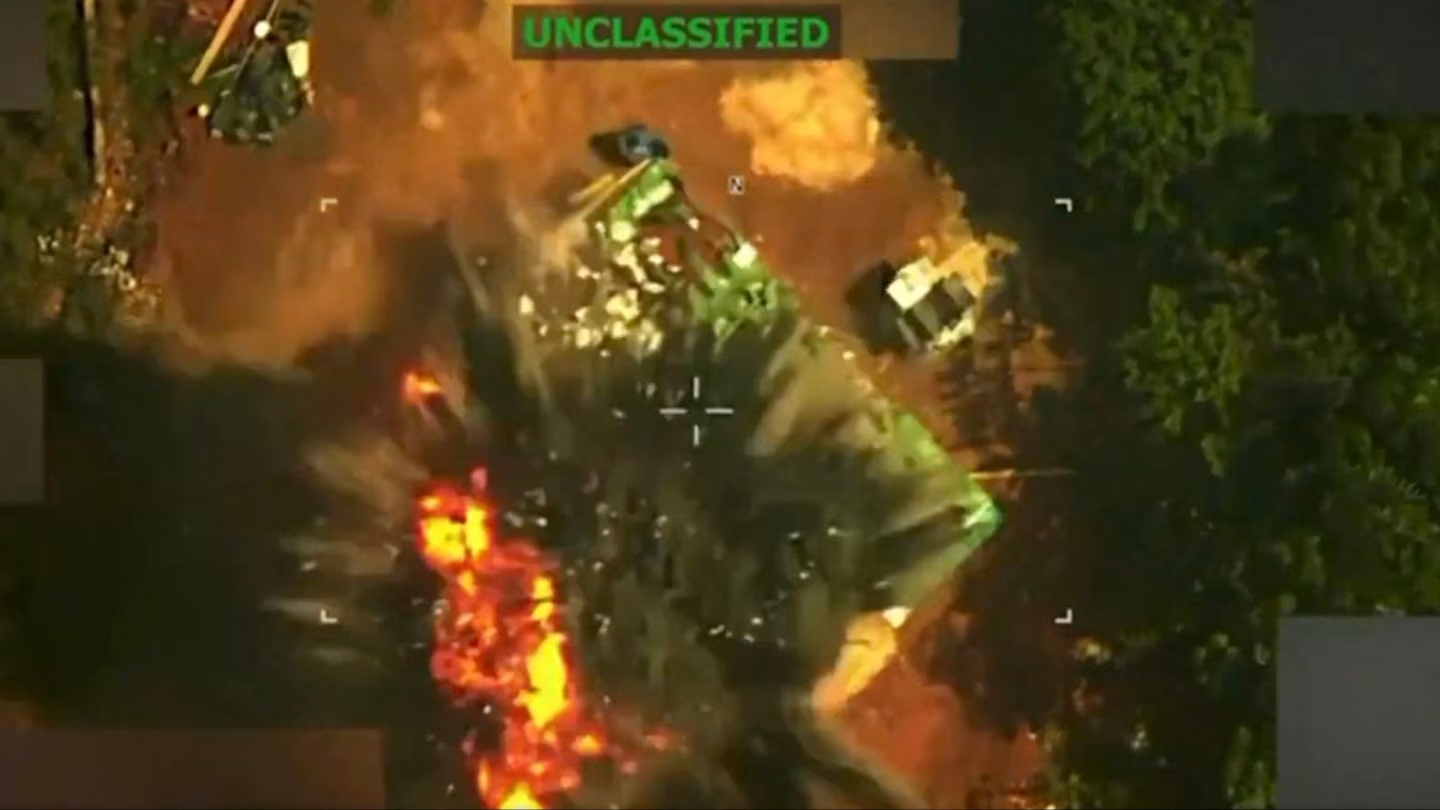
The United States has intensified its offensive against transnational organized crime following the reported killing of Héctor Rusthenford Guerrero Flores, better known as “Niño Guerrero,” the long-time leader of the Venezuelan criminal organization Tren de Aragua. President Donald Trump announced that U.S. forces carried out a targeted airstrike that killed Guerrero, describing the operation as a decisive blow against a group Washington has increasingly framed as a national security threat rather than a conventional criminal enterprise.
According to the White House, the strike was conducted by the U.S. Southern Command and coordinated with Venezuelan authorities. Video footage released by the president appeared to show a precision strike against a compound believed to be linked to the gang leader.
The operation represents the latest phase in a broader shift in U.S. policy toward Latin American criminal organizations. Under the Trump administration, groups such as Tren de Aragua have been designated as foreign terrorist organizations, allowing Washington to employ national security and military tools traditionally reserved for armed extremist groups.
For U.S. policymakers, the campaign reflects growing concern that sophisticated criminal networks are increasingly operating across borders, influencing migration routes, trafficking corridors, illicit financial flows, and regional stability. Administration officials have repeatedly argued that organizations such as Tren de Aragua pose a strategic threat that extends beyond conventional law enforcement challenges.
Guerrero’s death marks a significant moment in the evolution of a gang that emerged from Venezuela’s prison system and expanded into one of the most influential criminal networks in the Western Hemisphere.
Originally operating from the notorious Tocorón Prison in Venezuela’s Aragua state, Tren de Aragua evolved under Guerrero’s leadership from a local prison gang into a transnational criminal organization with operations stretching across multiple South American countries and into North America.
Authorities have linked the group to a broad portfolio of criminal activities, including human trafficking, kidnapping, extortion, contract killings, illegal mining operations, and drug-related offenses. Security agencies across the region have increasingly viewed the organization as a model of how criminal groups can leverage migration flows, weak border controls, and fragile institutions to expand internationally.
Read also: Starmer And Trump Speak After Days Of Public Acrimony
The strike also highlights the dramatic transformation of U.S.-Venezuelan relations in recent months. Earlier this year, American forces conducted an operation that resulted in the removal of former Venezuelan president Nicolás Maduro, who faced criminal charges in the United States. Washington subsequently accused Maduro of collaborating with Tren de Aragua, with Guerrero named among alleged co-conspirators.
Since then, the United States has sought to strengthen cooperation with Venezuelan leader Delcy Rodríguez, pursuing a combination of security coordination and economic engagement. The easing of certain sanctions and renewed discussions surrounding Venezuela’s vast oil reserves have become central components of the evolving bilateral relationship.
From a regional security perspective, Guerrero’s removal could disrupt the gang’s command structure, though experts caution that criminal organizations rarely disappear with the loss of a single leader. In many cases, such groups adapt by decentralizing operations or elevating new leadership figures capable of maintaining established revenue streams.
The broader challenge for governments across Latin America remains the networked nature of modern organized crime. Tren de Aragua has reportedly established operational links and partnerships with criminal actors in Colombia, Ecuador, Peru, Chile, and other jurisdictions. These alliances have allowed the group to extend its influence while reducing its dependence on centralized leadership.
The operation is also likely to renew debate over the legal framework underpinning Washington’s anti-cartel strategy. The Trump administration has increasingly characterized drug cartels and transnational criminal organizations as participants in an armed conflict against the United States, a position that has been used to justify expanded military operations beyond traditional counter-narcotics enforcement.
American forces have reportedly conducted dozens of maritime strikes targeting vessels suspected of involvement in narcotics trafficking. While the administration maintains that these actions are lawful and necessary to disrupt criminal supply chains, critics have questioned the evidentiary basis for some operations and raised concerns regarding compliance with international law.
Read also: Nigeria: The Slave Name And The Restructuring Verdict — Part 7
Legal scholars and human rights advocates have argued that treating suspected traffickers as combatants rather than criminal suspects risks blurring the distinction between military and law enforcement authorities. The administration, however, maintains that organizations such as Tren de Aragua operate at a scale and sophistication that warrants a national security response.
For investors, policymakers, and regional governments, the significance of Guerrero’s death extends beyond the elimination of a single criminal leader. It signals Washington’s continued willingness to employ military force against transnational criminal organizations and suggests that security cooperation between the United States and key Latin American partners may deepen further.
Whether the strike weakens Tren de Aragua in the long term remains uncertain. What is clear, however, is that the operation marks another step in the evolving convergence of organized crime, national security policy, and geopolitical strategy across the Americas.