
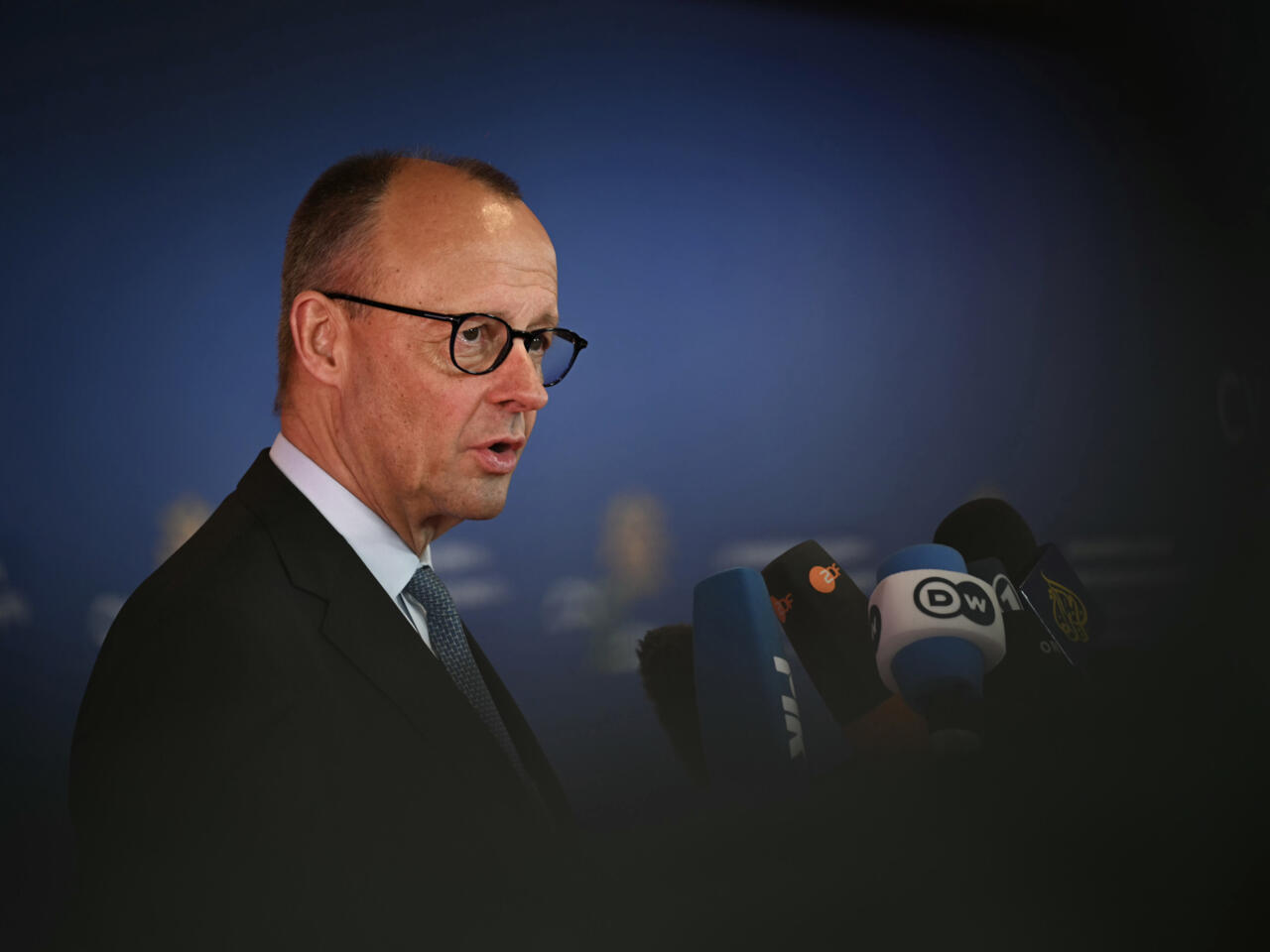
Germany’s chancellor wants Ukraine inside the European Union’s institutions now, without waiting for the decade or more that full membership could take to materialize. The mechanism he is proposing has never existed before.
Friedrich Merz put forward a formal proposal to embed Ukraine in the EU’s core structures through a newly created “associate member” designation — a category that currently has no legal basis under bloc rules and would require the kind of political engineering that Brussels rarely attempts under pressure. He outlined the plan in letters to European Commission President Ursula von der Leyen and European Council President Antonio Costa, framing it as an acceleration of Ukraine’s European future rather than a ceiling on it.
The architecture Merz described is specific. Ukraine’s president would attend EU summits as a participant, though without voting rights. Ukrainian ministers would join their counterparts at EU ministerial-level meetings.
Kyiv would hold a non-voting associate commissioner position inside the European Commission and send non-voting representatives to the European Parliament. The EU’s mutual assistance clause — the bloc’s collective defense provision — would extend to Ukraine under the proposal. So would partial access to the EU budget.
No vote. Real presence.
That distinction is deliberate. Merz has been explicit that this is not a consolation prize dressed up in diplomatic language. “What I envisage is a political solution that brings Ukraine substantially closer to the European Union and its core institutions immediately,” he wrote. He also insisted he still expects Ukraine to reach full membership and called for the immediate launch of all outstanding accession negotiation clusters — signaling that the associate track is meant to run in parallel with the formal process, not replace it.
Read also: Italy Bears the Cost Of Meloni’s Faltering Energy Shift
Whether Kyiv sees it that way is a live question. Ukraine has watched countries enter accession pipelines and remain there for years, sometimes decades, their momentum dissipating under the weight of domestic EU politics and the shifting priorities of member states. The fear in Kyiv is not that the proposal is offered in bad faith — it is that any interim framework carries the risk of becoming permanent by default, leaving Ukraine embedded in the EU’s structures but never quite of them.
That anxiety sharpened after Washington effectively closed the door on NATO membership for Ukraine, removing what had been the other anchor of Kyiv’s long-term security calculus. EU membership is no longer just an economic aspiration or a statement of democratic alignment. For Ukraine, it has become the primary institutional guarantee of its future.
The political environment in Europe has shifted enough to make Merz’s proposal worth attempting. For much of the past year, Hungary’s then-Prime Minister Viktor Orbán was the most reliable obstacle to Ukrainian accession, using Budapest’s veto to block or delay progress at virtually every turn. Orbán’s removal from power, following his defeat by rival Péter Magyar, has cleared one of the most consequential political logjams in the enlargement process. Merz is moving while the opening exists.
Read also: Collapsed Union Talks Put Samsung On Course For Major Strike
The proposal was first raised informally with EU counterparts last month. It arrives ahead of a scheduled EU–Western Balkans summit next month in Montenegro, where enlargement policy is expected to dominate the agenda. The timing gives Brussels a structured moment to respond — and gives member states a deadline, however soft, to register their positions.
The legal novelty of the associate membership category is not a minor procedural detail. It is the central challenge. The EU’s existing treaties do not provide for it, which means any implementation would require either treaty amendment — an extraordinarily difficult process requiring ratification across all member states — or a creative reading of existing provisions that could withstand legal scrutiny. Neither path is straightforward. Merz has proposed the destination. The route remains unmapped.
What the proposal does, regardless of how the legal questions resolve, is change the terms of the conversation. Ukraine’s accession has been discussed largely as a future event — something to be prepared for, negotiated toward, achieved eventually. Merz is arguing that eventually is the wrong frame.
He wants Ukrainian officials in the room now, watching how decisions are made, participating in the deliberations that shape the continent they are fighting to join.
For a country in the middle of a war, proximity to power is not an abstraction.